Latest Entries »

Do fish have friends?

On the face of it this sounds like a dumb question. But I am trying to be serious. Maybe “friends” is too strong a word. It seems appropriate only when describing people. It seems nonsensical to consider other animals, like say, cows in a herd, as being friends. But if you have dogs, as we do, the notion doesn´t seems quite as outlandish.

Two of our dogs, Bonita and Chica, are sisters. The other two, Barney and Boris, are just puppies. We all spend much of our time falling and tripping over the damn things. It is clear however that they are “friends” in the sense that they interact enthusiastically and spend time in one another´s company, much as Bonita and Chica have done for many years.

What about fish?

I have experienced very “odd” behaviour on many occasions on the river. It is not infrequent to play a barbel or a carp which, as it runs around the river is very closely “shadowed” by another fish, or sometimes more than one. To my knowledge, similar claims have been made for salmon although I have never caught one myself. The “companion” fish may even swim quite close to the angler during the heat of battle throwing its normal caution to the wind. Why?

Any serious suggestion that fish can be “friends” would be greeted in the scientific community as hopelessly anthropomorphic. A scientist might suggest I get a bit of therapy at the funny farm. But if the word “friends” is very loosely defined in the limited sense that it describes an individual with which another individual might spend time in preference for others of the same kind, maybe it is not so crazy after all.

To my knowledge, the shoaling activity of fish is well understood and the advantages to individual fish in terms of protection from predators are clear. Each fish benefits from the extra “eyes and ears” of those around them, and a confusing melee might make individuals more difficult to pick out by predators.

As I write this my two teenage kids are sitting on the sofa opposite. Leo has earphones stuck in his ears and is watching something on Youtube. Pippa is glued to a TV rerun of “Friends”. It sometimes seems like they live in a different world from us. Generations of humans certainly differ now more than perhaps they ever have in the past. Later I will run the kids over to friends´ houses where they will hang out with others of their own age.

This behaviour, familiar to all the parents of teenagers, does not seem confined to humans. Fish very often shoal with others belonging to a particular year class. If you catch a particularly big perch or bream it is a fair bet that there are a few more nearby.

But the benefit of hanging out with your mates may depend on how you plan to make a living for yourself. If you are actively competing with your siblings for a particular lie in a stream, as trout do, or a source of fodder fish, as pike do, then it might make sense to be intolerant of others of your kind. Maybe it makes more sense to chase them away or even to eat them. Of course, when they have reproduction on their minds, both pike and trout will ignore the usual rules and override their natural intolerance of one another.

Fish, in my view, have a kind of PR problem. Everybody thinks that they are thick! They are not credited as being smart like the “higher” vertebrates. Birds and mammals are considered to be quite adaptable and “clever”. We used to keep hens until a semi-feral campo dog broke in and killed them all. Hens are fine birds but, however much you love them, there is no getting away from the fact that they are pretty thick. Sheep are too.

But even hens have a social awareness which is well established and a means for determining individual rank within the “pecking order”. So clearly each individual is “known” within the group. Fishermen, more than scientists, know just how canny a fish like a carp can be. After all we spend so much time being outsmarted by them! In my book a wily carp is as “smart” as a hen and I would be inclined to credit them with knowing the others in their group as individuals – maybe even to the point of getting on better with some than with others. Some might have “personalities” which make them more likely to be leaders, and others to be followers. Maybe there is also some kind of rank within a shoal?

Although few would disagree that it makes sense for fish to form associations if the benefits outweigh the disadvantages, maybe I am alone in thinking that, under certain circumstances, fish develop allegiances and “friendships” which are more complex than anyone might suspect.

And if I need to spend a spell in the loony bin weaving baskets out of spaghetti, then so be it.

Leo and Pippa taking it easy along with the two puppies, Boris and Barney
Leo and Pippa taking it easy along with the two puppies, Boris and Barney


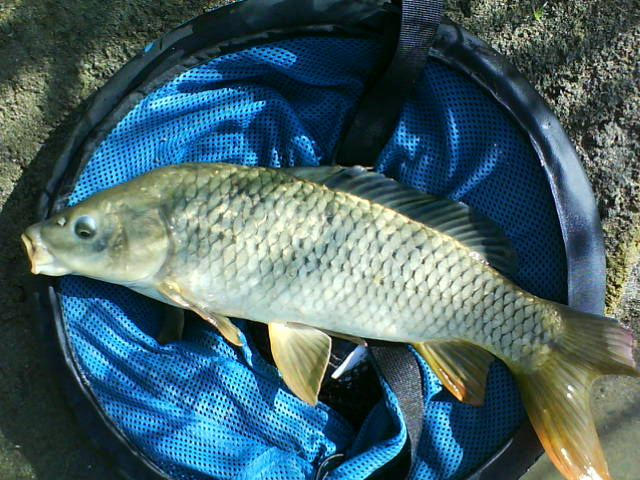
Carp like these are often "shadowed" by others while they are being played

Carp like these are often “shadowed” by others while they are being played
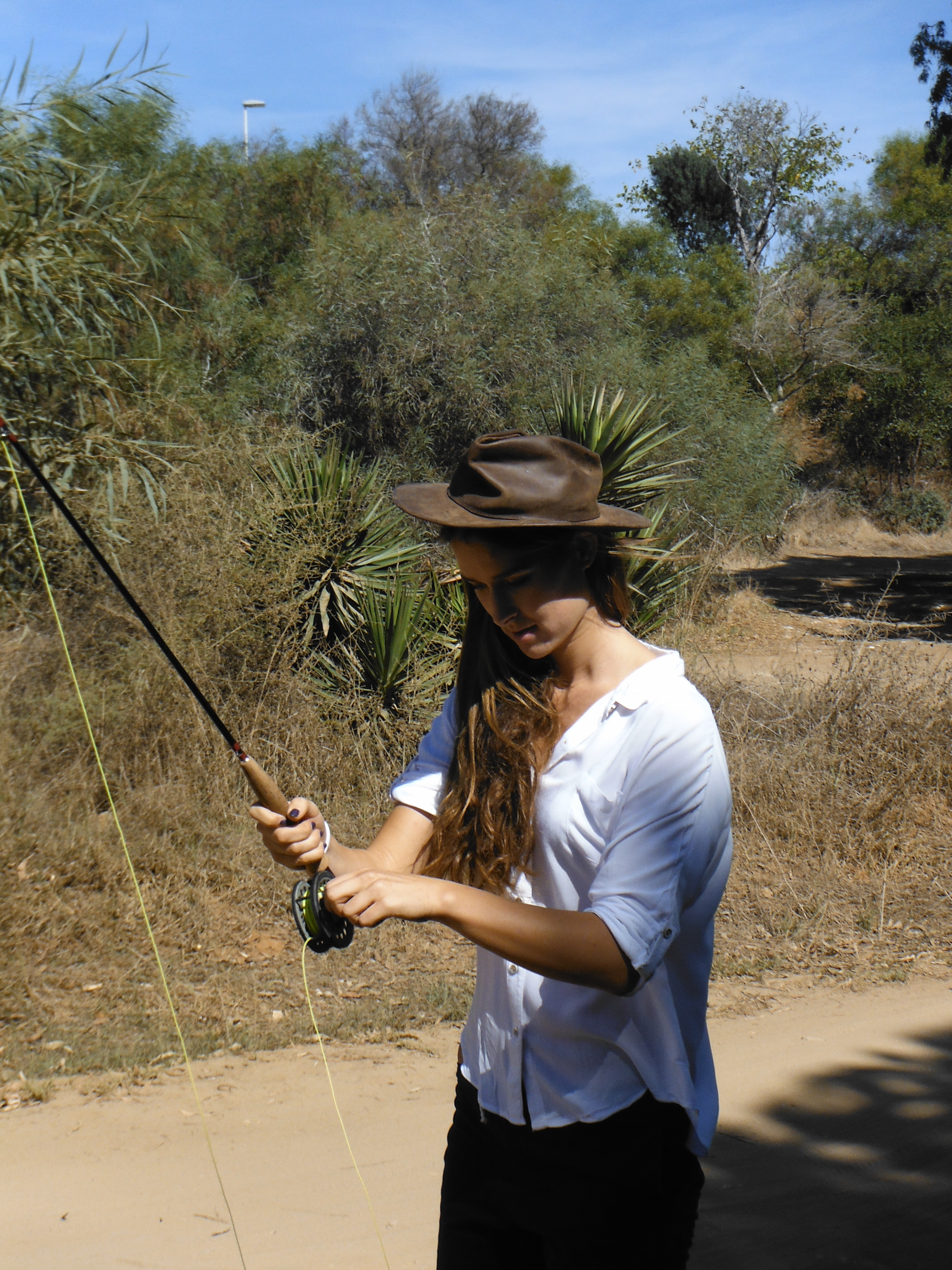
Learning to cast

Everybody knows that only a complete loser would even consider taking up golf. So it probably won´t surprise you that I, myself, have a soft spot for the game. Or, at least, I used to have.

Over recent years I have pretty much abandoned golf for several reasons. First, I am no good at it. Secondly, with only a few hours each week during which it is possible to extricate myself from work and family commitments, I would rather be sneaking around on the bank of a beautiful river than searching the rough for the ball I just sliced off the fairway.

And then there is the prohibitive cost of playing here on the Costa del Sol, a golfing Mecca for those well-heeled enough to jet off from the frozen or waterlogged courses of Northern Europe, and wander around in the sunshine instead. And, finally, it is a relief also not to be associated, in any way, with men wearing stupid trousers.

The golf I played in the past was of such a consistently poor standard that we took some perverse pleasure in how awful we were. My “best” shot saw the ball not only leave the fairway, but the entire course, landing eventually on the corrugated roof of a barn in which a number of cows had been sheltering. The dome roof effectively acted as a giant amplifying drum panicking the little herd and causing the cows to gallop out of there in all directions.

My brother Sean went one better on the very first tee. He  managed to hook a shot so that it went flying at around knee height straight into the club members car park where it bounced from car to car until it eventually ran out of steam. For a while it looked like a ball in a pin ball machine.

The reason I find myself thinking about golf is that the golf swing is quite a technical thing and the steps that need to be followed and refined in developing a decent swing are, in a broad sense, not unlike those needed to develop a reasonable fly casting stroke.

First off, if you really want to leather the ball in golf the chances are you will probably screw up one of the fifty million things you need to think about to get your swing right. If this happens you might make a complete balls of the whole exercise. Likewise, a reasonable casting stroke is not a forced thing. It is not so much about how much power you add but when you add it and, crucially, when you stop adding it.

I hesitate to say much more because I realise that there are many people who are far better qualified to offer instruction than I am. I am a caster of only moderate ability myself. There are big fat books that have been written on fly casting by people who cast pretty much full-time. And then there are You tube videos, instructional DVDs and all that stuff. My favourite instructor is probably the late Mel Krieger who seems to me like such a talented and enthusiastic teacher. He died not too long ago and was an inspirational figure to many. Here is a link which will take you to one of his lessons on Youtube: http://www.youtube.com/watch?v=4ZDOON6pZ1Y

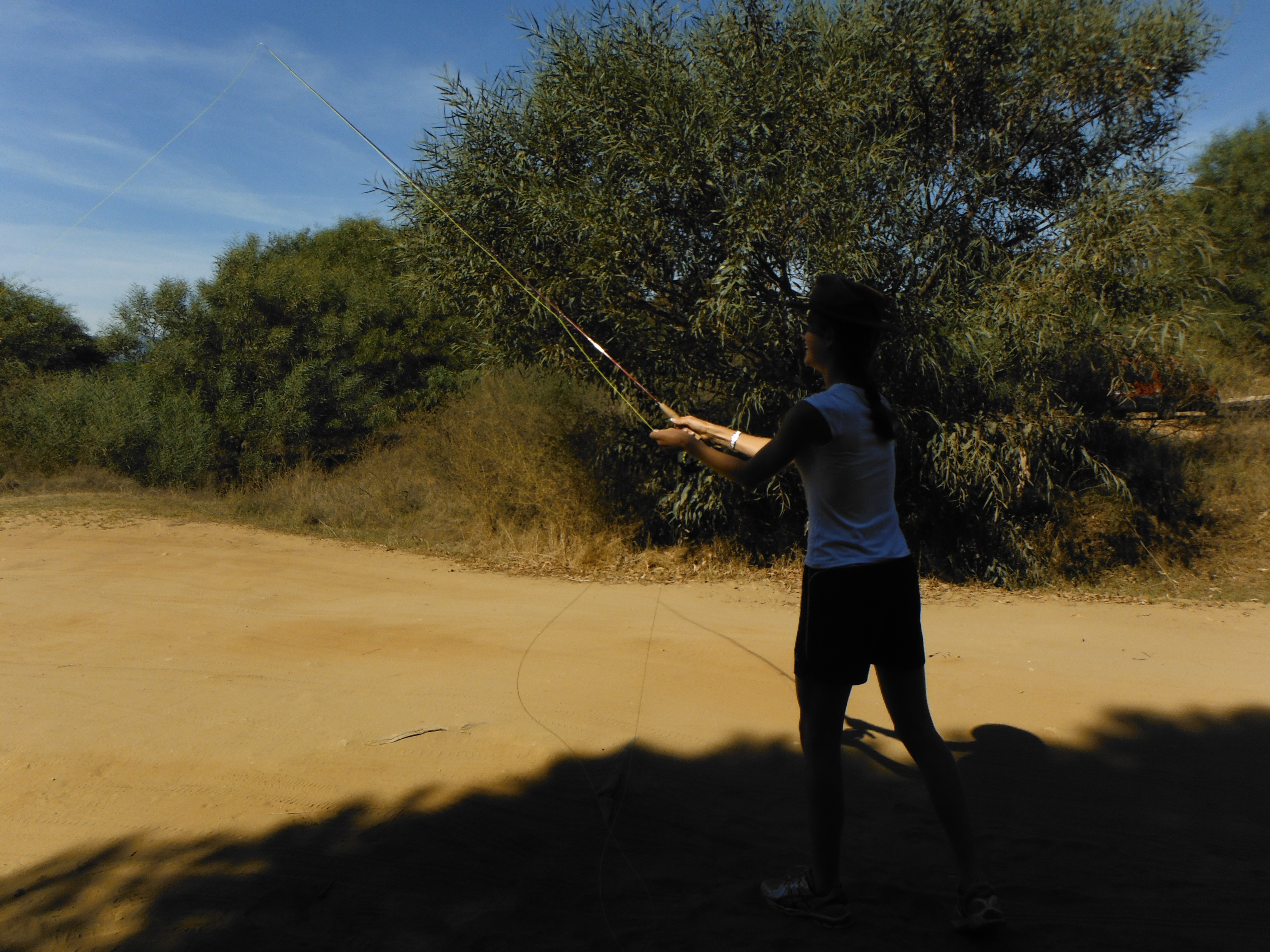
Just recently I took a bunch of students to do some Biology fieldwork on a local beach. The kids completed the tasks pretty fast and so I took out my fishing gear which was in the back of the car and we all had a casting competition. There were only two rules. First, whoever got the thread at the end of the leader furthest was the winner (no hook in case we impaled one another!). The second was that you had to wear the leather hat even if it made you feel pretty stupid. These kinds of rules have never deterred golfers! The final winner was disputed but all the students showed great promise. Here they are in action:

Thea Zabell getting to grips with fly casting

Thea Zabell getting to grips with fly casting

Clarinde prepares to take her turn

Clarinde prepares to take her turn

Clarinde in action

Clarinde in action

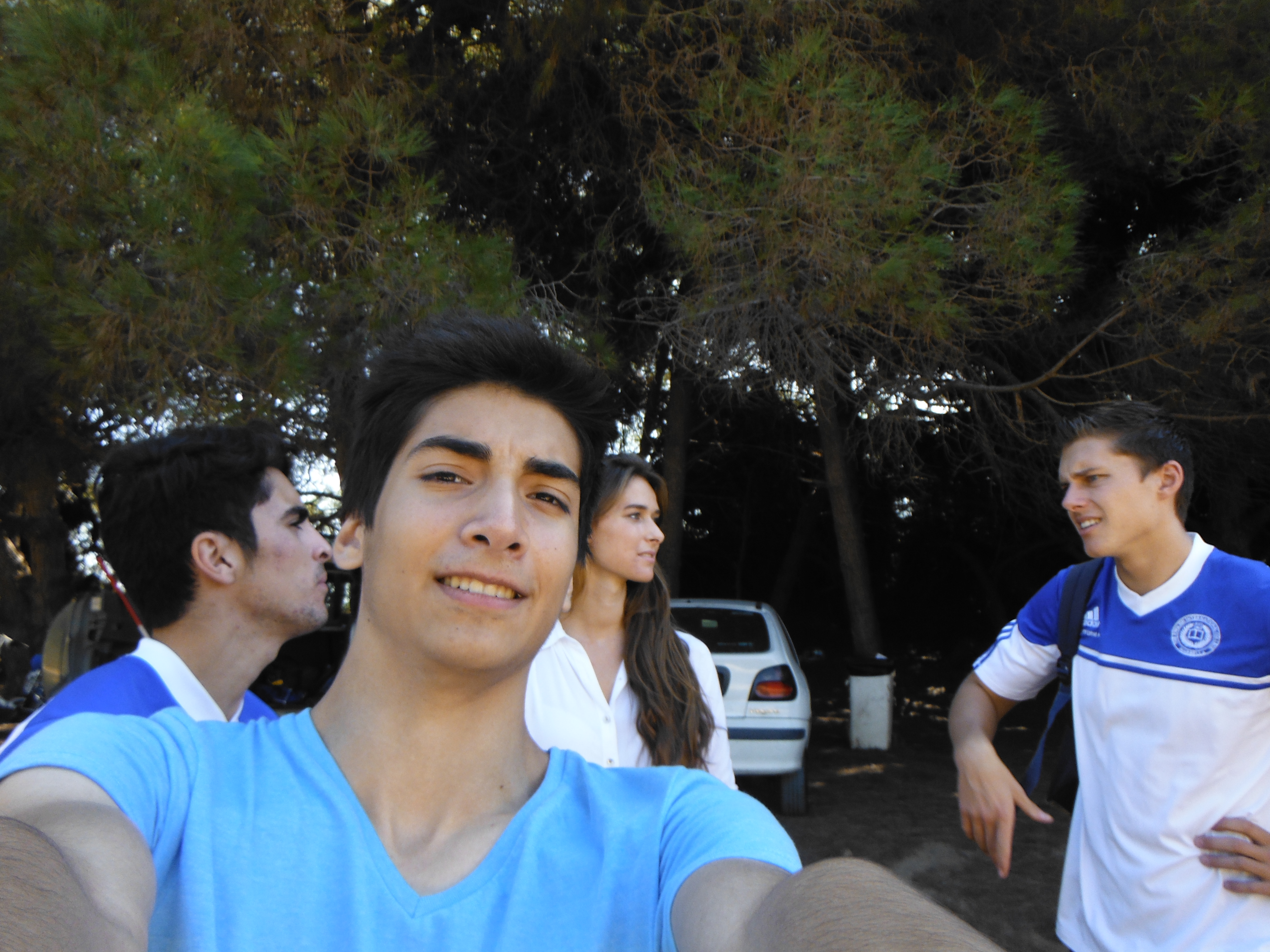
The competitors take a break from the intense pressure of competition casting! Left to right: Sami, Nico, Thea and Gary

The competitors take a break from the intense pressure of competition casting! Left to right: Sami, Nico, Thea and Gary

Maggots and bluebottles

I once heard a comedian who cracked this joke:

“I have a friend who is a fly fisherman. He went off to the river the other day and came back with a two pound bluebottle!”

HA HA HA!

Not a bad joke actually, although I preferred the one about his family being so poor that the nearest thing they could get to a Jacuzzi was a fart in the bath.

What a winner!

I mention the bluebottle joke because I have been thinking recently about bluebottles and, particularly about their little wriggling larvae, familiar to coarse fisherman as the ubiquitous maggot.

I bought some maggots a few weeks ago for my students to have a look at. They were sold to me by a very beautiful young woman in the fishing section of Decathlon in Fuengirola. This woman was a real stunner and I immediately fell in love with her and felt, for the first time, a little embarrassed about asking her to get me a box of maggots from the locked fridge. What kind of a man goes buying boxes of maggots?

Of course this was not the first time I have bought maggots. I used to buy gallons of the things during the years when my brother Sean and I did a lot of coarse fishing. They were unceremoniously scooped out from great plastic containers using a pint glass. I never really felt uncomfortable or embarrassed when buying them before, but then again, the tackle dealers were not beautiful young women. Most of them, let´s face it, are as ugly as hell!

Maggots are interesting things from a scientific point of view. It turns out that they are useful in surgery to clean wounds which might otherwise become infected. The maggots, as it happens, will feed on dead tissue but leave living tissue alone and so help reduce the risk of infection.

And they are useful too in the morbid but fascinating study of forensic entomology because the size and stage of development of maggots and other little critters can be very useful in determining how long a dead body has been lying around.

Most people know little about insects, and have little interest in their biology and life histories, but, having said that, it is probably true to say that the image that immediately enters most of our heads when we think of a “fly” is the image of a bluebottle, or something very similar. So it is no surprise that the gag about the fly fisherman catching a two pound bluebottle works better than saying he landed, say, a two pound mayfly, or sedge, or stonefly, or caddis fly, or crane fly or whatever kind of fly or nymph a fly fisherman would actually use.

The truth is, from a fly fishing point of view, both maggots and adult bluebottles are of very marginal interest, and for a very good reason. The bluebottle lays its eggs on something gruesome like a dead hedgehog or whatever, and the larvae feed, grow and pupate and turn into the adult fly. The adults feed on nectar, bless them, but then go and spoil things by finding something dead and disgusting to lay their eggs on.

All of this means that at no point during their life cycle are maggots or adult blue bottles likely to find their way into the water and become the natural food of fish, quite unlike the midges, and caddis flies, and mayflies and all the others which the fly fisherman may want to impersonate. And maggots, which are a favourite bait of coarse fishermen, would not be part of the natural diet of fish either. The fish eat these things because fishermen throw bucket loads of them into the water. It is very unlikely that they would otherwise ever even see one.

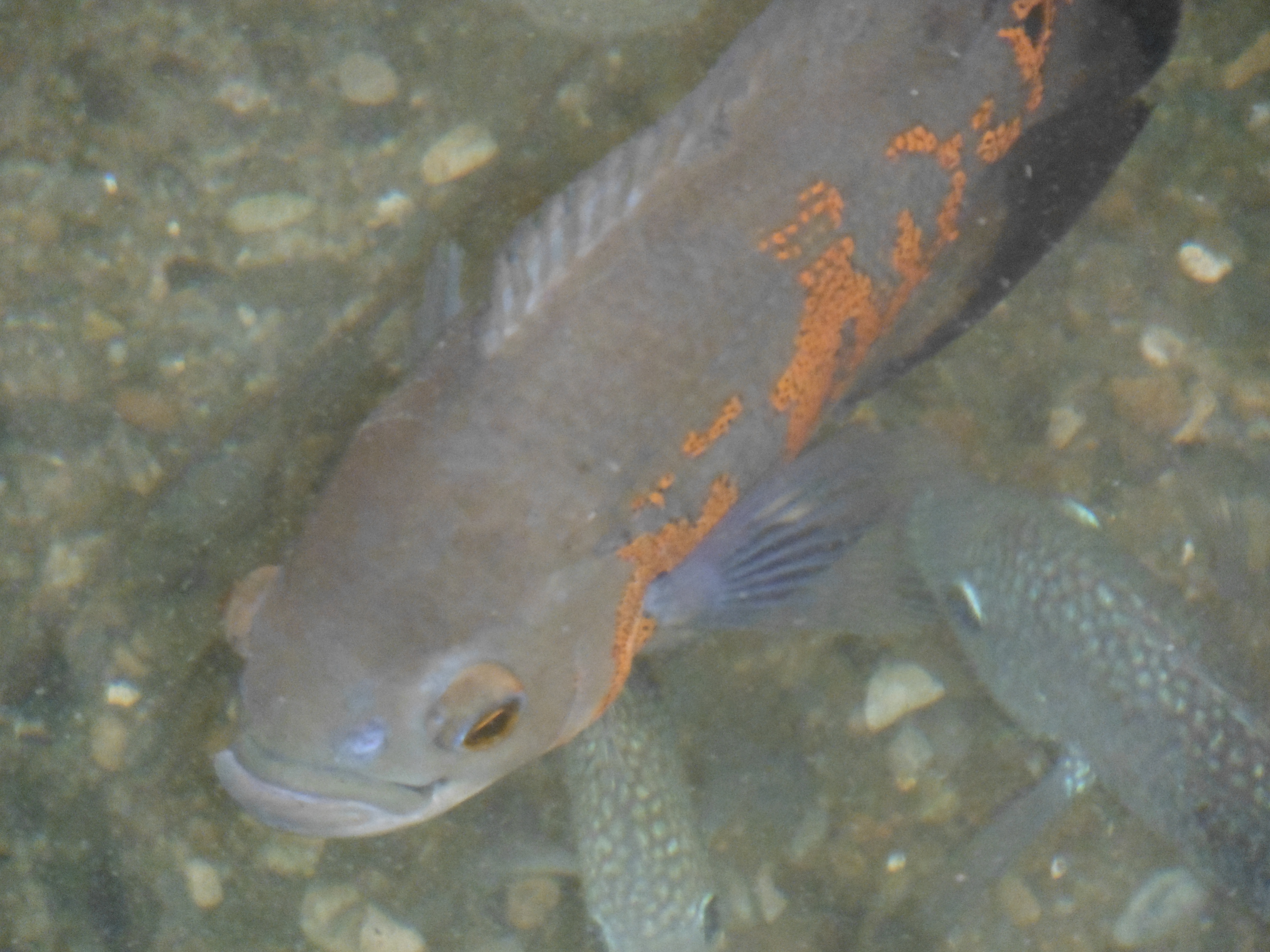
Of course none of this means that fish don´t consider them tasty. Fish love maggots. And they are perfectly happy to eat the adult flies if they can get their hands on them. (Okay, it´s just an expression – I know fish don´t have hands!) We know how much fish like bluebottles from experience because we had a pet fish one time called an oscar. It was given to us by a friend who had grown tired of looking after it. The thing was huge. My son Leo and I used to catch flies and pop them into the tank. Schlurp! The oscar absolutely loved them!

I have a dry fly pattern which works pretty well at imitating a “fly” in the familiar, generic sense. It is really simple to tie. A little black dubbing and some of that fine foam which is used in packaging are pretty much all you need. I sometimes use a black hackle feather, sometimes not. I don´t think it makes much of a difference.

If the fish are just taking whatever terrestrials have had the misfortune of getting themselves drowned it is as good a bet as anything else.

Oscars like this find bluebottles yummy

Oscars like this find bluebottles yummy

Toro bravo

I read a story one time about a fly fisherman in Africa who inadvertently hooked a hippopotamus. He had been boat fishing in a river swarming with catfish and tigerfish. Naturally, he presumed he had just hooked a massive fish and his fishing companions, fed up with his interminable battle, told him to get out of the boat and finish playing the fish from a mud island, so that they themselves could get back to their own fishing.

It was only when he gained some line that he saw the hippo emerge from the water and start charging towards him. So the guy does what any thinking angler would do: he drops his gear and legs it into some rushes. Hippos are notoriously bad tempered and dangerous things and, having had a fly stuck in its snout, this one was in a particularly foul mood and proceeded to jump up and down on the abandoned fishing tackle smashing the rod into a million pieces, although his reel, miraculously, survived undamaged. The reel manufacturer, it turns out, used this event to market their product being able to claim that their gear was proven to be hippopotamus-proof!

Having a run in with bad tempered mammals is just one of the hazards of fly fishing. I remember a story told to me by Michael Roche, a terrific yarn spinner I knew in New Zealand, about a fisherman chased into the river by a bull, and I myself was fully prepared to leap into the Guadalhorce river one time when a wild boar and her half grown youngsters trotted up to within 10 metres or so to drink from the river. Thankfully, they took no notice of me.

I have become acquainted over the last few years with a fisherman called Norman Smith who is a veteran angler and who has fished throughout Spain, along with his wife Maureen. Norman is excellent company. He has a fine beard and a terrific store of fishing tales. He makes me think of Ernest Hemmingway, another guy with a beard who knows how to tell a story. Norman and I have never fished together, although we are planning to put that right shortly, and our encounters have been over a few beers at the local watering hole in Villafranco del Guadalhorce.

Norman told me a tale one time which goes something like this……….

One time himself and Maureen were fishing some reservoir somewhere which could only be reached by walking through country where fighting bulls were on the loose. You know what these things are like. They have been bred over the years to be mean, bad-tempered, sons of bitches and, if you come across one you better get the hell out of there. Fast.

Anyway, it just so happened that Norman wanted to get to the reservoir one morning at such an early hour that all was in darkness. He was about halfway from his car, where he had spent the night, when he became aware of the sound of a heavy animal nearby. He froze. This is one of those nightmare moments when the adrenalin kicks in and the mind is forced to work through the options. He realised that, even if he ran and jumped into the reservoir, he could not outpace the creature and had a pretty good chance of being gored to death. So he remained perfectly still in the vain hope that he might not draw attention to himself. He knew that bulls have poor eyesight. But even this strategy was doomed as the dawn was breaking and it was only a matter of minutes before he would be seen. And things turned out that way. As the light increased Norman, frozen in terror, emerged from the darkness and at the same time, only yards away the brooding presence itself came into sharp relief…….. a horse.

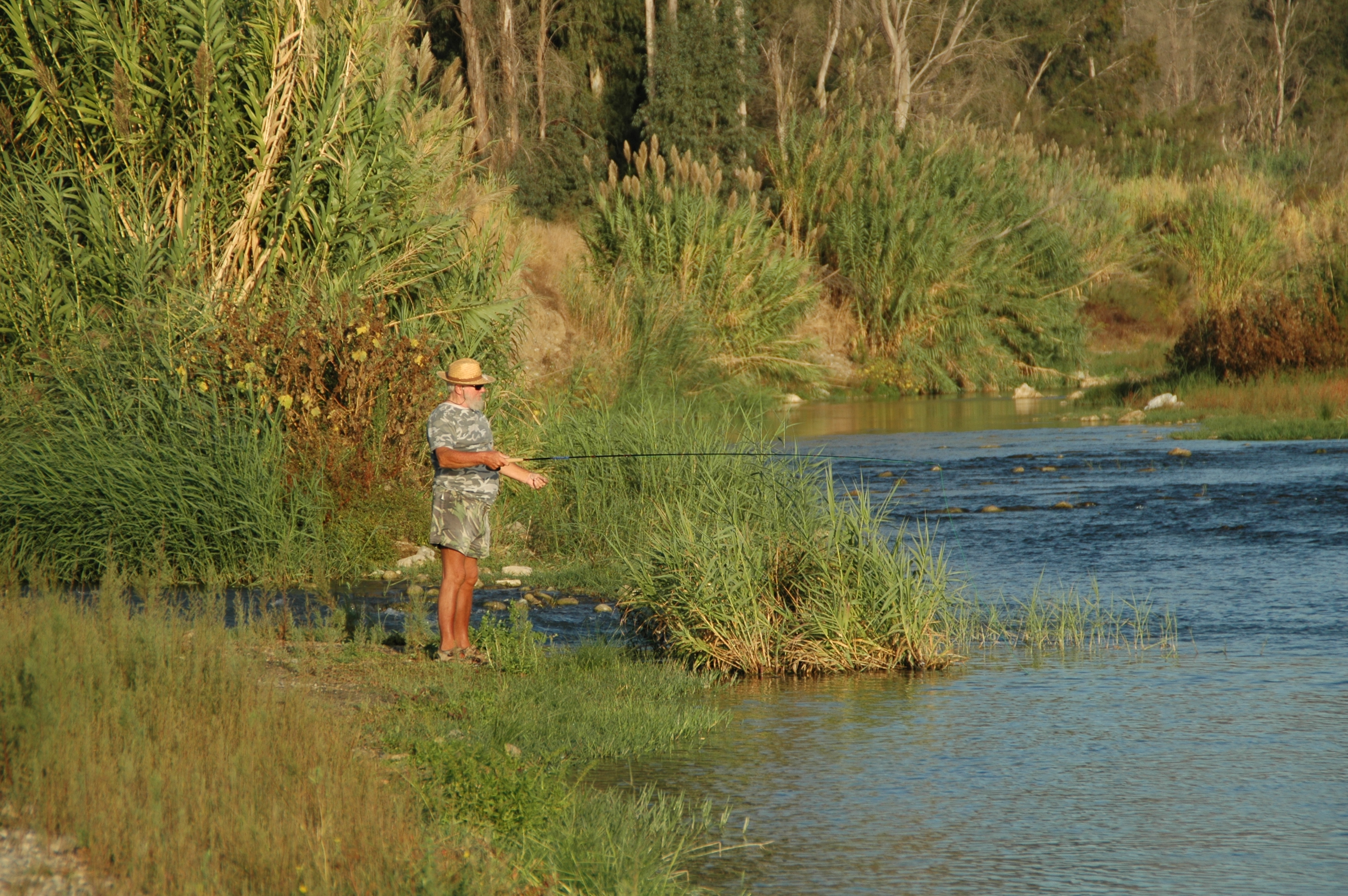
I like to show a photo or two on this blog thing if I can lay my hands on something suitable. Below there are three pictures. One of them shows Norman himself fly fishing on the Guadalhorce river. Norman is a  coarse fisherman and is relatively new to fly fishing but I hope that fly fishing will grow on him.

There is also a picture of a horse, also taken on the Guadalhorce, where they are often tethered.

Finally, there is a picture of a pony. This is not my pony but I am getting pretty fond of it. It belongs to Juan, a builder who is doing some work on our place. He texted me the other day to ask if he could put his pony on our land to graze for a while.

Why not?

Norman fly fishing on the Guadalhorce

Norman fly fishing on the Guadalhorce

A horse chilling on the bank of the river

A horse chilling on the bank of the river

Juan´s pony

Juan´s pony

Embarrassing Bladder Problems

I happen to own a boat. Well, actually that´s not true. I own a couple of float tubes which, to me at least, are boats.

My brother Sean went and built himself what is, indisputably, a proper boat. He made it from marine ply and uses it to fly fish for pike or fool around with his kids. He did a fine job on it too. He might be tempted to say to me that my float tube is not, technically, a boat. But the thing floats and you can sit in it and catch a few fish so it is pretty much a boat in every meaningful sense.

Recently though my float tube has begun to misbehave. In my last three outings bad things have happened while afloat and, while it is not really fair to blame all of them on the float tube, I am developing a feeling that this particular craft might be a tad unlucky.

First, I lost my rod and reel overboard and they sank to the bottom.

On the next outing my binoculars got flooded while sitting in a supposedly waterproof bag in the well of the boat. They are not waterproof. Now all I can see through them is a bunch of bubbles.

Most recently, air started leaking from one of the two main air bladders and makes one side dip deeper into the water.

Float tubes are not often seen in Spain and I am conscious of raising eyebrows whenever I am on the water. I am not quite sure if I am perceived as a cool fisherman out doing his thing in an innovative and modern way, or simply some ridiculous git lumbering around with a pair of fins on his feet. If I feel I am being observed I try to tidy my act up a little:  I make my casting a little less sloppy and work to land the fly consistently close to the margins where, I hope, some black bass might be holding off the steeply-sloping sides.

The last time I was out, I realised I had become the object of interest of a few bass fishermen standing on the bank who were fishing in the conventional way using lures. I have no idea what they made of me but, if they laughed, they were good enough to do it discreetly.

The fishing was poor and the bass showed zero interest in the little popper I was offering. Eventually I decided to paddle away and lose my little audience. This unfortunately wasn´t quite straightforward since the air bladder had leaked so much air, and I had lost so much buoyancy, that I was listing heavily to starboard. To compound things, the banks here are so steep that it is difficult to pull up ashore and pump up the leaking bladder. And so the bass fishermen were treated to the sight of me searching out a margin shallow enough to pull up, clambering out, and re-inflate  my ailing craft before setting sail again.

I have just taken the offending bladder out to examine it. The air is leaking from the valve. I guess I am just going to have to go ahead and get a new bladder. After all a leaking bladder is not only a problem, it is an embarrassment.


The bass often lie close to the steep margins

The bass often lie close to the steep margins


Where can I pull up?

Where can I pull up?


My "boat" and everything you need to get afloat (as long as you don´t mind getting a wet arse!)

My “boat” and everything you need to get afloat (as long as you don´t mind getting a wet arse!)


The offending valve

The offending valve


This week a package arrived for me in the post. When I opened it up I found it was full of flies. Most people would not be too excited about that, but this was different. These were flies I was expecting.

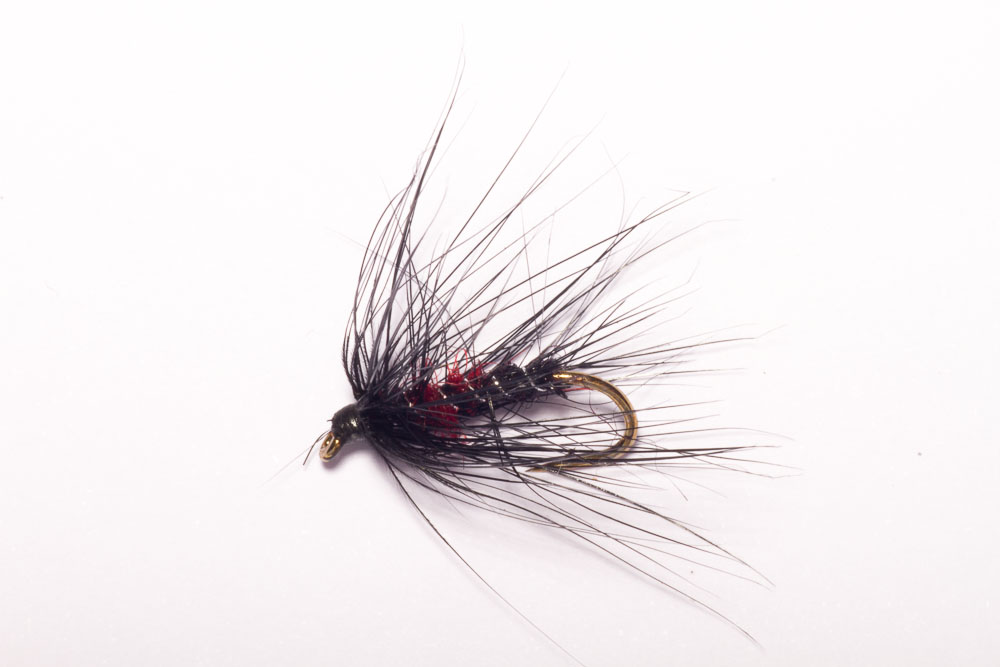
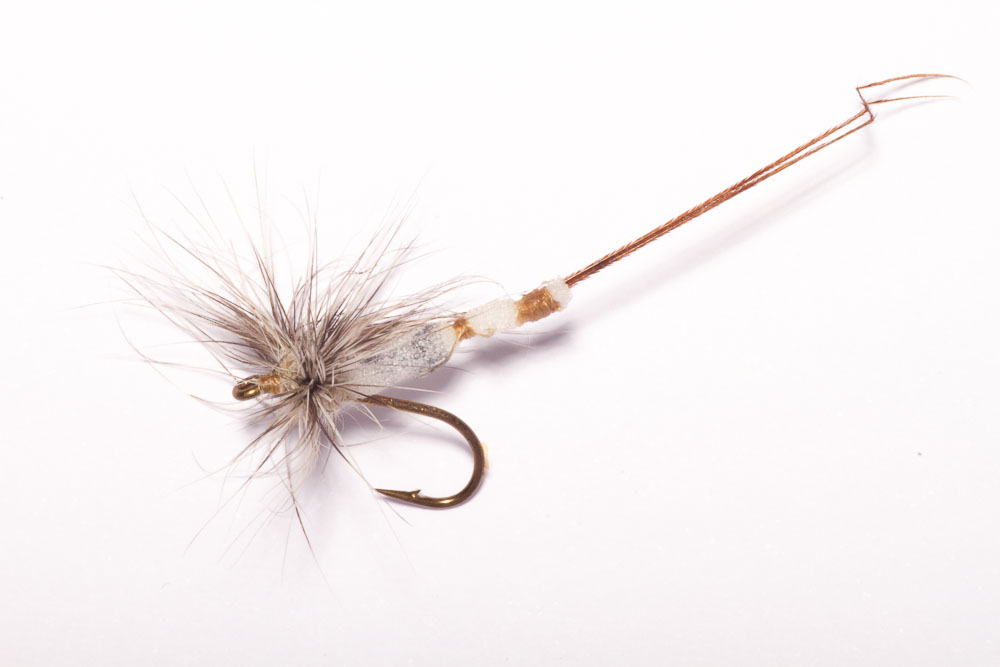
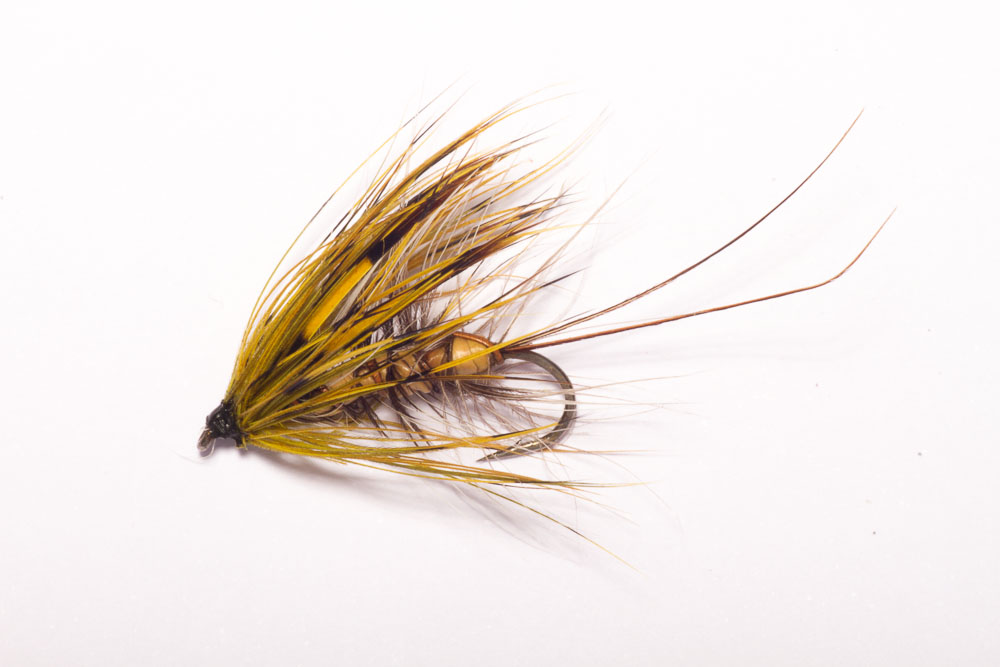
They were tied by Finian Dodd who lives on the shore of Lough Arrow in County Sligo and include many of the patterns which are effective on the lough and, no doubt, many of the larger loughs throughout the country.

I have used Finny´s flies myself on Lough Arrow during a visit this summer and on a previous visit a couple of years ago. The fish in July and August seem to feed very late in the evening and into the darkness and the locals don´t venture until quite late and the big sedges are likely to be on the water. The flies which are successful are Green Peters and murroughs  which are fished dry.

I have to admit that I was unsuccessful on the occasions I fished Arrow although I did hook a good fish that spat out the fly after a few seconds. It was just one of those things. Even though a couple of years have passed by I can´t think about Arrow without remembering that fish!

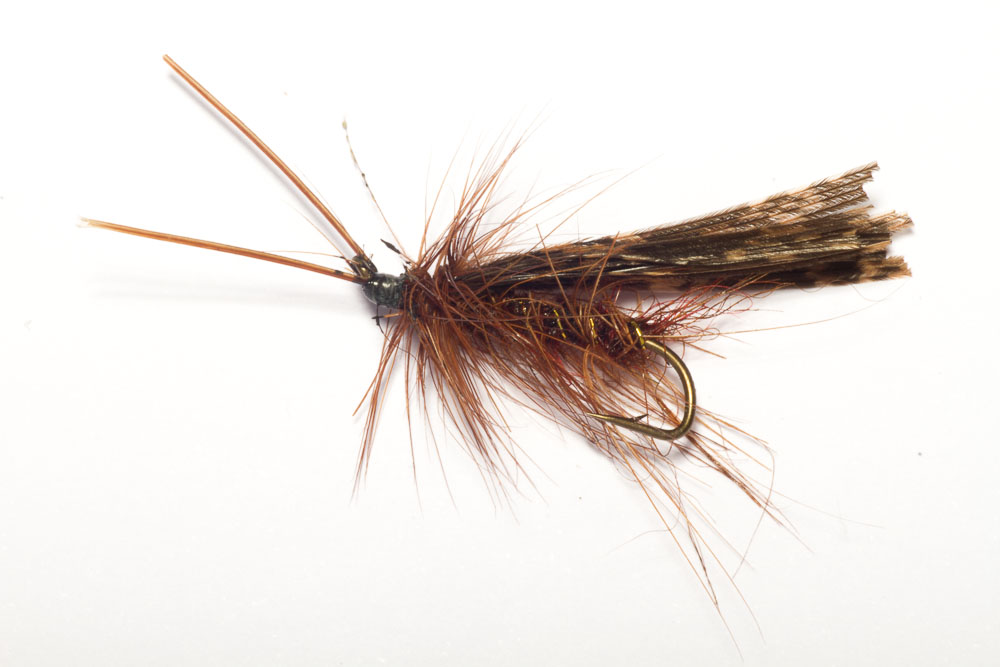
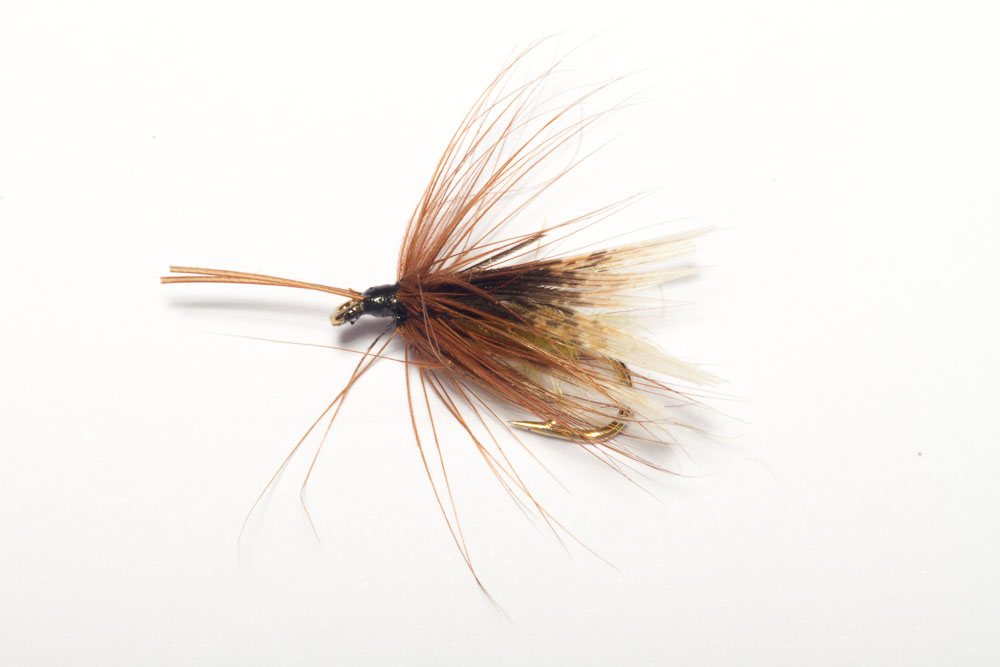
A work colleague, Geoff Lawrence, was kind enough to take some photos of some of Finny´s flies and I have attached the photos below.

If you ever want to fish Lough Arrow, Finny hires out boats and knows the lough like the back of his hand. He is exceptionally knowledgeable about the lough as a fishery and it is well worth having a chat with him. Here are some of Geoff´s photographs of Finny´s trout flies.

Golden Olive

Golden Olive Bumble

Bibio

Bibio

Mayfly - unfortunately the tail fibres got kinked in transit. I will see if I can straighten them out.

Mayfly – unfortunately the tail fibres got kinked in transit. I will see if I can straighten them out.

Mayfly

Mayfly

Murrough Sedge

Murrough Sedge

Green Peter Sedge

Green Peter Sedge

Green Peter

Green Peter

Green Peter

Green Peter

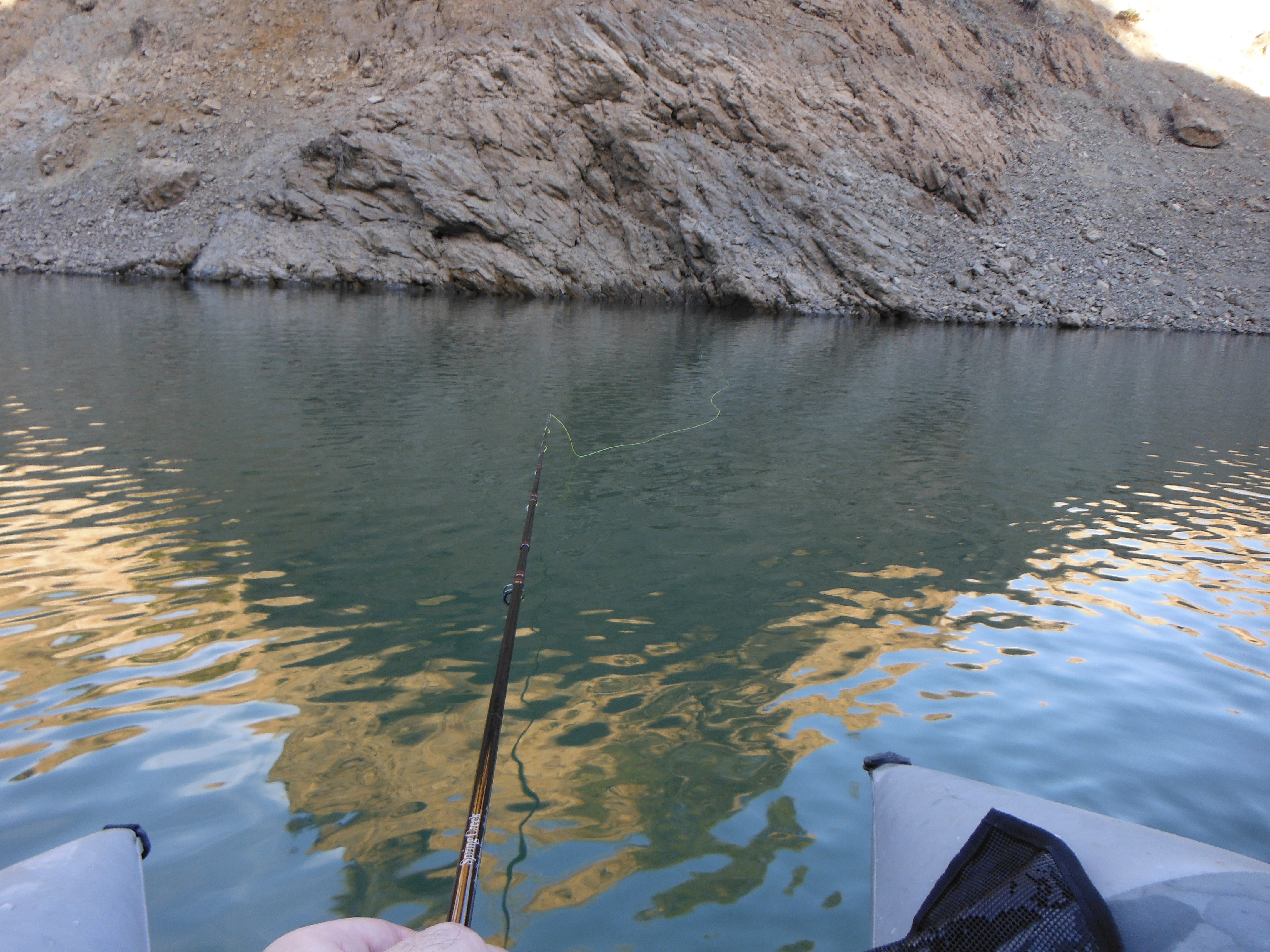
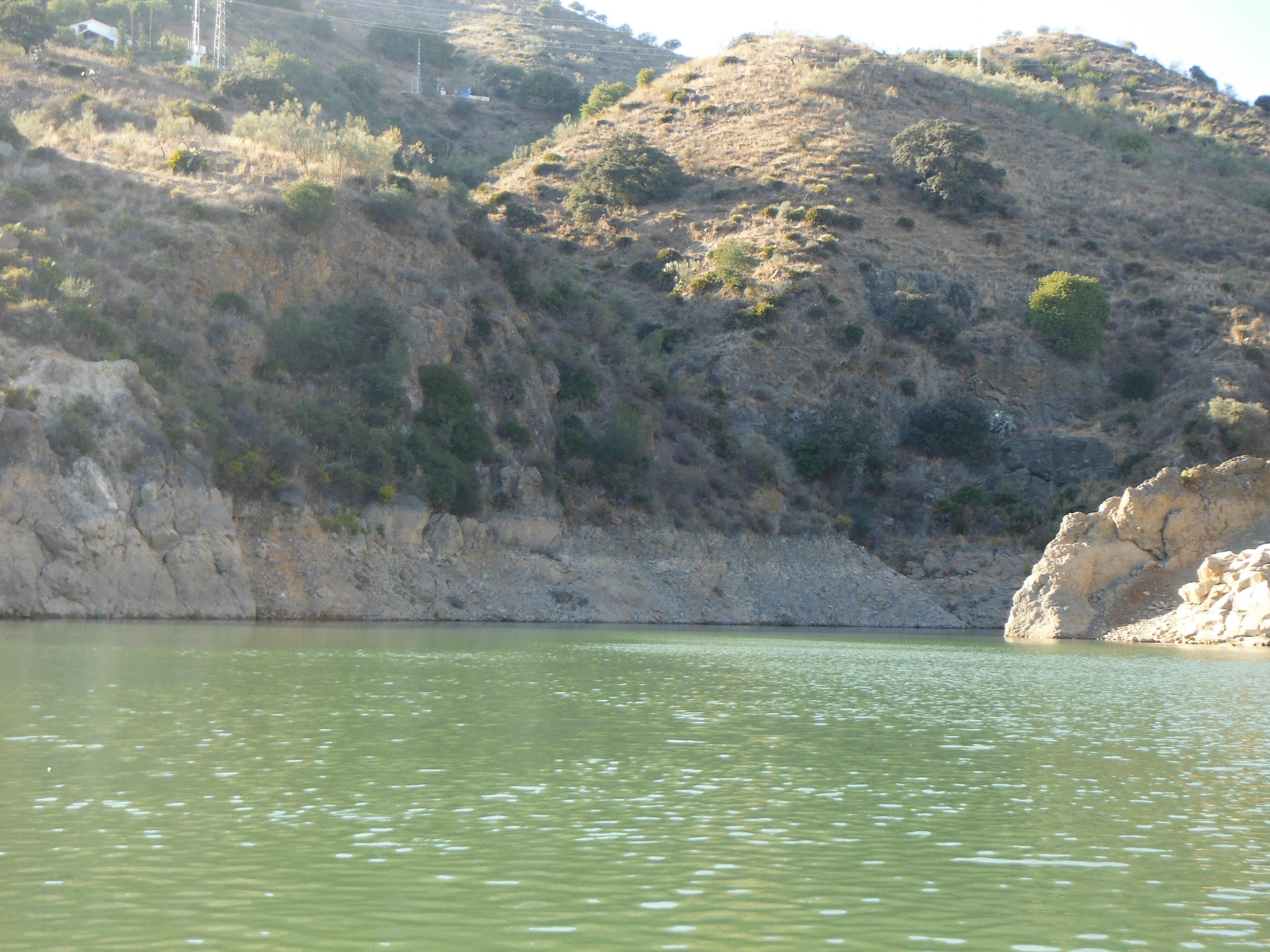
El Chorro is a group of three reservoirs which help to provide water to the City of Málaga and surrounding towns and, in addition, much of the irrigation water to the olive groves and citrus farms of the Guadalhorce river valley. All of the reservoirs are man-made but they have been around so long now that there must be few who can remember the mountain valleys which are now deep under water, and it is difficult to imagine that the steep sides of the reservoirs would, long ago, have been the faces of sheer cliffs.

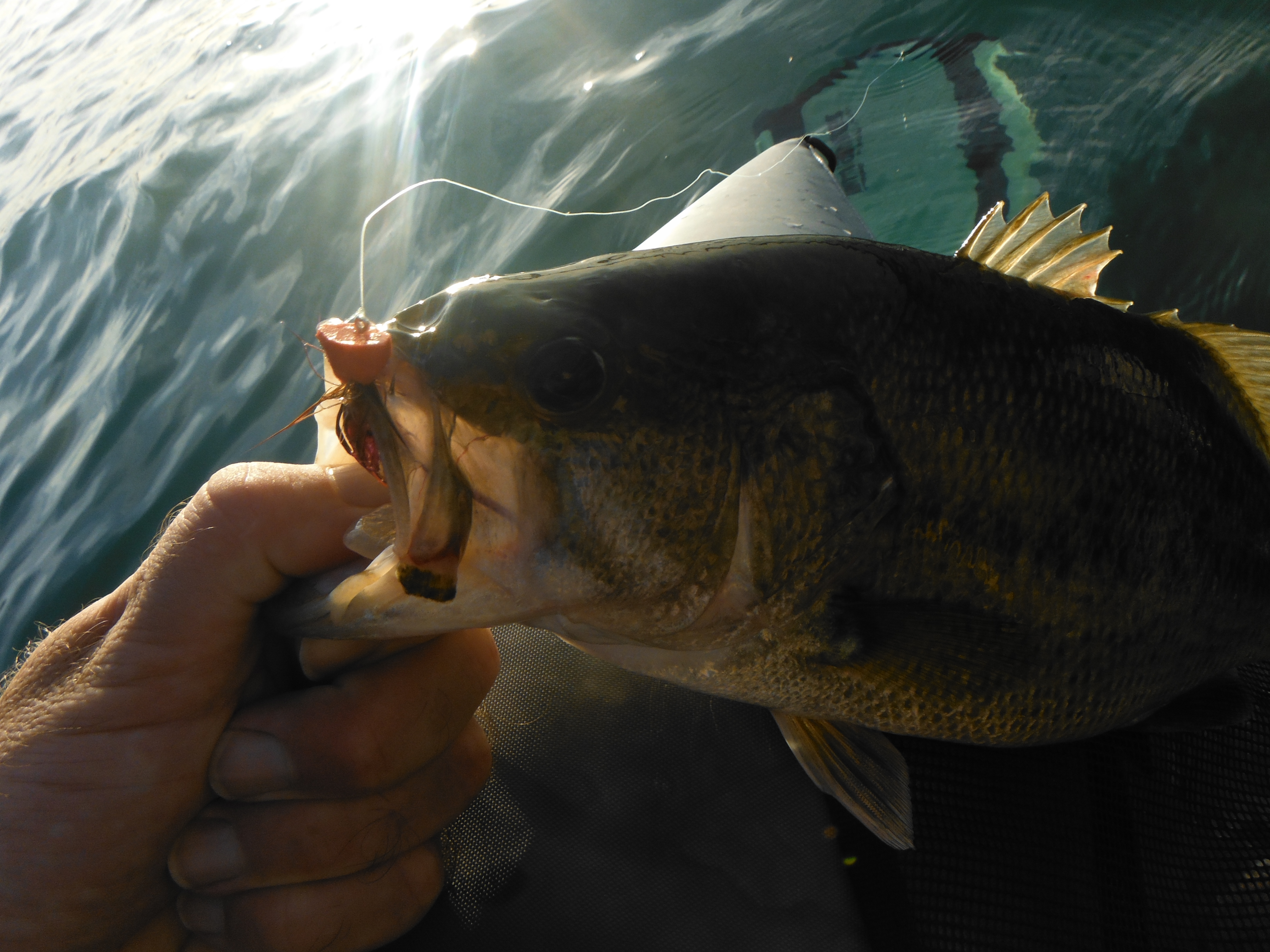
I took the float tube there yesterday evening to see if I could fool a few black bass with a little pink popper. As usual, there were a few carp at the surface. They could be easily approached but didn´t want to have anything to with any fly I showed them. That is pretty much par for the course here. They routinely refuse everything I throw at them, sometimes even fleeing at the sight of my fly. I have learned to be philosophical about being snubbed in this way!

It is interesting to consider what these carp are up to out in the middle of the reservoir. The floor is far below, out of sight. They do not appear to be actively feeding, or, if they are, they are feeding on something very small trapped perhaps, in the surface film.

The bass proved a little more co-operative. They decided to feed for about an hour and a half before it started getting dark. Because the reservoir is so deep, the bottom cannot be seen from more than a few feet of the shoreline in most places. The standard approach is to fish pretty close to the shore and often to cast right up against it.

In the end I caught a few fish, mostly in a small inlet, and managed to see a fine sunset.


It´s easy to imagine a bass lurking around the branches.

It´s easy to imagine a bass lurking around the branches.

The first bass of the evening.

The first bass of the evening.

The black bass is an introduced species from North America. This was my best of the evening but they grow much bigger than this!

The black bass is an introduced species from North America. This was my best of the evening but they grow much bigger than this!

Today I caught a carp which was, maybe, the dumbest one in the river. As fish go, carp are generally considered to be pretty smart. But not this one! I suppose there is an exception to every rule. This particular fish was feeding in the shallows and a cloud of silt, produced by its rummaging, lead me straight to it. It was just a few feet away from a snag which emerged above the water surface and I managed to hook the snag straight away. This is a skill I have refined over the years. I make it look easy! There was no sign of my nymph coming out of the snag and so, in frustration, I pulled on the line by hand and the snag was uprooted from the river bed and I managed to drag it over to the side.

Any self-respecting fish would have buggered off  as a result of all of this tomfoolery and commotion, but this dumb carp just resumed its feeding as though nothing had happened. After retrieving my fly I presented it to the fish again. It took a couple of casts to put the fly in the right place and, sure enough, the dumb fish inhaled the fly without hesitation.

Then all hell broke loose before I managed to draw it into the shallows and unhook it. As I fumbled around trying to get my camera sorted out it thrashed around and threw water all over me before working its way into deeper water and disappearing.

I have no picture of this fish, or of the barbel I caught a little later, but I managed to photograph a couple of other carp. I don´t know why the fish failed to show the characteristic wariness of its peers. It was as big as any of the others and can hardly blame youth, inexperience or lack of education. One thing seems pretty clear though: when these carp are feeding actively they can become so preoccupied that they lose a lot of their usual caution.

It doesn´t concern me that I have no photographic record of the dumbest fish in the river.

I will probably catch it again some time

It shouldn´t be too hard!


One of the smarter ones

One of the smarter ones


Another smart one

Another smart one


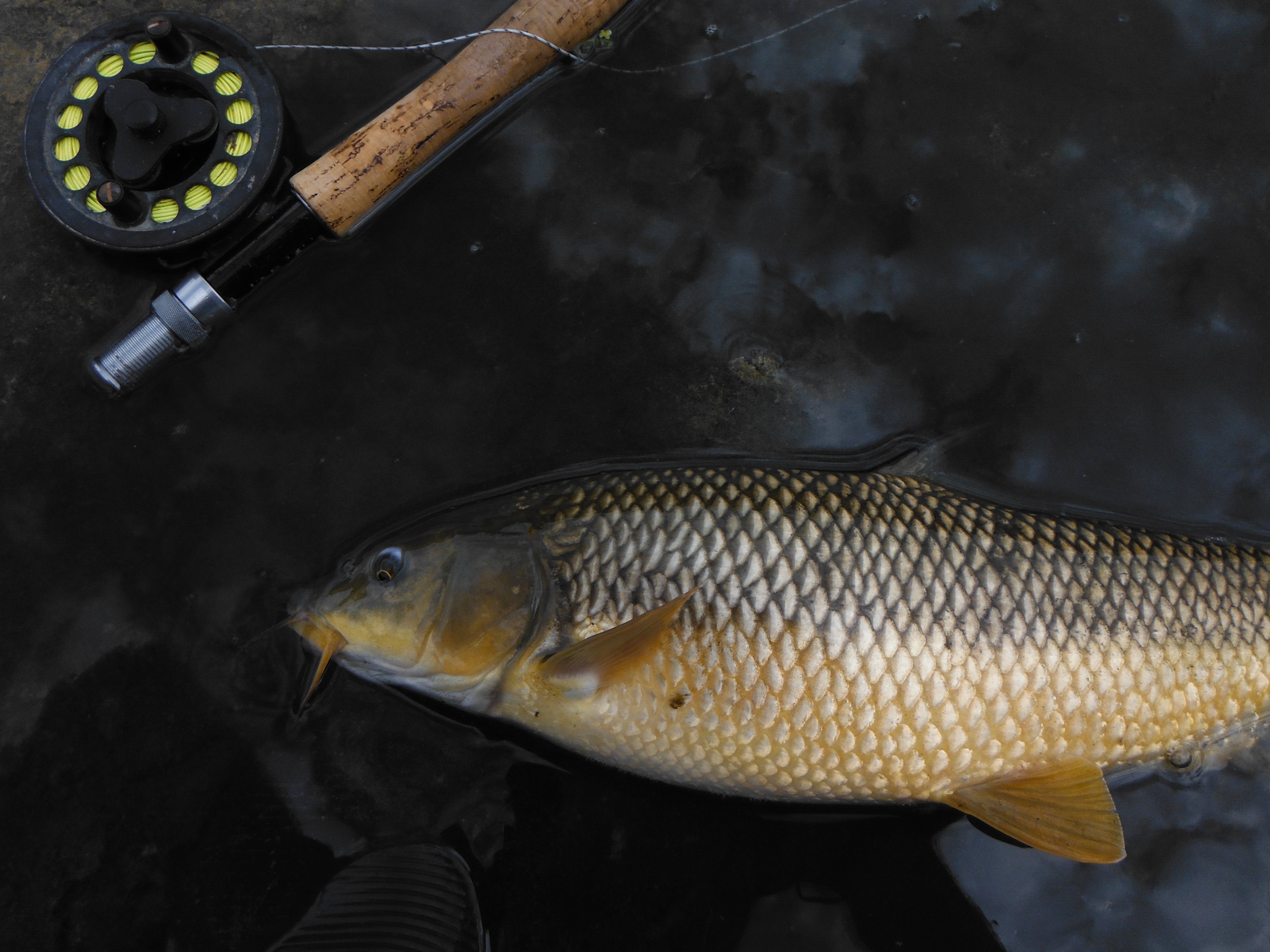
Pretty things, these. The reflection of my fingers detracts from its otherwise cerebral apprearance.

Pretty things, these. The reflection of my fingers detracts from its otherwise cerebral apprearance.


First rain

Last night it rained heavily on the Guadalhorce river valley. This was the first rain in several months and marks the beginning of a seasonal change which will transform the river. Over the next few months its level will rise and it will sculpt new features into the landscape, as it does each year. I wanted to get out today to see how the fish would respond to the cooler, overcast conditions and spend a few hours at the river bank taking in the changes that were beginning to unfold.

There was little change in the river itself. This was not surprising. The campo is so parched now at the tail end of a dry summer that most of the water that fell as rain will be  absorbed into the dry soil rather than run off into the river. It reminded me of one of my Uncles who drank each evening three pints of Guinness. The first, he said, was for his thirst and the others were for enjoyment. In the campo, last night´s rains were for thirst.

The rains will be of interest to the locals who grow crops of olives and harvest them in the autumn. I am told that the amount of rain falling in the autumn is critical to the success of the crop. If too little falls the olives will not swell adequately and if too much falls, or it falls at the wring time, the harvest can be compromised and the olives rot in the mud.


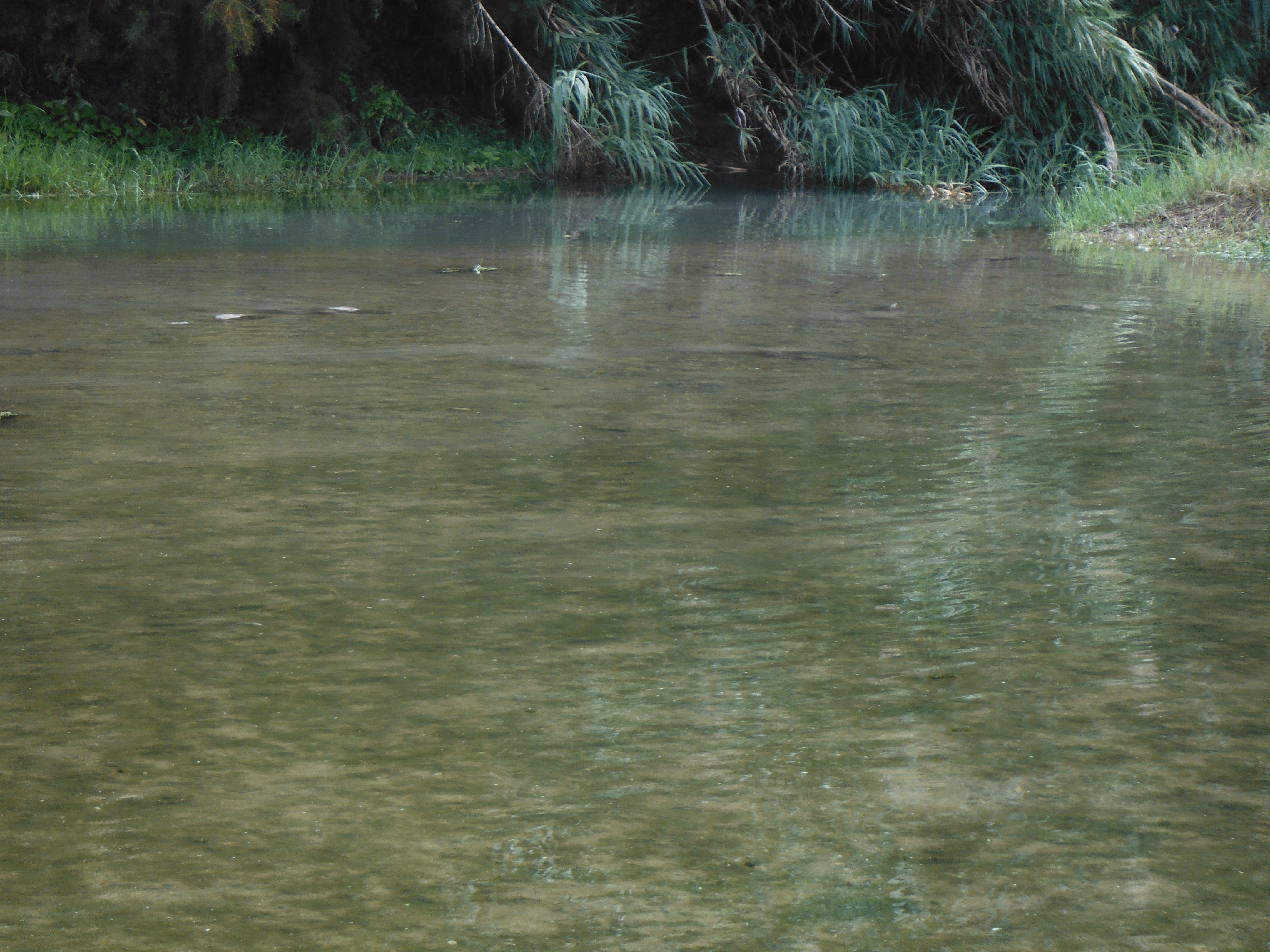
Signs of feeding fish -The backs of carp can be seen here breaking the surface of the shallows and clouds of disturbe

Signs of feeding fish -The backs of carp can be seen here breaking the surface of the shallows and clouds of disturbed sediment suggest others are busy too!


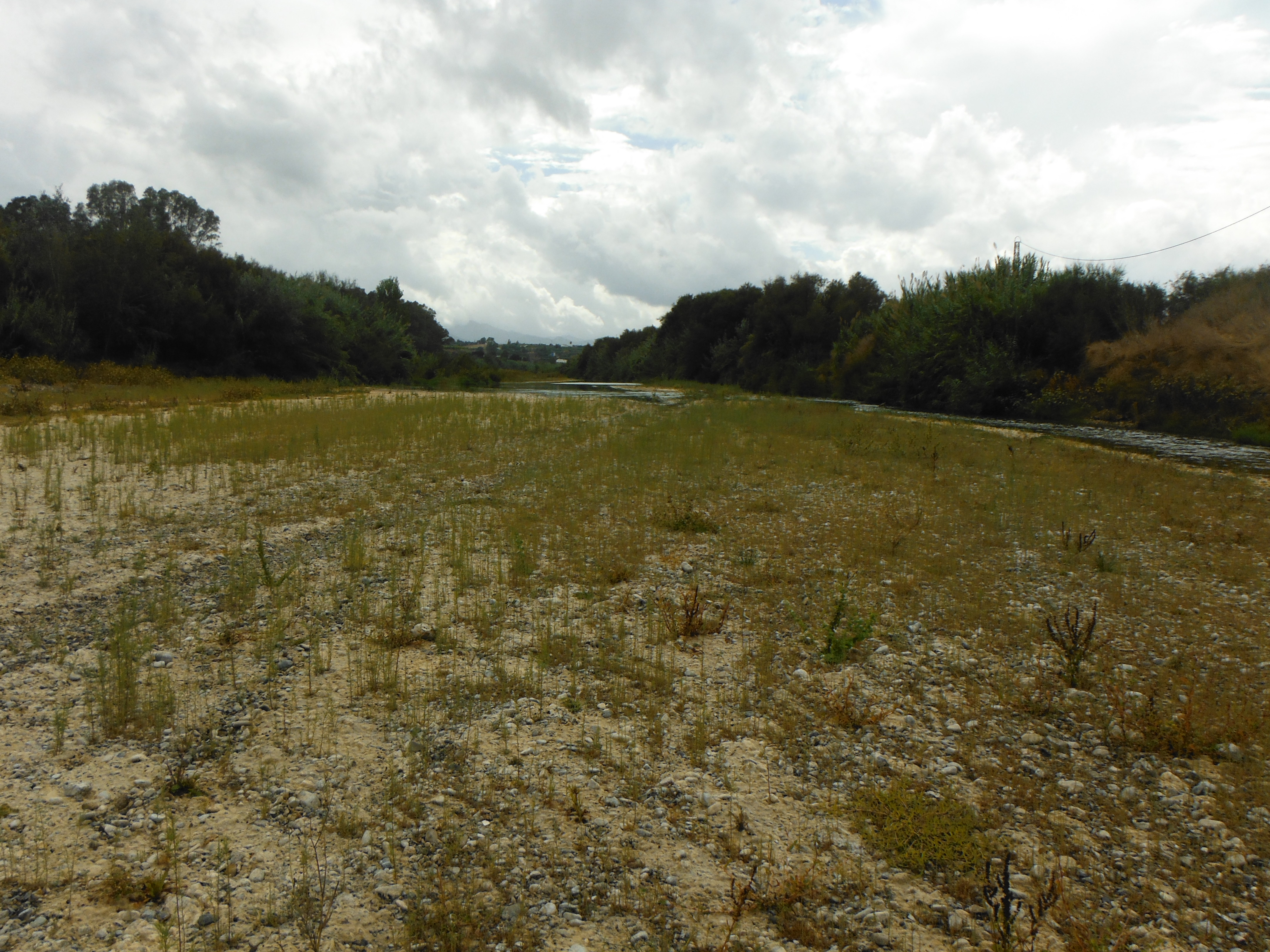
I explored a lovely stretch of the Guadalhorce river just upstream of my regular haunt and, as is often true, I had the river to myself. The fish were active  and the carp broke the surface with their backs as they navigated the shallows and created drifting clouds of sediment as they fed.

The foreground will all be underwater when the rains return this winter.

The foreground will all be underwater when the rains return this winter.


Guadalhorce 29 September 011Guadalhorce 29 September 008

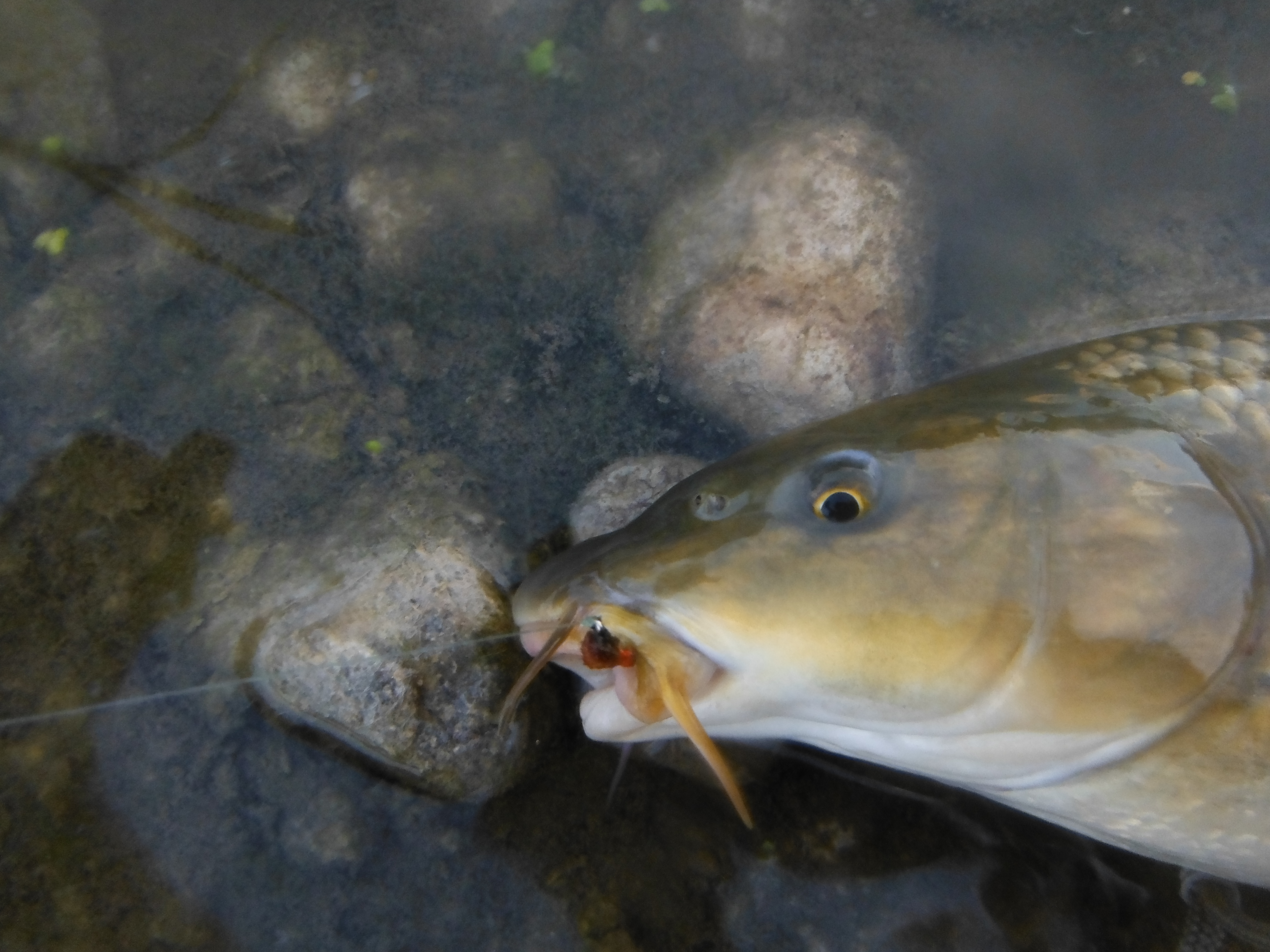
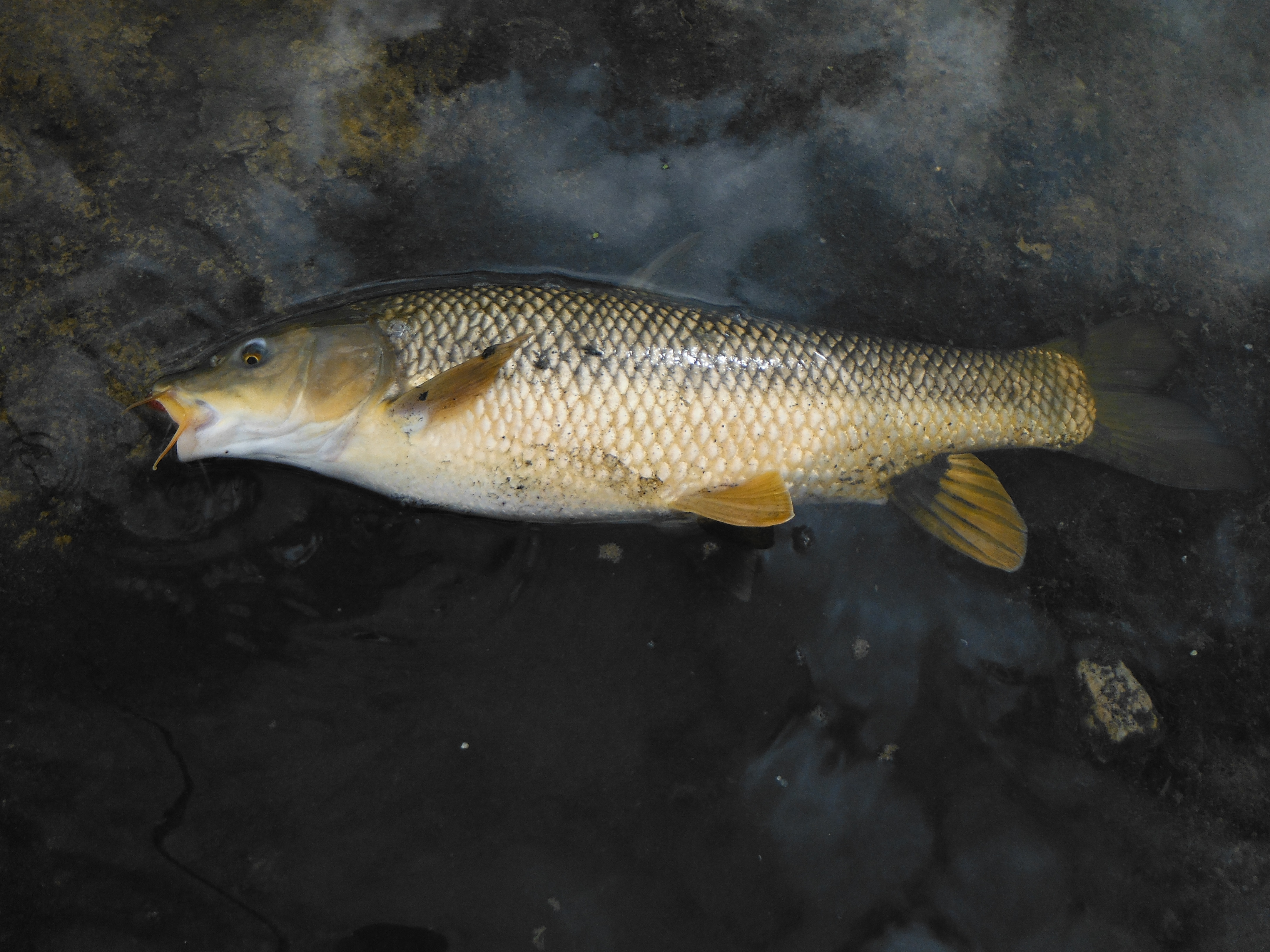
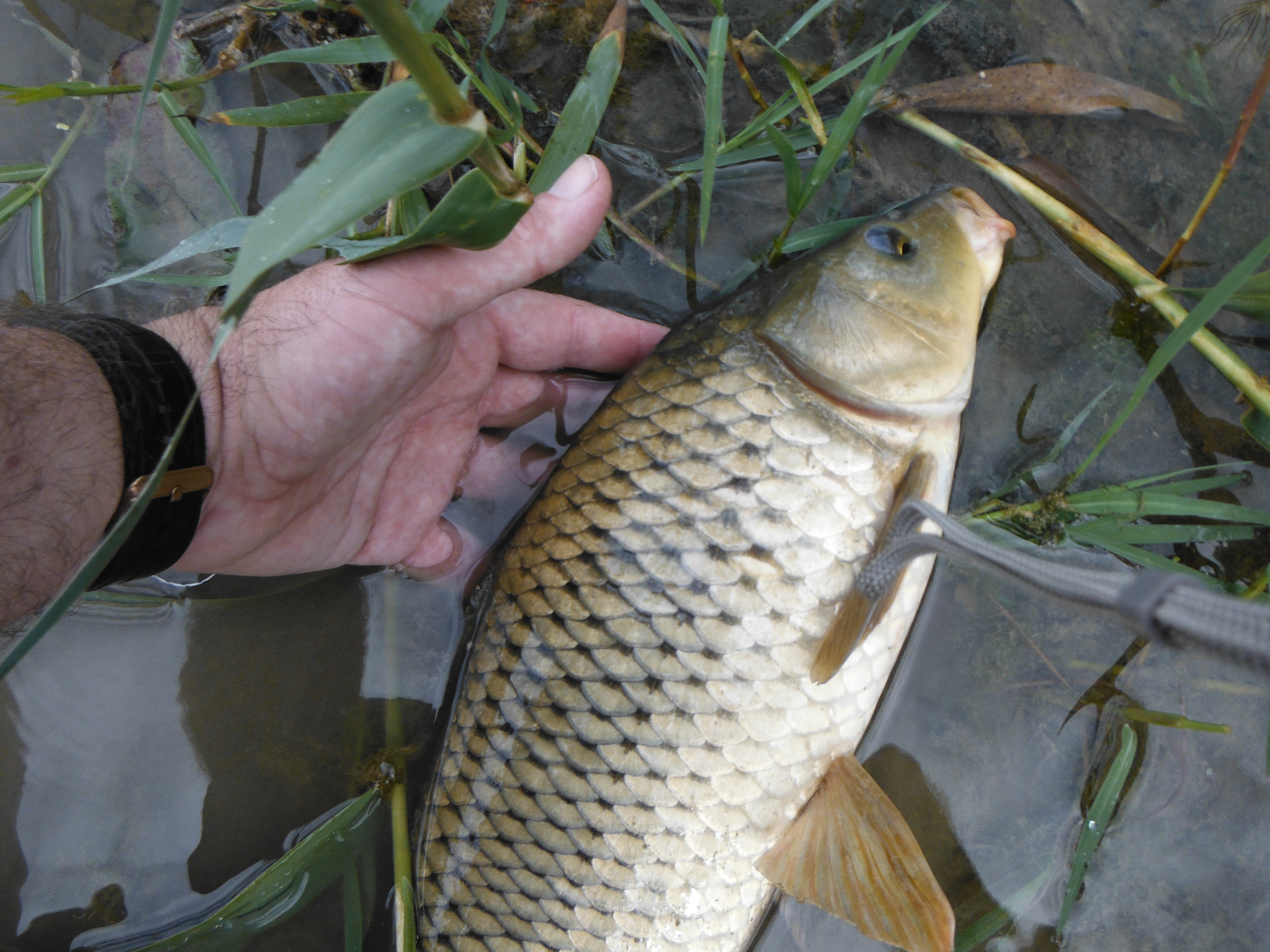
A handsome carp about to go back

A handsome carp about to go back

Guadalhorce 29 September 009

Of Crocodiles and Turtles

A bad fishing day, in most of our eyes, would normally consist of hanging your best flies in tree branches, catching nothing, getting lost, falling in or all of these things happening.  But it seems that a bad day could, at least in theory, turn out to be far, far worse.

Here in Andalucia, we get the odd report of escaped crocodiles and the thought of being eaten alive is enough to satisfymost people´s definition of what constitutes a bad day.

Last year a nile crocodile was seen sunning itself on the side of a little lake near Mijas. It was a place I had investigated a few years as a prospective fishing site, but its depth and difficult access made it an unsuitable venue for fly fishing. The crocodile, in the end, was found dead and an autopsy revealed the cause of death was an obstruction in its alimentary canal due to something it had eaten. This crocodile was over two metres long.

A few years back at least one crocodile was caught by the civil guards on a stretch of the Guadlahorce near to Cártama. It was quite close to the Crocodile Park which has since moved to Torremolinos. Naturally, everyone thought the crocodiles had escaped from the Park but the Crocodile Park people I spoke to tell me that it is likely to have been released into the wild by unscrupulous bastards who keep these things as pets. It´s one thing getting bored with your gold fish and flushing it down the loo but cute little pet crocodiles that somebody sets free have the potential to become big horrible mean crocodiles that might take a fancy to a guy like me.

This is almost certainly the way the Mijas croc turned up. Apparently, there are plenty of crocodiles kept by individuals here on the coast and the climate is ideal for these things. A few years ago new legislation tightened up  on the keeping of crocodiles by individuals and, no doubt, a few animals may have been released on the quiet. The suspicions of the Crocodile Park bloke I spoke to was that the Mijas crocodile was released by a nearby Russian who was big into the drugs trade and exotic pets.

Now don´t get me wrong. I think that crocodiles are great. Nobody loves them more than I do. I just took a bunch of kids to the crocodile park last Thursday and was greatly impressed by those great lumbering creatures. There is one old nile crocodile there called Paco who is 90 years old and is the father of most of the crocodiles in the park. He is absolutely huge. He impresses his four 25 year old girlfriends by lying at the bottom of a pool and bubbling air out of his eye sockets. My wife does not know this, but I have similar plans for my old age. When I am 90 I want to have at least four 25 year old girlfriends. I can´t do the eye socket thing yet but I´m working on it.

The appearance of crocodiles where they are not expected is a little worrisome. There is, at least in theory, a small chance that I may end my fishing career inside the belly of a great reptile. I don´t particularly want to end it all this way although I guess it beats cardiovascular disease or cancer hands down. No dribbling in an old folks home for me! No incontinence pads, no endless repetitions of fishing stories, no forgetting everything – just a glorious death roll, a muddy thrashing in the shallow water and finally, from the bowels of the Guadalhorce as the ripples subside, a happy, postprandial burp.


A nile crocodile swimming in the crocodile park, Torremolinos.

A nile crocodile swimming in the crocodile park, Torremolinos.


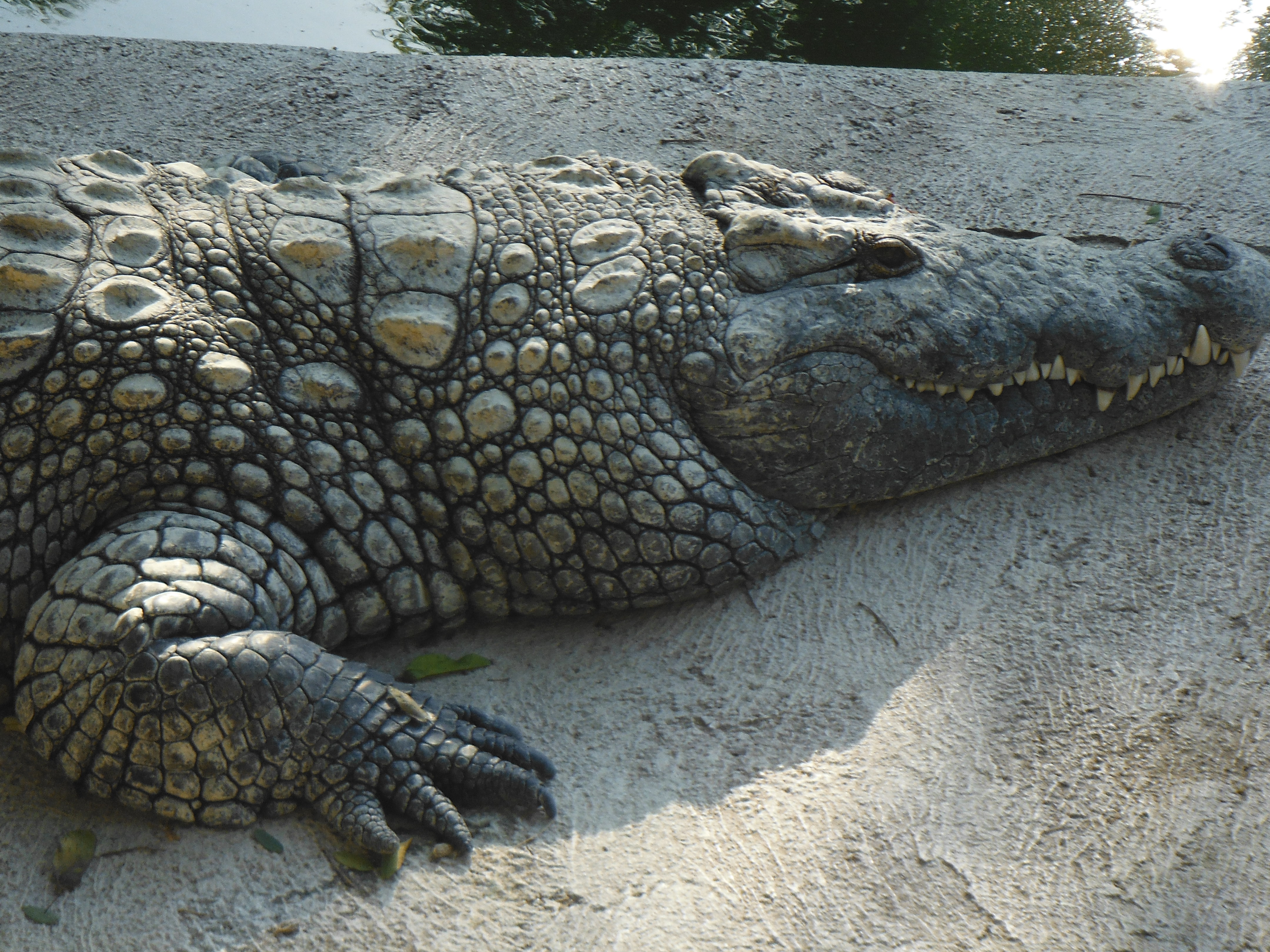
A crocodile not swimming at Torremolinos Crocodile Park!

A crocodile not swimming at Torremolinos Crocodile Park!


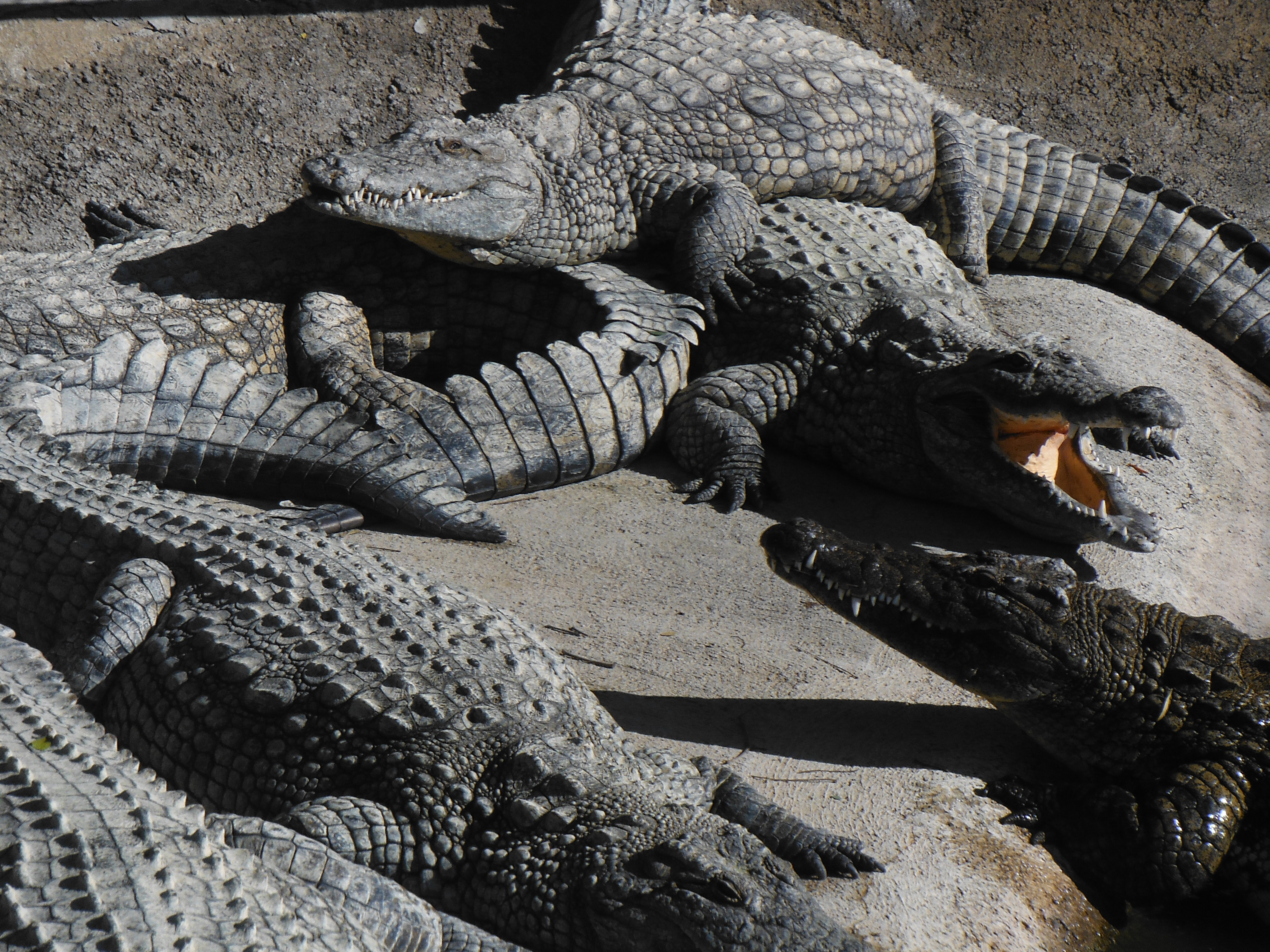
Heaps of crocodiles

Heaps of crocodiles


Last night on the river I didn´t see any crocodiles, thankfully, but I saw plenty of turtles. These are often heard rather than seen as they tip themselves into the river from rocks and branches if you happen to come too close and interfere with their sun bathing. But last night they gave themselves away when their dome shells broke the surface of the shallow water. I came across four or five breaking the surface in this way and another one 20 metres or so from the river. It was lying on the ground with all its protuberances withdrawn into the shell.  I imagine that it had left the river recently because it was still quite wet. For the hell of it I carried it back to the river to let it go in the hope it would start walking off and give me a chance to photograph it in action. But it had no interest in posing for photos and remained tucked in until I lost interest and wandered upstream where another turtle was more cooperative.

These turtles are native to the river and there are two very closely related sub-species. They are threatened by the invasive red necked turtle from Florida which everyone keeps as pets and which escape or end up being released into the wild, often by well-meaning people. In some areas, like Doňana national park, the red necked turtles are actively eradicated or removed.

I hope that the Florida turtle keep away from my local stretch of the river. And the crocodiles too!


The popular Florida red neck turtle. This invasive species is displacing native turtles.

The popular Florida red neck turtle. This invasive species is displacing native turtles.


A wild turtle seen swimming in the river last night.

A wild turtle seen swimming in the river last night.