Latest Entries »

Fishing Camp

Let me tell you about our fishing camp. My brother Sean and an old friend Mark convene each summer to fish some of the great limestone loughs of the west of Ireland. If you live a life of squalor and misery, you might picture our camp easily. It’s pretty upmarket if you normally sleep in a cardboard box under an embankment. But, if you are accustomed to snuggling under quilted eiderdown in a sumptuously appointed log cabin, you might want to look away now, or, if courageous enough to proceed, to have a stiff drink in your hand.

We set up camp on the shores of Lough Mask. This is remote and desolate country. The trees are sparse and the winds can be fierce and unrelenting. Weathered limestone bedrock breaks the surface and yields reluctantly to the shallow soil. It is hard to push a tent peg fully into the ground here. More than anything else, though, this country is wet.

In Ireland the boundary between the water and the land is as disputed as the one between the water and the sky. It is in this hazy and indistinct world, blanketed by drizzle, we appear each July and set up our two dome tents. For as long as we can negotiate absences from families and work, this will be our home.

One evening last year we returned to our tents to find them ringing wet. This surprised us because the day had been unusually breezy and dry. It turned out that cows had been pissing on them. While we were away pulling teams of wet flies before the noses of indifferent trout, cattle had come across our lodgings and decided that these would provide a convenient latrine for the entire herd.

It is easy to forget that chancing upon these unusual structures in their barren world may well have been the most exciting event that had ever occurred in the lives of these ponderous herbivores. I can only imagine what they might have said to each other.

“What the hell are these things?”

“Christ knows. I’ve never seen anything like them!”

“Are they alive?”

“They don’t seem to move or to make noise”

“What shall we do?”

“Let’s piss all over them!”

Of course we have learnt to be philosophical about such things. There are a number of methods for becoming wet and, over the years, we have mastered most of the techniques. In Ireland this is part of our cultural heritage and a primary reason we shun umbrellas despite the certainty of rain. But having our encampment saturated in such a novel way greatly increased our respect for these lowly animals.

I am very tempted to pour myself a drink now and tell you all about what we do and say at camp. But such reminiscences create a tremendous yearning to sit once again around our camp fire with a glass of wine in the company of those seasoned bullshitters. I will therefore desist. For the three of us, this is a treat which is strictly reserved for the summer.

Published under the title “Cowboys” Fly Fishing and Fly Tying Monthly, June 2011.

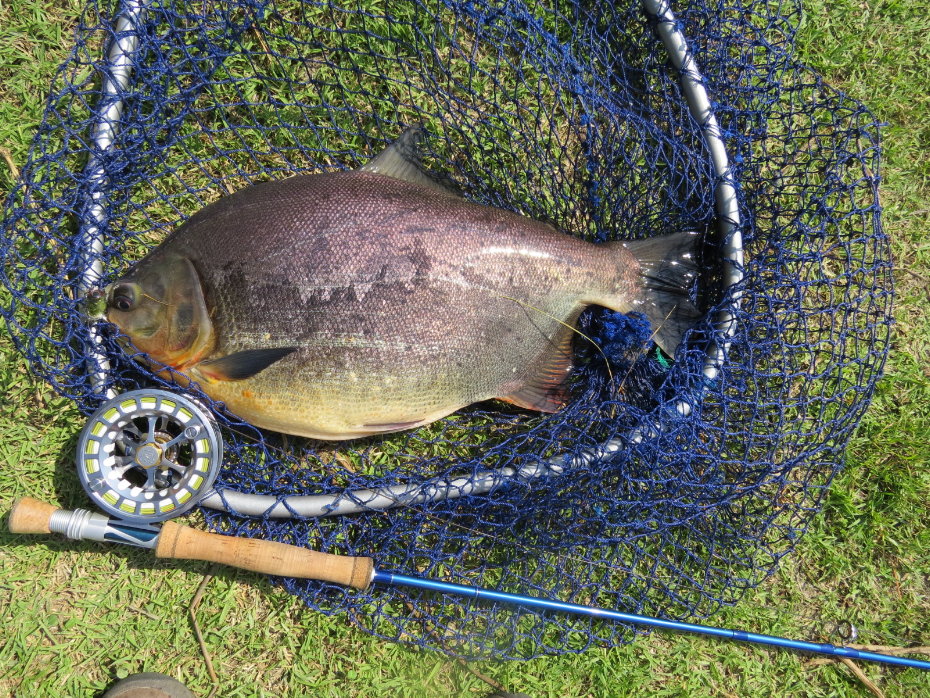
Yesterday, while I was fooling around on the river, my friend Harry was off enjoying the kind fishing adventures guys like me can only dream about. Like me, he landed a couple of fish, but his were absolute stunners. One was an Arapaima, one of the largest-growing freshwater fish in the world and the other was a Pacu, a deep-bodied fish, not unlike a piranha to which it is closely related. I have seen both of these before swimming around in various aquaria and know a little about them. Both come from South America and so, when I saw Harry´s photos yesterday evening, I assumed he was having some crazy adventure on the Amazon.

As it happened he was in Thailand fishing a water stocked with various kinds of large tropical fish. The other anglers fish more conventionally using bait but Harry is, in his heart, a fly fisherman and he took both of his fish in the fly.

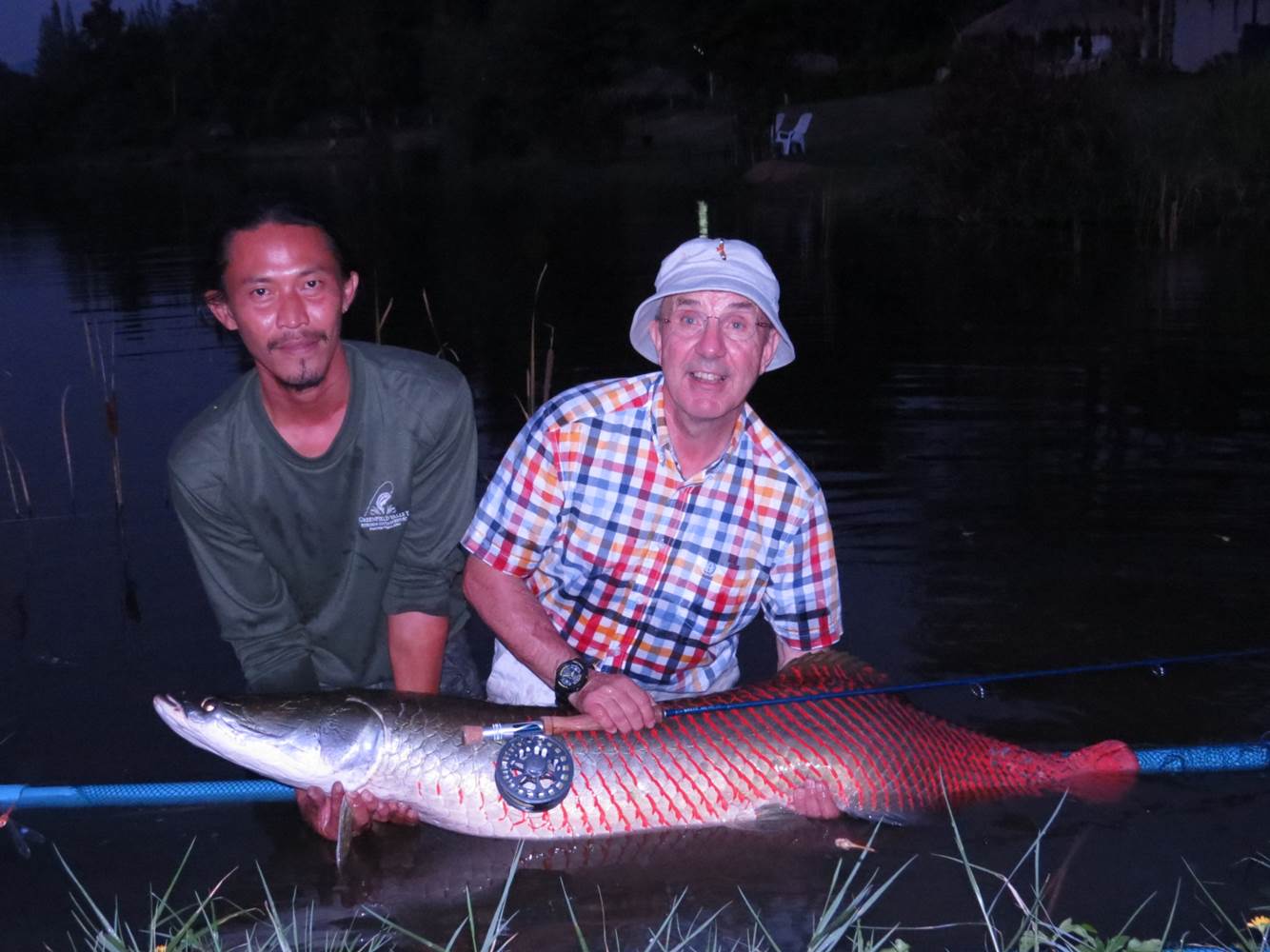
Arapaima are fascinating things. They need to surface periodically to breathe air and can survive in places which are so depleted in oxygen that many other species fail to survive. They also have such tough scales that they are able to resist the attention of piranhas. What I was little prepared for, when I saw Harry´s photo was just how beautiful they are. They have a flattened head which appears almost reptilian, and large scales protecting an elongated body.

Harry said that the Arapaima hit the fly pretty much as soon as it hit the water and that it was dark before the great fish was finally released.

The Pacu are as strong as hell. The specimen pictured was estimated to weigh 9 or 10 kilos. Apparently they have extremely sharp teeth and will bite through anything that is not made out of steel. Harry hooked his fish with a nymph and it was not taken in enough to result in his line being bitten through. Apparently hooking these things is like getting you fly caught in the 10.23 from Paddington, and they will do their level best to snag you in some underwater obstacle if they have not already bitten through your line. I had always thought of them like big docile herbivores, like swimming sheep, but I obviously underestimated them.

Harry is on his way to New Zealand and was kind enough to allow me to report on his adventures. So hopefully we will have more stories to report soon.

Pacu

Pacu

Harry with his beautiful Arapaima, estimated at 25 kilos.

Harry with his beautiful Arapaima, estimated at 25 kilos.

The weather continues to be fine here and the dark skies of earlier in the week threatened rain but did not deliver. Today the sun shone and it seemed worth giving the river a whirl in the afternoon. I had hoped Norman, who introduced me to this stretch of the river, might be free to join me today but unfortunately he had other commitments. He did tell me, however, that yesterday he had a close encounter with a golden eagle which landed very close to his house. What an awesome thing to see!

The barbel seem to be active in the river. They are less easy to spot than earlier in the year but they still occupy the fast seams and broken water and will take a nymph if you are lucky. The carp put in an appearance too. They repeatedly refused the nymphs I offered but this is their party trick. I tried to coax them into taking the fly by telling them that I would immortalise them by posting their photos on my blog and that all I wanted in return was that they surrender their liberty temporarily. But the carp, being carp, would have none of it.

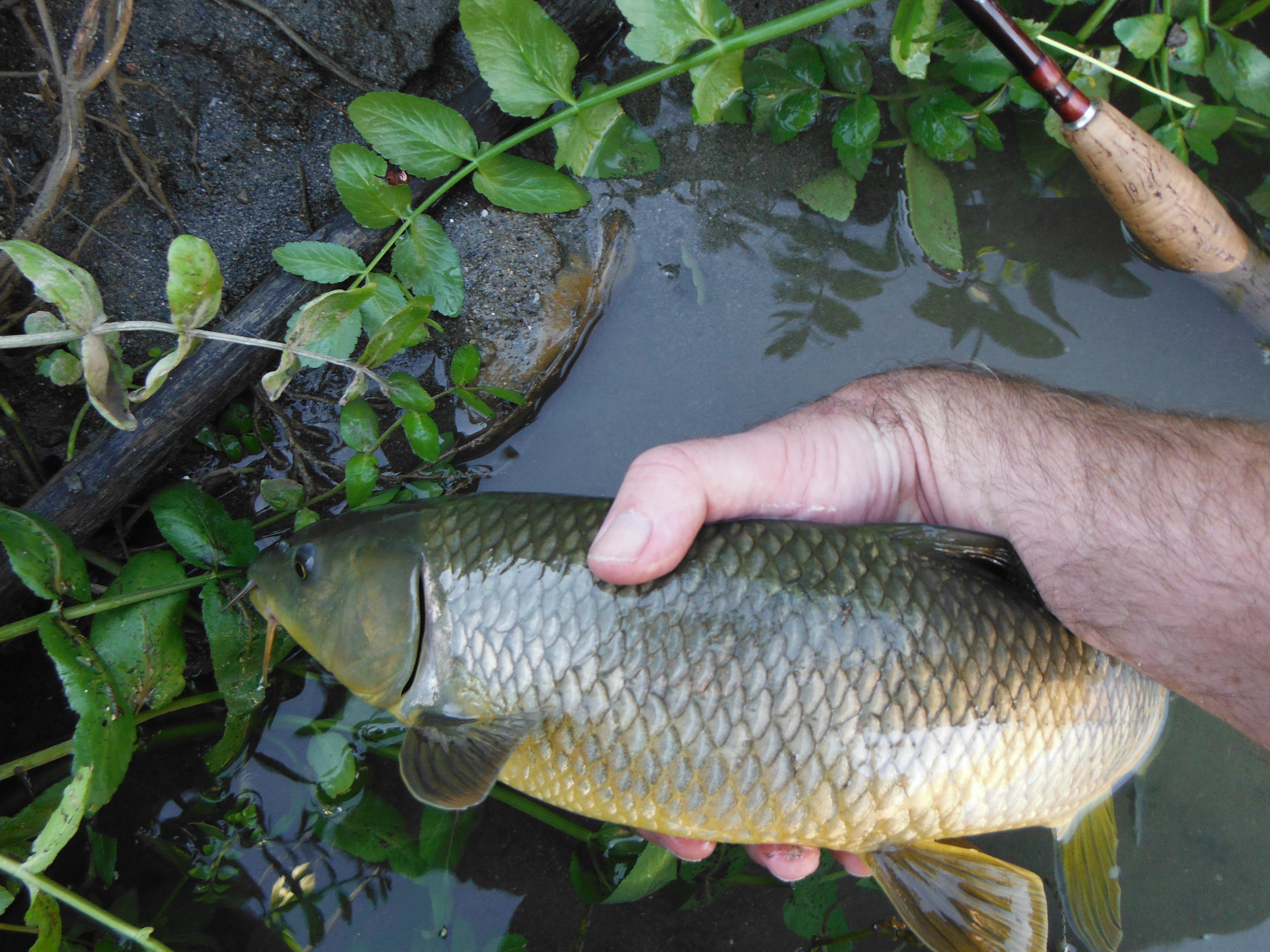
I did actually manage to hook a carp in the end, quite a good one too, but it spat out the nymph after a minute or so which surprised me as I thought it was well hooked. Such is life!

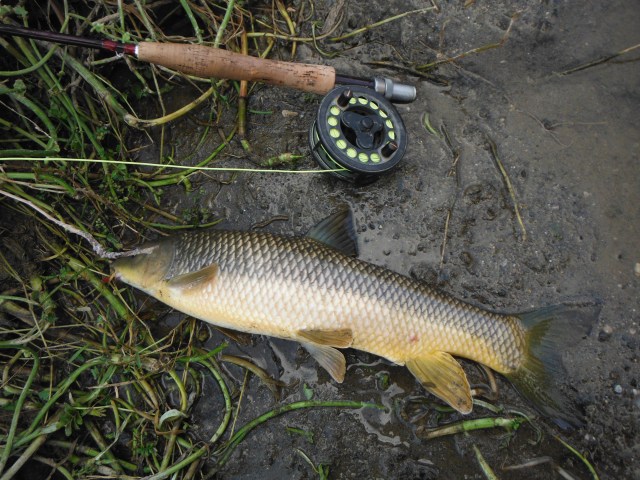
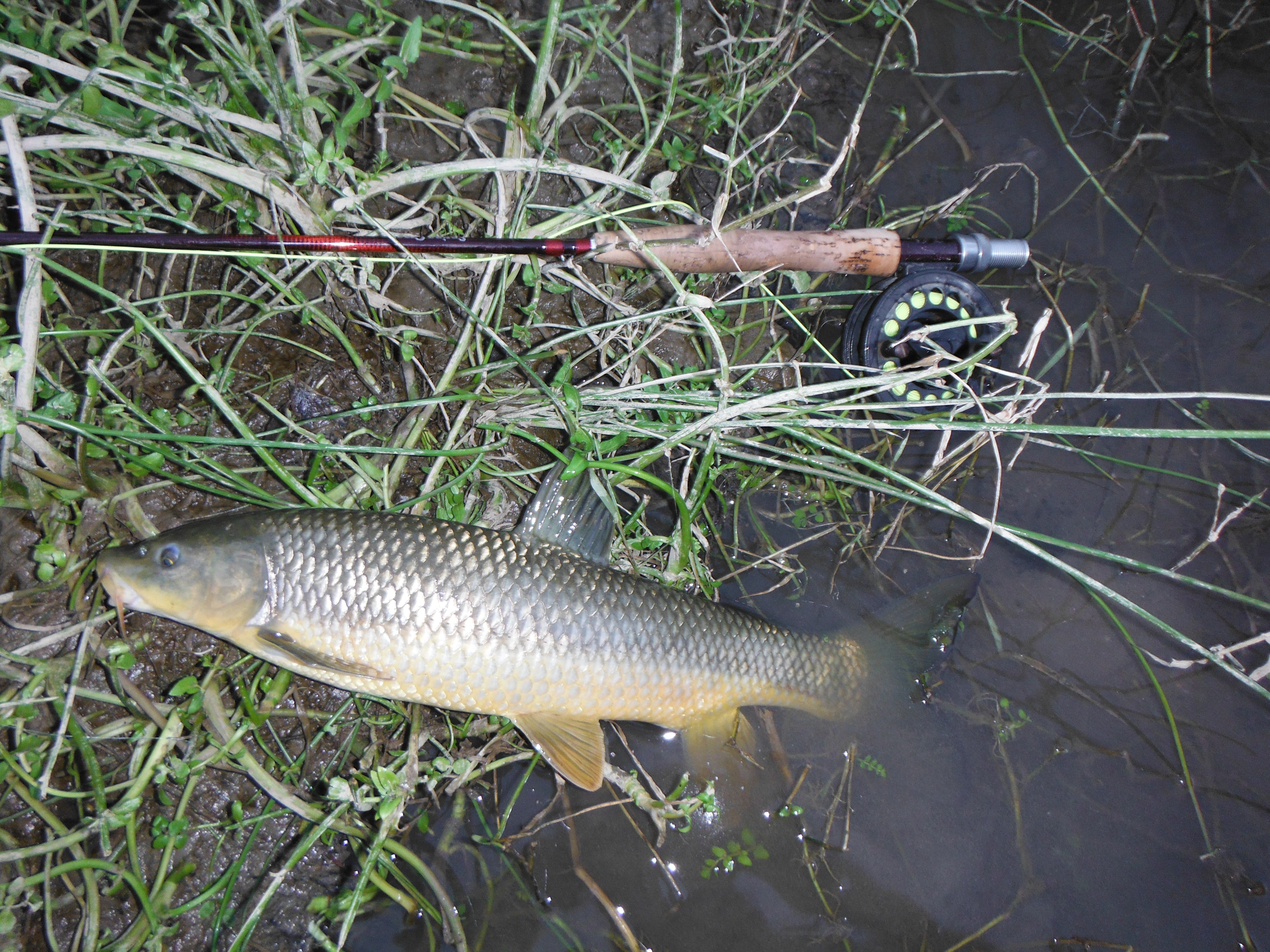
In the end I had to settle for a couple of gypsy barbel but they were fine strong fish. How lucky I am to be able to fish at this time of year when most fly fishermen have hung up their waders and are tying flies or just hanging around at home getting on their wives´ nerves.

When I got home I found a message from my friend Harry Abbot who is off fishing in the tropics. He has made a couple of fine catches already and I will report on his adventures shortly.

Numero uno

Numero uno


The nymph

The nymph


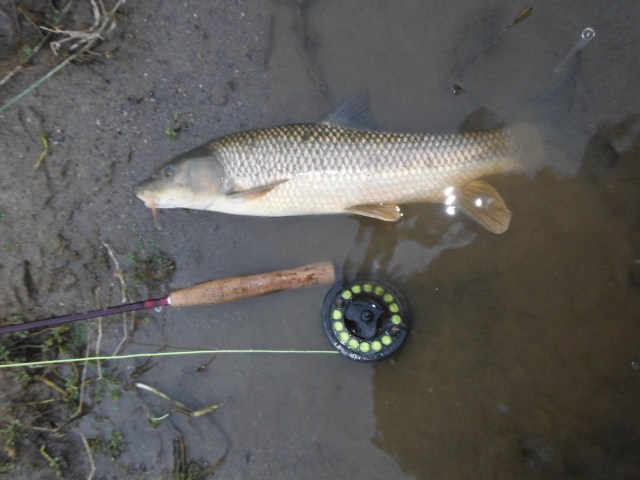
Numero dos

Numero dos


Naked Trout Fishing

Nudism isn’t everybody’s cup of tea. Why a bunch of people want to wander around buck naked is a bit of a mystery to most of us. Playing volleyball on the lawn on a sunny day may well be more pleasurable without the encumbrance of clothing but I suspect that may not be true of walking through nettles, climbing over electric fences or wading in icy rivers which, let’s face it, is the kind of thing we tend to get up to. You don’t need me to tell you that, as anglers, trying to get over a barbed wire fence could be difficult. And nobody wants to arrive at the riverside with their tackle scratched.

So it is tempting to think that naturists are all simply nutters who have collectively taken leave of their minds as well as their kit, and I have never heard of any convincing argument in favour of conducting our lives “au naturelle”, except for one. And here it is; when we remove our clothes we also remove the labels that define us and we can become, in a sense, equals. One person looks pretty much like another and, as you may have noticed, most nudists look like animated prunes.

I mention all this because fly fishermen really ought to be thinking of ways they can reduce to a minimum the number of things they need to cart around. Coarse fishermen win first prize in the amount of kit that is deemed necessary for a day by the water. Fly fishermen, by comparison, travel light. And, to me at least, it seems that the more accomplished they become the more they feel they can dispense with. First to go is the fully laden fishing vest which, in time, is replaced by a single box of flies and a couple of spools of tippet material. The net is gone too. Every item of equipment needs to argue a strong case in its favour to be included in a shirt pocket or two. If we can do without it why carry it around?

The only down side is that with less stuff it becomes harder to impress your friends with flash gizmos. Have you seen my new waterproof, digital camera? It has an inbuilt photoshop facility which allows you to effortlessly engineer images so that you can simply paste, onto a picture of your outstretched arms, the picture of a ten pound brown trout. You don’t even need to catch the damn thing! And I’ve had a robotic arm welded to my titanium fishing suit! This thing casts all day for me so my hands can be kept warm in my fur-lined hand warmers. They had to club a couple of seal pups to be able to make these but, boy, was it worth it! And of course it’s cleverly designed to allow me to slip my hand out to access to the inbuilt mini bar.

The funny thing is, I suspect, I may not actually need this stuff. Maybe the old nudists have a point after all. Maybe we should dispense with these things and make our lives less complicated. From now on, as far as I’m concerned, less is more, and nothing at all is the very best. I’m going to start going fishing naked. I won’t even carry a rod. My trout will all be caught by tickling as I lie on the stretches riverbank where the nettles are few and far between.

Naked Tout Fishing – published by Fly Fishing and Fly Tying Monthly (July 2010)

A Day in December

I believe today is the first day I have fished on the river in December. It was a beautiful day and, as usual, I had the river to myself. There were quite a few mullet active in the shallows but they were  skittish and the disturbance of a nymph landing on the water was enough to see them off.

I was hoping that a weighted nymph might be interest a fish or two even if there were no fish showing and I was fortunate to take a nice barbel. I would have done well had fish I managed to hook not thrown the hook. This happened with another couple of barbel and a pretty decent carp. Never mind. Such is life!

I used an indicator about three feet from the nymph. Unfortunately I couldn´t lay my hands on the yarn indicator I have used in the past and made do with a little piece from a wine cork with the leader threaded through it using a needle. It seemed to work fine.

I don´t know if I will ever figure out the fish in this river. Just as I was about to leave and it was getting dark the odd barbel began to rise to dry flies. Needless to say, they ignored the little dry sedge I floated over them!


The only fish I managed to land

The only fish I managed to land

Having thrown together a few little “Plastic Bag” nymphs this morning I took them to the river to give them a little swim. I had only an hour or so on the water since Ireland were about to play the All Blacks and we had invited neighbours around to watch the game on the telly.

The river was looking good but the water temperature seems to have dropped. The river was also carrying a little colour. It is difficult to be precise about the temperature change since my thermometer consists of my legs and feet! I have a pair of neoprene boots which I use to wade and they seem to be falling apart. The puppies have been chewing the damn things.

There were a couple of fishermen on the stretch I had hoped to find some carp and so I gave them a wide berth and headed downstream a little way. There were no carp to be seen but a few barbel were around although difficult to see.

The little nymph  took one barbel but I hooked another which came off after some time. Interestingly, the fish took the nymph which was dragging downstream as I waded slowly upstream looking for fish.

In the head of the pool there were some fish but they were difficult to see. I decided to fish a nymph blind and swapped my little PB nymph for something with a little more weight. I just cast the nymph into the deeper area with strong current and just tried to keep in touch with it as it drifted downstream.

It was a real eye opener! I managed to hook two or three good fish but all of them came off. One was a decent fish too. I was not in the least deterred by not landing the fish. It was interesting to see how productive the “blind” nymphing can be and it suggests that I might be able to catch a few fish when the winter comes on and there are few fish to be seen.

And the rugby? Ireland lost to the All Blacks but they came as close to winning as it is possible to come. It was a terrific performance.  Final score: Ireland 22, New Zealand 24. The All Blacks are undefeated this year and Ireland, a team that has never beaten them, came within a whisker of spoiling the party!

Christ, you can´t beat sport!

The river was carrying a little colour

The river was carrying a little colour


A new stretch of river for me

A new stretch of river for me


In the heat of battle!

In the heat of battle!


The one fish I managed to land.

The one fish I managed to land.


Such lovely fish, these.

Such lovely fish, these.


Look what the puppies did to my wading boots

Look what the puppies did to my wading boots


Just because they´re cute they get away with anything!

Just because they´re cute they get away with anything!


This fly was heavier and was taken by several fish which were unseen. Interesting!

This fly was heavier than the PB nymph and was taken by several fish which were unseen. Interesting!

A few years ago we had a teacher of Physics at our school who was something of a legend. His name was David Sutcliffe. He was, not only the school Principal, but one of the best teachers I have ever come across. He was hugely respected by the kids.

One time I was having a coffee and looking over the latest copy of Fly Fishing and Fly Tying Monthly. He noticed the headline of an article I was reading which was something like “successful nymph patterns for carp”. I went on to point out to him that nymph fishing for carp is the kind of thing I tend to get up to myself.

Fishing was not really David´s thing but he  thought it over for a second and said “I guess there are a lot of things you could catch from a nymph. It just never occurred to me that a carp might be one of them!”

Tragically, David, passed away in 2007. He was only in his 50´s when cancer got the better of him. If he were still around I imagine that, tomorrow, we might have discussed the international rugby that is happening this weekend. I might even have brought in a few of the nymph patterns I hope to tie up this morning to show him. I wonder what he might have made of them?

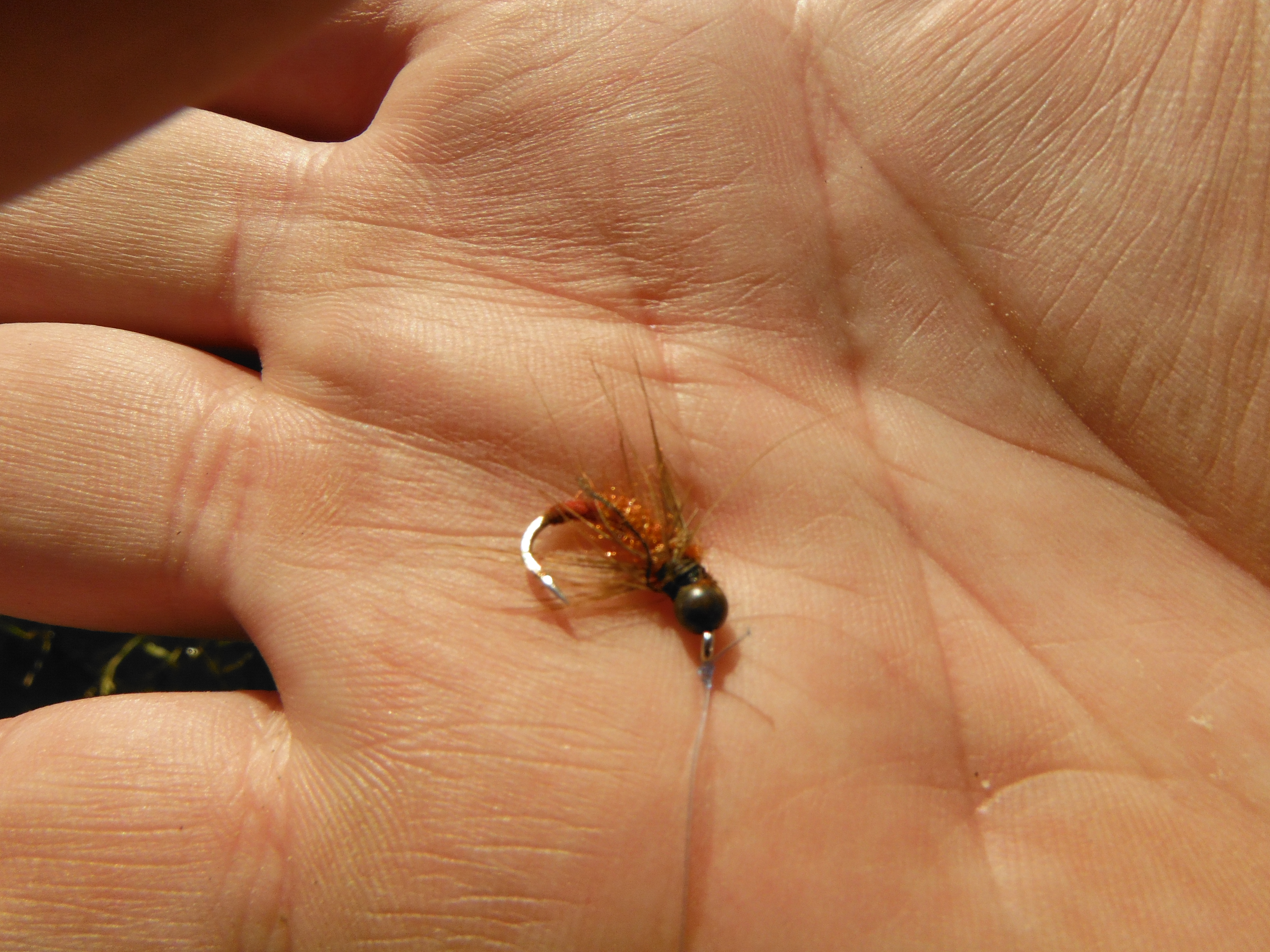
I have developed a nymph pattern myself which has received the nod of approval from the carp in my local river. It is simple to tie and the materials needed are easy to get hold of and the fly itself can be rustled up in a couple of minutes. These are the kinds of flies I like – quick, cheap and easy!

The body is tied from a narrow strip of thin plastic taken from a plastic bag. The nice thing is that, within reason, you can choose whatever colour you want. You might just need to visit a different supermarket! Personally, I plump with red / pink since it seems to work just fine. I like to tie them reasonably thin and, if I want the thing to sink faster, I just opt for a heavier hook.

I don´t know if this fly represents a nymph or a buzzer pattern and will leave the pedants to fight this out if they have nothing better to do. For me, it is simply the plastic bag nymph and, when using it, I am confident it will work as well as anything else. It is better, in fact, than most.

Here is how to put the fly together if you fancy giving it a whirl…….

All you need - some dubbing, a strip of plastic and some copper wire

All you need – some dubbing, a strip of plastic and some copper wire

Take some thread to the bend of the hook

Take some thread to the bend of the hook and wrap it over some copper wire

Tie in a narrow strip cut from a plastic bag

Tie in a narrow strip cut from a plastic bag

Take the thread back towards the eye

Take the thread back towards the eye

Wrap the plastic strip forward and tie down

Wrap the plastic strip forward and tie down

Do the same with the copper wire

Do the same with the copper wire

Dub the head and tie off

Dub the head and tie off

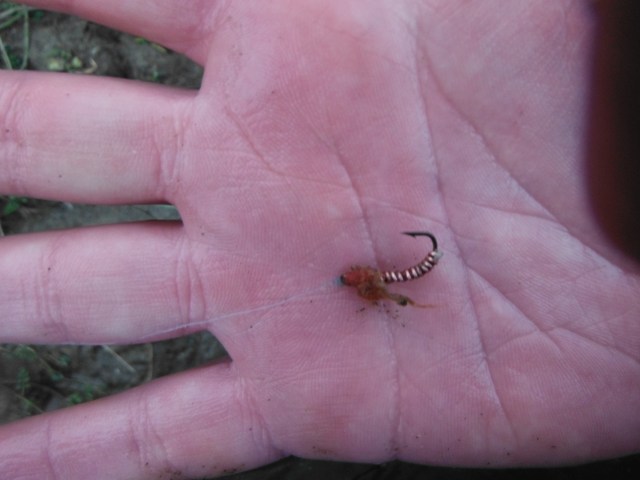
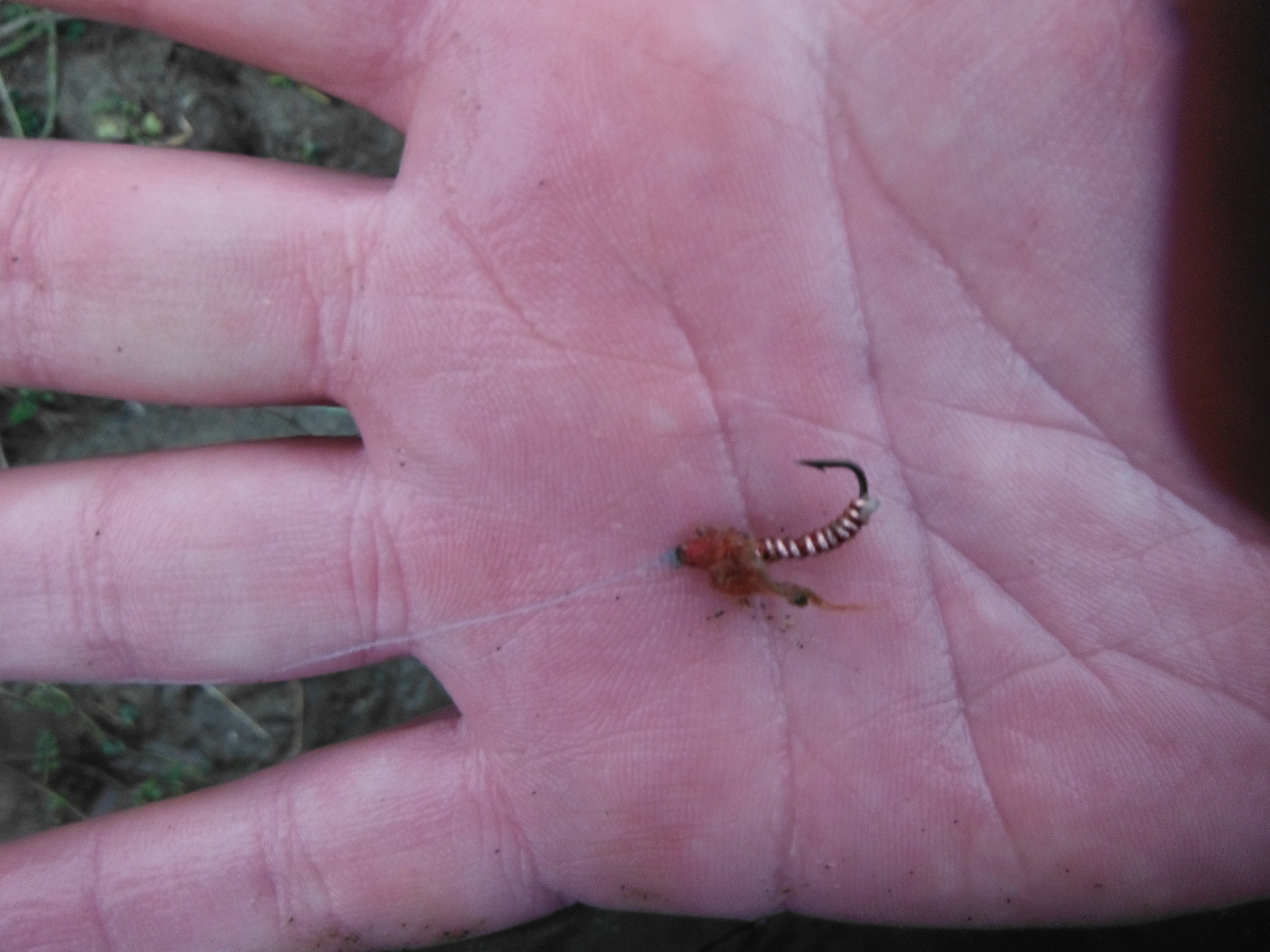
The finished fly. PersonaIly, I like to de-barb them. Then it´s off to the river to find a carp thick enough to eat one!

The finished fly. PersonaIly, I like to de-barb them. Then it´s off to the river to find a carp thick enough to eat one!

A Treatise on Turds

This supposed to a blog primarily about fly fishing fly but, as you may have noticed, I tend to get side tracked from time to time. And now, in a discussion of animal turds, it looks like this might be happening again. But funnily enough, the two subjects are connected and the link between them is not as tenuous as you might imagine.

Scientists who are interested in studying mammals spend a lot of their time looking at their droppings. It stands to reason. Many mammals are small, secretive and nocturnal, and it is difficult to observe their behaviour directly. But their droppings, if we can find them, speak volumes about what they have been getting up to.

I once took a small group of students to the National Park at Doňana which is one of the last refuges of the critically endangered Iberian Lynx, one of the rarest cats in the world. During a night walk our guides stumbled across an animal dropping which they thought might have come from a lynx. You should have seen how excited they were! It was as though they had stumbled across a winning lottery ticket. The Doňana guides carefully bagged the dropping for further analysis. The lynx turd could yield fragments of bone and fur which might give some insight as to the behaviour of a cat, which is very rarely seen.

The droppings of grazers may not tell us so much but they do testify to the efficiency of digestive systems which are quite specialised. They need to be because grass is quite low in energy and is very difficult to digest. The important task of breaking down the cell walls of the plant cells is done by microorganisms, like bacteria, because no mammals make the enzyme cellulase that carries out this nifty trick. As a result of this, grazers often have specialised compartments in their alimentary canals to house these microorganisms. Most famous is the cow´s “four stomachs” only one of which corresponds to the “true” stomach. The biggest compartment, the rumen, is a huge fermenting tank from which material is periodically regurgitated to be chewed again. This is what cows are getting up to when they are chewing the cud. This way of getting the most out of diet of grass is shared by other familiar ruminants like sheep and goats and deer.

Rabbits are about the smallest mammals that can survive on an exclusive diet of grass. They are obviously too small to house a bunch of stomachs and so they have solved the problems of digesting by the simple expedient of passing the food through the entire digestive system not once, but twice. After the food has gone through the digestive system the first time it is ingested again, in the form of a soft pellet, and passes through the digestive system for a second time. Rabbits, like cows, depend on microorganisms to break down the plant cell walls, but they house them in a long blind-ending compartment called the caecum.

We have a pony grazing outside the house at the moment. The builder, Juan, asked if it could graze on our bit of land and we were happy to have it. I have no idea how long the pony that we have christened “Tony” is going to be with us but, while it is here, it is happily converting the wild growing plants into nice compact manure. Tony, like horses and donkeys, is a hind gut digester and houses billions of bacteria in the caecum and large intestine.

Tony the pony.

Tony the pony.


Tony the pony´s legacy

Tony the pony´s legacy

Pippa with her rabbit, Molly. Maybe bunnies are not as cute as we thought!

Pippa with her rabbit, Molly. Maybe bunnies are not as cute as we thought!


Right, enough about turds! What has any of this go to do with fly fishing?

Turds, and particularly cow turds, can be good or bad for fishing. A fresh cow pat is larder for a variety of insects and other invertebrates like dung flies. A fresh cow pat, with the consistency of porridge, may not look too appetising to us but for little bugs it´s like getting a Christmas hamper! For the fly fisherman this can be good news too. We can tie up an imitation of a dung fly and see if there is a trout nearby who wants to play ball.

A Dung Fly


But cow shit is, on the whole, bad news. If it seeps into streams and makes its way into rivers or lakes it artificially enriches the water and acts, as it does on land, as a fertiliser. This can lead to through the proliferation of algae to a process called eutrophication. It is this process which has had very damaging effects on places like Lough Sheelin although I believe it was the wastes from pigs rather than cows that were to blame.

I was prompted to write about this because of a very interesting letter published in this month´s Fly Fishing and Fly Tying Monthly and sent in by David Pilkington. It would seem that pour on insecticide chemicals which are given to farm and domestic animals can affect the droppings also which can become toxic to invertebrates. Not only are the insects which would normally breakdown wastes affected but, as a natural consequence, so too are the birds which feed on them. And the cow pats, no longer broken down by the usual hordes of invertebrates, remain wet and slimy and more likely, perhaps, to find their way into a water course where it causes a whole bunch of problems.

It is a worrying problem and a reminder, if we need one, of how we can pay a price which is often indirect and far from obvious, for intervening in the natural order of things even though we might have the best intentions.

An indispensable fly?

I read one time about a fly tied from a lady´s stockings. The author who described the pattern suggested that the business of procuring the stockings was far more engaging and stimulating than the tying process itself. The stockings belonged to the local barmaid and the author´s principal preoccupation was with ways he might contrive to get his hands on her undergarments which, he happily reported, he eventually managed to do. I can remember almost nothing of the fly itself. I imagine he can´t either. Maybe it was effective, maybe not. Who cares!

Other materials may not quite so much fun to obtain. There is a famous trout fly called the tupps indispensable which, in its original tying, incorporates the urine-stained wool taken from a ram´s scrotum. There are few sheep around our parts. This is goat country. But even if there were, it might raise a few eyebrows locally if I were caught in the act of sourcing this particular material. I am therefore going to dispense with the tupps, however indispensable it is claimed to be.

My advice to you, if you want to lay your hands on this particular fly, is just to go ahead and buy one. I have included below a photograph of a tupps indispensable which I found online and can be bought from Irish Fishing Flies. It costs 75 cents. You will notice from the photograph that the fly appears to be stuck in a tree. This impressed me. The Irish Fishing Flies people obviously target their marketing efforts to fishermen like me who appreciate that it is in a tree, very likely, that the fly will end its days.

The tupps indispensable

Close this window

I met up with Norman Smith this morning and we headed off to reconnoitre the river. We did not have too much time. Norman said that if he was not back by 1.00 pm his wife would kill him!

The stretch of river we looked at was well known to Norman although he had not been there for a few years. He has fished this part of the river pretty extensively in the past and there is probably no part of the river he has not seen at some time.

It can be surprising how a river can change. In one spot we took a look at the entire river had been moved, or most likely diverted for some construction work on motorway flyover. The boys with earth moving equipment can also pull a few surprises on us.

Between one thing and another we did manage to do a little fishing and, in the end, we managed to take a couple of carp. The fish seemed a to grow little nervous as the morning wore on. A half dozen or so people on horseback decided to cross the river quite close to us which didn´t improve our prospects particularly! It always surprises me how friendly people are. I´m sure that it never occurred to the horsemen, as they waved to us, that they were scaring the hell out of every fish in the river!

The carp in the river have only put in an appearance in 1979. Norman´s first carp was a mirror which, these days, is very rare capture. Until the carp showed up, the river was the exclusive preserve of gypsy barbel. It is likely that the carp, in the form of fry, made their way into the river from the reservoir at El Chorro. Today, it seems, both species coexist quite happily.

We managed to get back to Villafranco for a quick beer and a couple of tapas. Norman headed back to his wife but just after his 1.00 pm. deadline.

I wonder if he is still alive?

Norman spotting carp

Norman spotting carp

One of the carp

One of the carp

This weir provides a barrier to mullet and prevents them swimming further upstream.

This weir provides a barrier to mullet and prevents them swimming further upstream.

Thanks!

Thanks!