Category: Natural history


A Treatise on Turds

This supposed to a blog primarily about fly fishing fly but, as you may have noticed, I tend to get side tracked from time to time. And now, in a discussion of animal turds, it looks like this might be happening again. But funnily enough, the two subjects are connected and the link between them is not as tenuous as you might imagine.

Scientists who are interested in studying mammals spend a lot of their time looking at their droppings. It stands to reason. Many mammals are small, secretive and nocturnal, and it is difficult to observe their behaviour directly. But their droppings, if we can find them, speak volumes about what they have been getting up to.

I once took a small group of students to the National Park at Doňana which is one of the last refuges of the critically endangered Iberian Lynx, one of the rarest cats in the world. During a night walk our guides stumbled across an animal dropping which they thought might have come from a lynx. You should have seen how excited they were! It was as though they had stumbled across a winning lottery ticket. The Doňana guides carefully bagged the dropping for further analysis. The lynx turd could yield fragments of bone and fur which might give some insight as to the behaviour of a cat, which is very rarely seen.

The droppings of grazers may not tell us so much but they do testify to the efficiency of digestive systems which are quite specialised. They need to be because grass is quite low in energy and is very difficult to digest. The important task of breaking down the cell walls of the plant cells is done by microorganisms, like bacteria, because no mammals make the enzyme cellulase that carries out this nifty trick. As a result of this, grazers often have specialised compartments in their alimentary canals to house these microorganisms. Most famous is the cow´s “four stomachs” only one of which corresponds to the “true” stomach. The biggest compartment, the rumen, is a huge fermenting tank from which material is periodically regurgitated to be chewed again. This is what cows are getting up to when they are chewing the cud. This way of getting the most out of diet of grass is shared by other familiar ruminants like sheep and goats and deer.

Rabbits are about the smallest mammals that can survive on an exclusive diet of grass. They are obviously too small to house a bunch of stomachs and so they have solved the problems of digesting by the simple expedient of passing the food through the entire digestive system not once, but twice. After the food has gone through the digestive system the first time it is ingested again, in the form of a soft pellet, and passes through the digestive system for a second time. Rabbits, like cows, depend on microorganisms to break down the plant cell walls, but they house them in a long blind-ending compartment called the caecum.

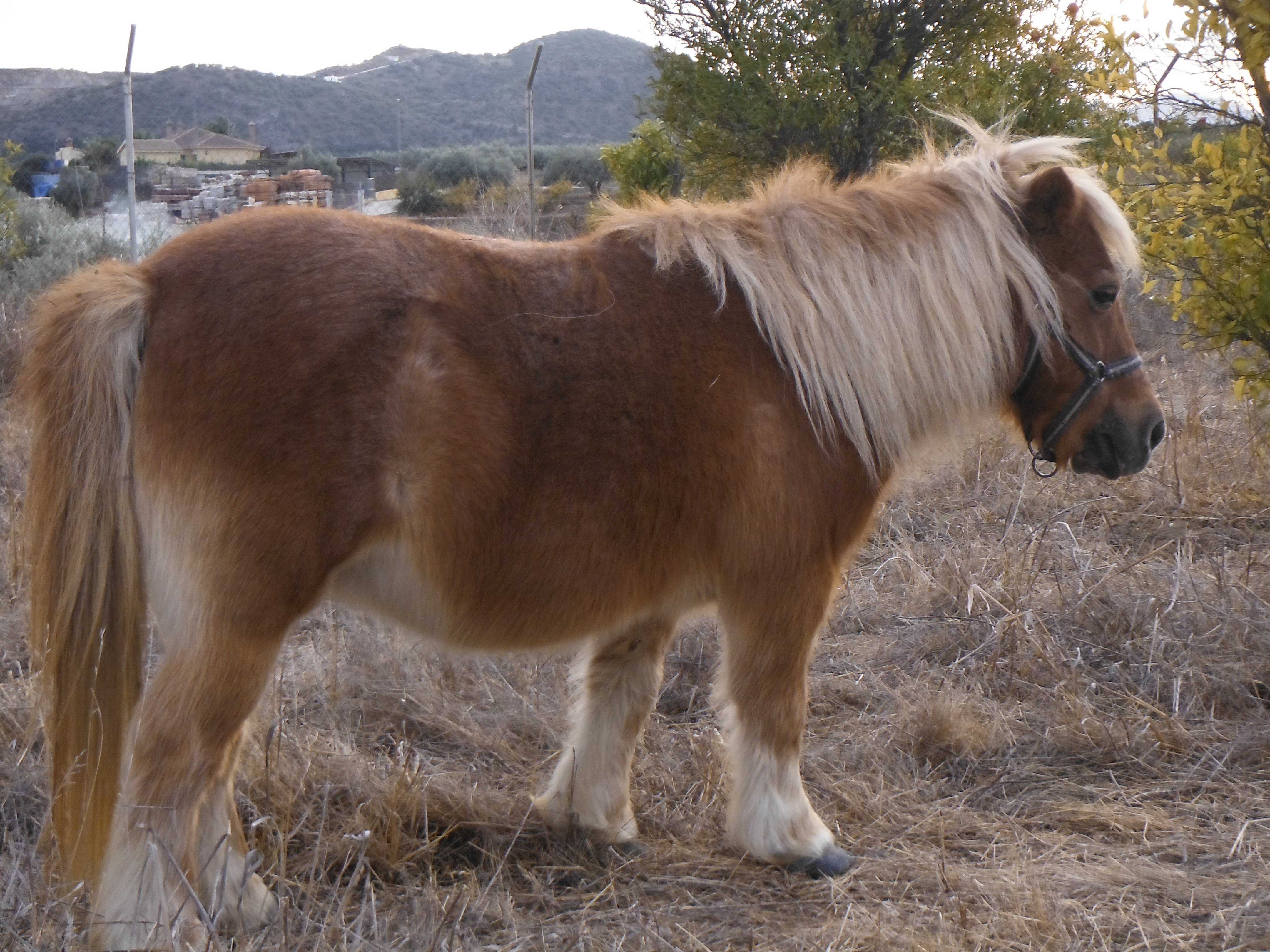
We have a pony grazing outside the house at the moment. The builder, Juan, asked if it could graze on our bit of land and we were happy to have it. I have no idea how long the pony that we have christened “Tony” is going to be with us but, while it is here, it is happily converting the wild growing plants into nice compact manure. Tony, like horses and donkeys, is a hind gut digester and houses billions of bacteria in the caecum and large intestine.
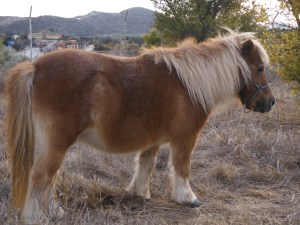
Tony the pony.
Tony the pony.


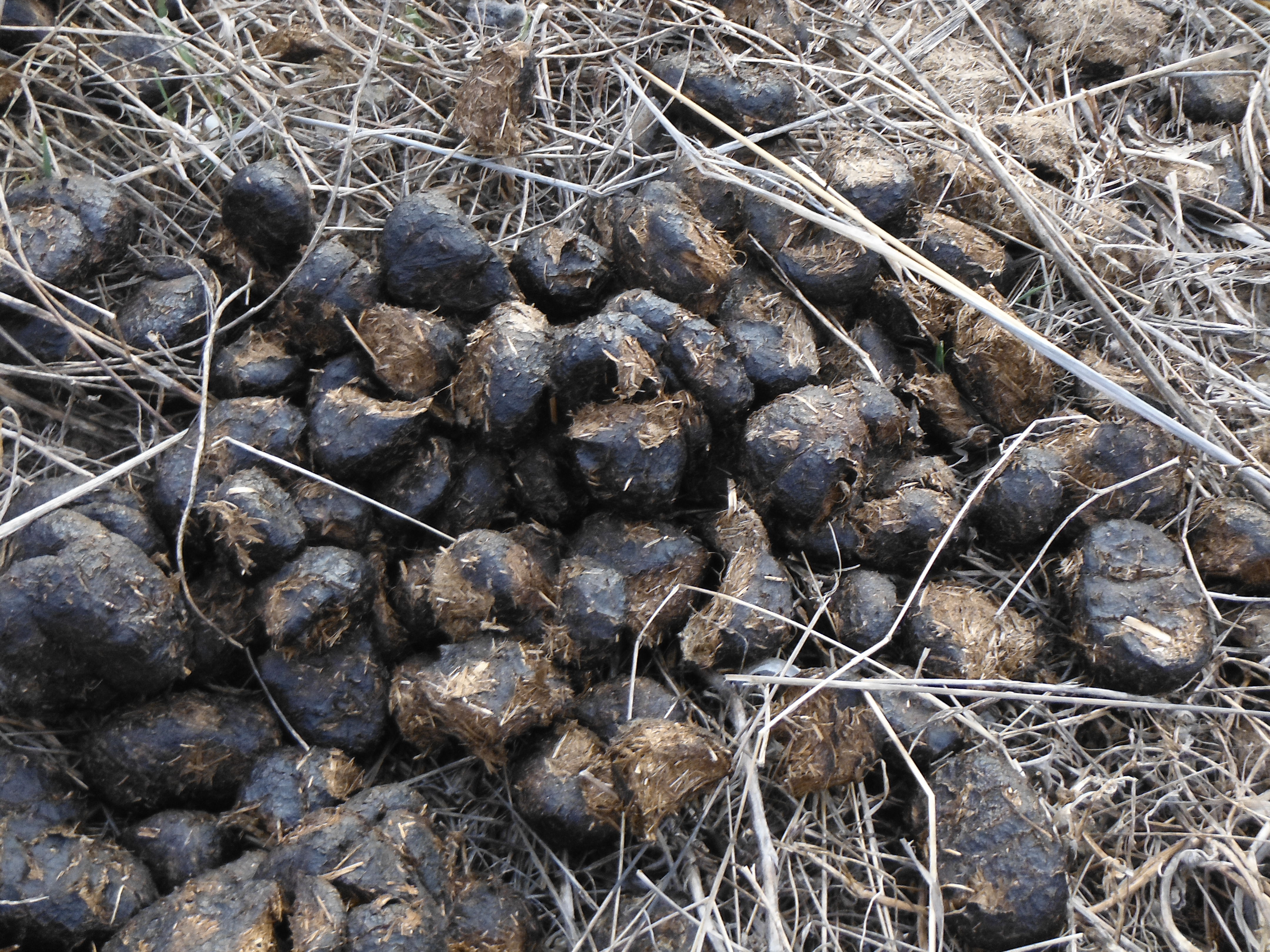
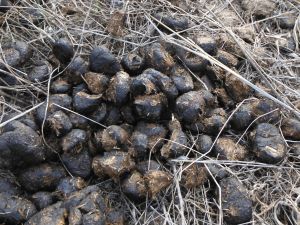
Tony the pony´s legacy

Tony the pony´s legacy

Pippa with her rabbit, Molly. Maybe bunnies are not as cute as we thought!

Pippa with her rabbit, Molly. Maybe bunnies are not as cute as we thought!


Right, enough about turds! What has any of this go to do with fly fishing?

Turds, and particularly cow turds, can be good or bad for fishing. A fresh cow pat is larder for a variety of insects and other invertebrates like dung flies. A fresh cow pat, with the consistency of porridge, may not look too appetising to us but for little bugs it´s like getting a Christmas hamper! For the fly fisherman this can be good news too. We can tie up an imitation of a dung fly and see if there is a trout nearby who wants to play ball.

A Dung Fly


But cow shit is, on the whole, bad news. If it seeps into streams and makes its way into rivers or lakes it artificially enriches the water and acts, as it does on land, as a fertiliser. This can lead to through the proliferation of algae to a process called eutrophication. It is this process which has had very damaging effects on places like Lough Sheelin although I believe it was the wastes from pigs rather than cows that were to blame.

I was prompted to write about this because of a very interesting letter published in this month´s Fly Fishing and Fly Tying Monthly and sent in by David Pilkington. It would seem that pour on insecticide chemicals which are given to farm and domestic animals can affect the droppings also which can become toxic to invertebrates. Not only are the insects which would normally breakdown wastes affected but, as a natural consequence, so too are the birds which feed on them. And the cow pats, no longer broken down by the usual hordes of invertebrates, remain wet and slimy and more likely, perhaps, to find their way into a water course where it causes a whole bunch of problems.

It is a worrying problem and a reminder, if we need one, of how we can pay a price which is often indirect and far from obvious, for intervening in the natural order of things even though we might have the best intentions.

Of Crocodiles and Turtles

A bad fishing day, in most of our eyes, would normally consist of hanging your best flies in tree branches, catching nothing, getting lost, falling in or all of these things happening.  But it seems that a bad day could, at least in theory, turn out to be far, far worse.

Here in Andalucia, we get the odd report of escaped crocodiles and the thought of being eaten alive is enough to satisfymost people´s definition of what constitutes a bad day.

Last year a nile crocodile was seen sunning itself on the side of a little lake near Mijas. It was a place I had investigated a few years as a prospective fishing site, but its depth and difficult access made it an unsuitable venue for fly fishing. The crocodile, in the end, was found dead and an autopsy revealed the cause of death was an obstruction in its alimentary canal due to something it had eaten. This crocodile was over two metres long.

A few years back at least one crocodile was caught by the civil guards on a stretch of the Guadlahorce near to Cártama. It was quite close to the Crocodile Park which has since moved to Torremolinos. Naturally, everyone thought the crocodiles had escaped from the Park but the Crocodile Park people I spoke to tell me that it is likely to have been released into the wild by unscrupulous bastards who keep these things as pets. It´s one thing getting bored with your gold fish and flushing it down the loo but cute little pet crocodiles that somebody sets free have the potential to become big horrible mean crocodiles that might take a fancy to a guy like me.

This is almost certainly the way the Mijas croc turned up. Apparently, there are plenty of crocodiles kept by individuals here on the coast and the climate is ideal for these things. A few years ago new legislation tightened up  on the keeping of crocodiles by individuals and, no doubt, a few animals may have been released on the quiet. The suspicions of the Crocodile Park bloke I spoke to was that the Mijas crocodile was released by a nearby Russian who was big into the drugs trade and exotic pets.

Now don´t get me wrong. I think that crocodiles are great. Nobody loves them more than I do. I just took a bunch of kids to the crocodile park last Thursday and was greatly impressed by those great lumbering creatures. There is one old nile crocodile there called Paco who is 90 years old and is the father of most of the crocodiles in the park. He is absolutely huge. He impresses his four 25 year old girlfriends by lying at the bottom of a pool and bubbling air out of his eye sockets. My wife does not know this, but I have similar plans for my old age. When I am 90 I want to have at least four 25 year old girlfriends. I can´t do the eye socket thing yet but I´m working on it.

The appearance of crocodiles where they are not expected is a little worrisome. There is, at least in theory, a small chance that I may end my fishing career inside the belly of a great reptile. I don´t particularly want to end it all this way although I guess it beats cardiovascular disease or cancer hands down. No dribbling in an old folks home for me! No incontinence pads, no endless repetitions of fishing stories, no forgetting everything – just a glorious death roll, a muddy thrashing in the shallow water and finally, from the bowels of the Guadalhorce as the ripples subside, a happy, postprandial burp.


A nile crocodile swimming in the crocodile park, Torremolinos.

A nile crocodile swimming in the crocodile park, Torremolinos.


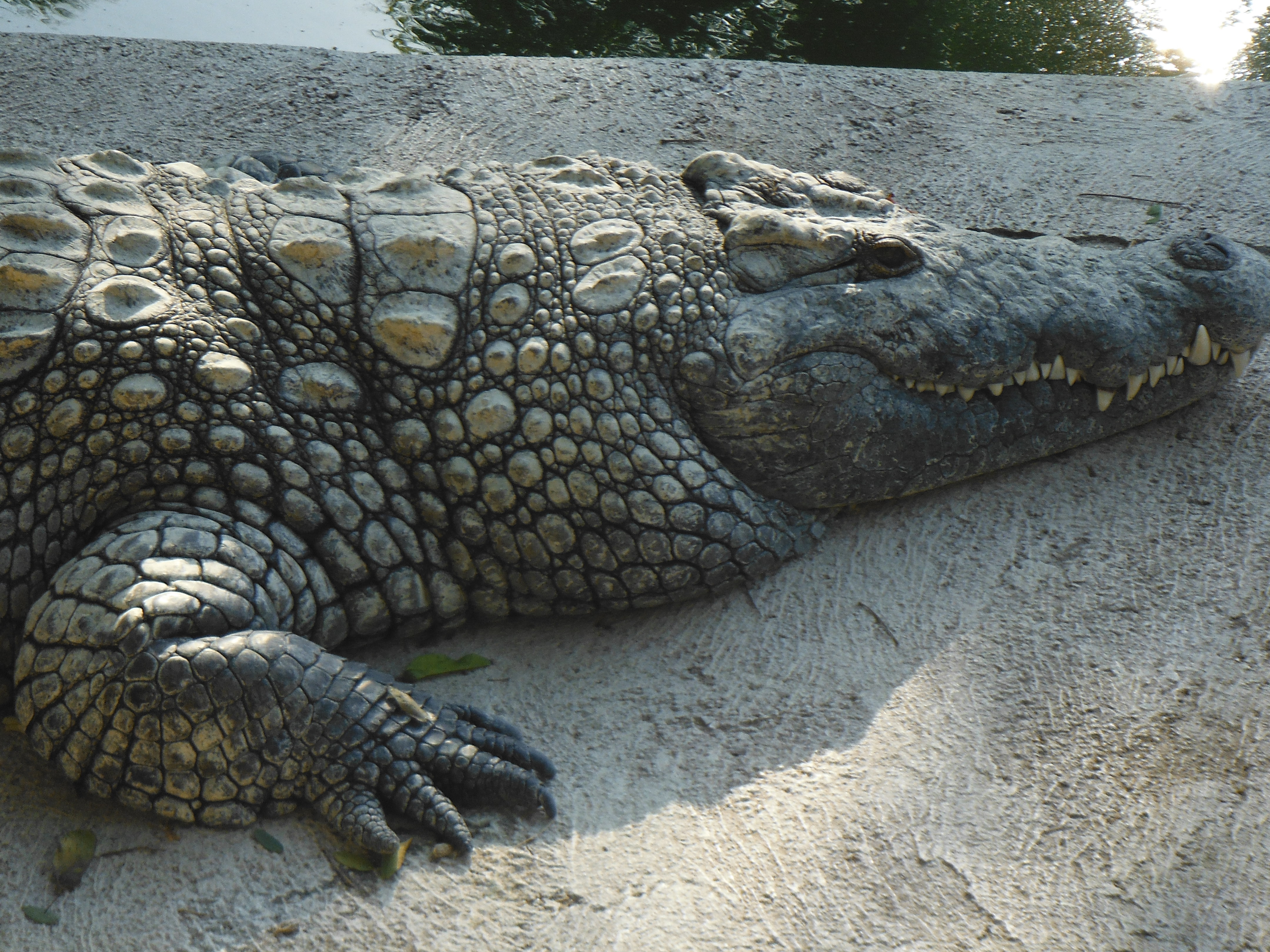
A crocodile not swimming at Torremolinos Crocodile Park!

A crocodile not swimming at Torremolinos Crocodile Park!


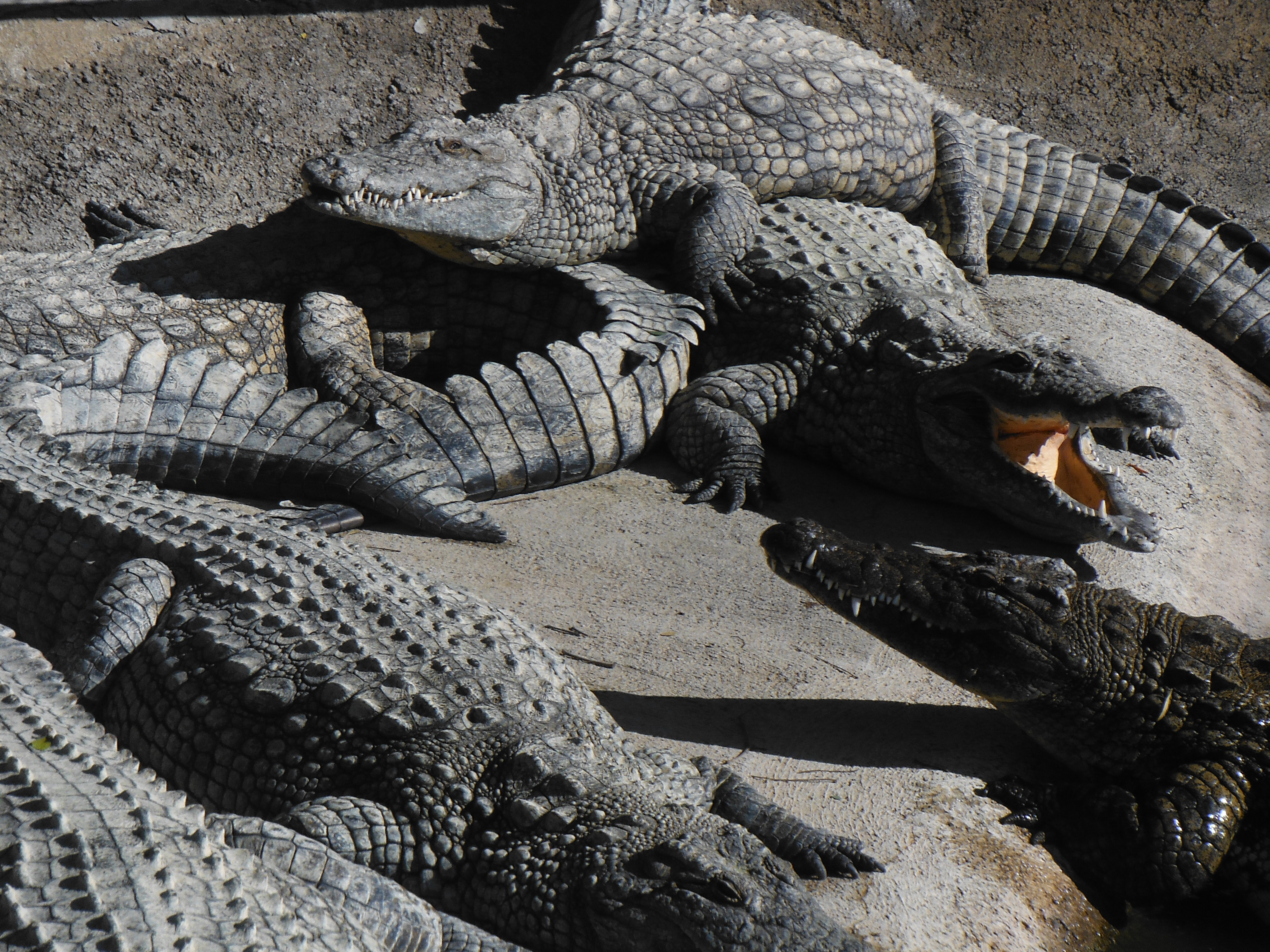
Heaps of crocodiles

Heaps of crocodiles


Last night on the river I didn´t see any crocodiles, thankfully, but I saw plenty of turtles. These are often heard rather than seen as they tip themselves into the river from rocks and branches if you happen to come too close and interfere with their sun bathing. But last night they gave themselves away when their dome shells broke the surface of the shallow water. I came across four or five breaking the surface in this way and another one 20 metres or so from the river. It was lying on the ground with all its protuberances withdrawn into the shell.  I imagine that it had left the river recently because it was still quite wet. For the hell of it I carried it back to the river to let it go in the hope it would start walking off and give me a chance to photograph it in action. But it had no interest in posing for photos and remained tucked in until I lost interest and wandered upstream where another turtle was more cooperative.

These turtles are native to the river and there are two very closely related sub-species. They are threatened by the invasive red necked turtle from Florida which everyone keeps as pets and which escape or end up being released into the wild, often by well-meaning people. In some areas, like Doňana national park, the red necked turtles are actively eradicated or removed.

I hope that the Florida turtle keep away from my local stretch of the river. And the crocodiles too!


The popular Florida red neck turtle. This invasive species is displacing native turtles.

The popular Florida red neck turtle. This invasive species is displacing native turtles.


A wild turtle seen swimming in the river last night.

A wild turtle seen swimming in the river last night.