Category: Flies and fly tying


The plastic bag nymph

A few years ago we had a teacher of Physics at our school who was something of a legend. His name was David Sutcliffe. He was, not only the school Principal, but one of the best teachers I have ever come across. He was hugely respected by the kids.

One time I was having a coffee and looking over the latest copy of Fly Fishing and Fly Tying Monthly. He noticed the headline of an article I was reading which was something like “successful nymph patterns for carp”. I went on to point out to him that nymph fishing for carp is the kind of thing I tend to get up to myself.

Fishing was not really David´s thing but he  thought it over for a second and said “I guess there are a lot of things you could catch from a nymph. It just never occurred to me that a carp might be one of them!”

Tragically, David, passed away in 2007. He was only in his 50´s when cancer got the better of him. If he were still around I imagine that, tomorrow, we might have discussed the international rugby that is happening this weekend. I might even have brought in a few of the nymph patterns I hope to tie up this morning to show him. I wonder what he might have made of them?

I have developed a nymph pattern myself which has received the nod of approval from the carp in my local river. It is simple to tie and the materials needed are easy to get hold of and the fly itself can be rustled up in a couple of minutes. These are the kinds of flies I like – quick, cheap and easy!

The body is tied from a narrow strip of thin plastic taken from a plastic bag. The nice thing is that, within reason, you can choose whatever colour you want. You might just need to visit a different supermarket! Personally, I plump with red / pink since it seems to work just fine. I like to tie them reasonably thin and, if I want the thing to sink faster, I just opt for a heavier hook.

I don´t know if this fly represents a nymph or a buzzer pattern and will leave the pedants to fight this out if they have nothing better to do. For me, it is simply the plastic bag nymph and, when using it, I am confident it will work as well as anything else. It is better, in fact, than most.

Here is how to put the fly together if you fancy giving it a whirl…….

All you need - some dubbing, a strip of plastic and some copper wire

All you need – some dubbing, a strip of plastic and some copper wire

Take some thread to the bend of the hook

Take some thread to the bend of the hook and wrap it over some copper wire
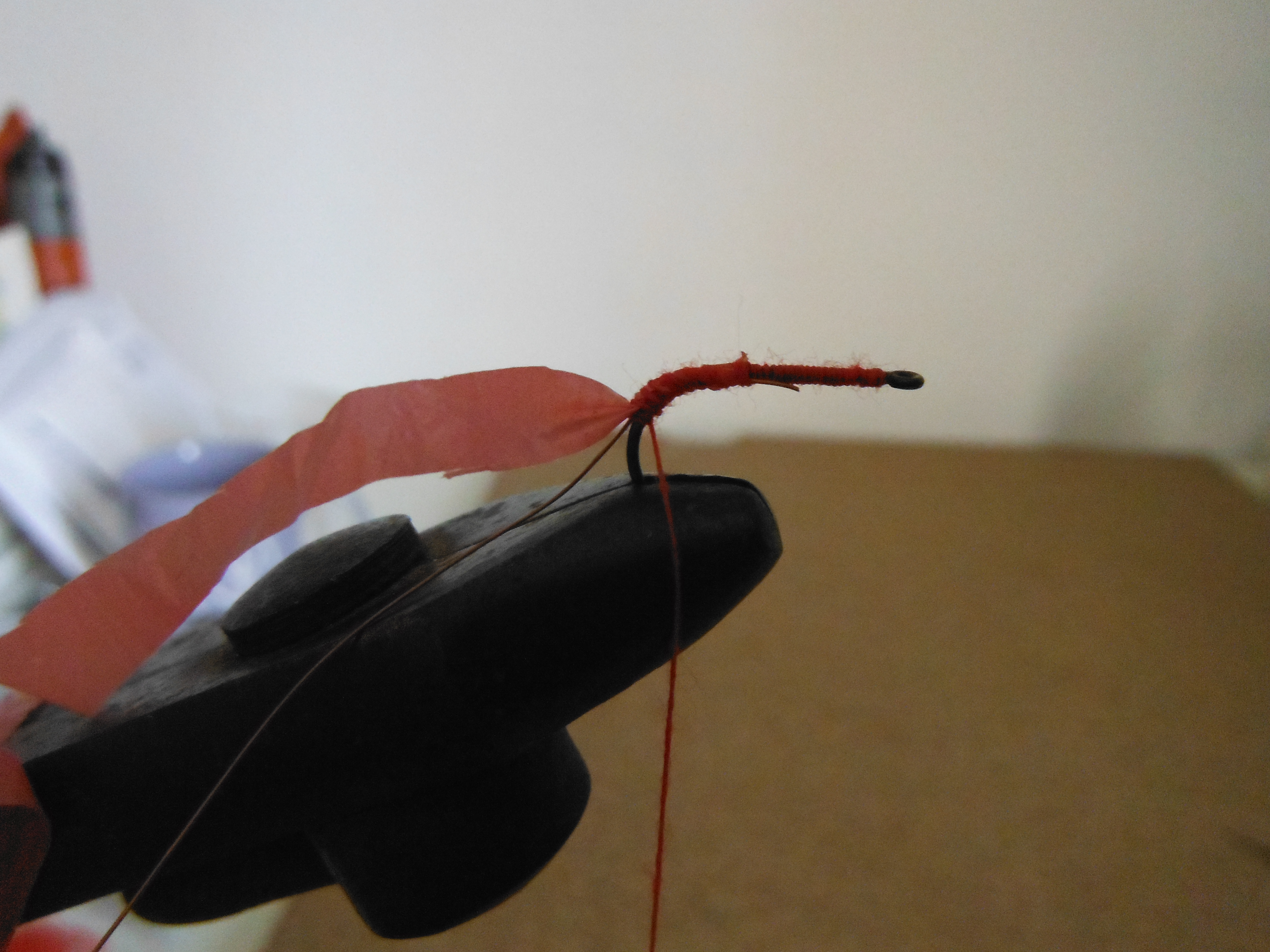
Tie in a narrow strip cut from a plastic bag

Tie in a narrow strip cut from a plastic bag

Take the thread back towards the eye

Take the thread back towards the eye

Wrap the plastic strip forward and tie down
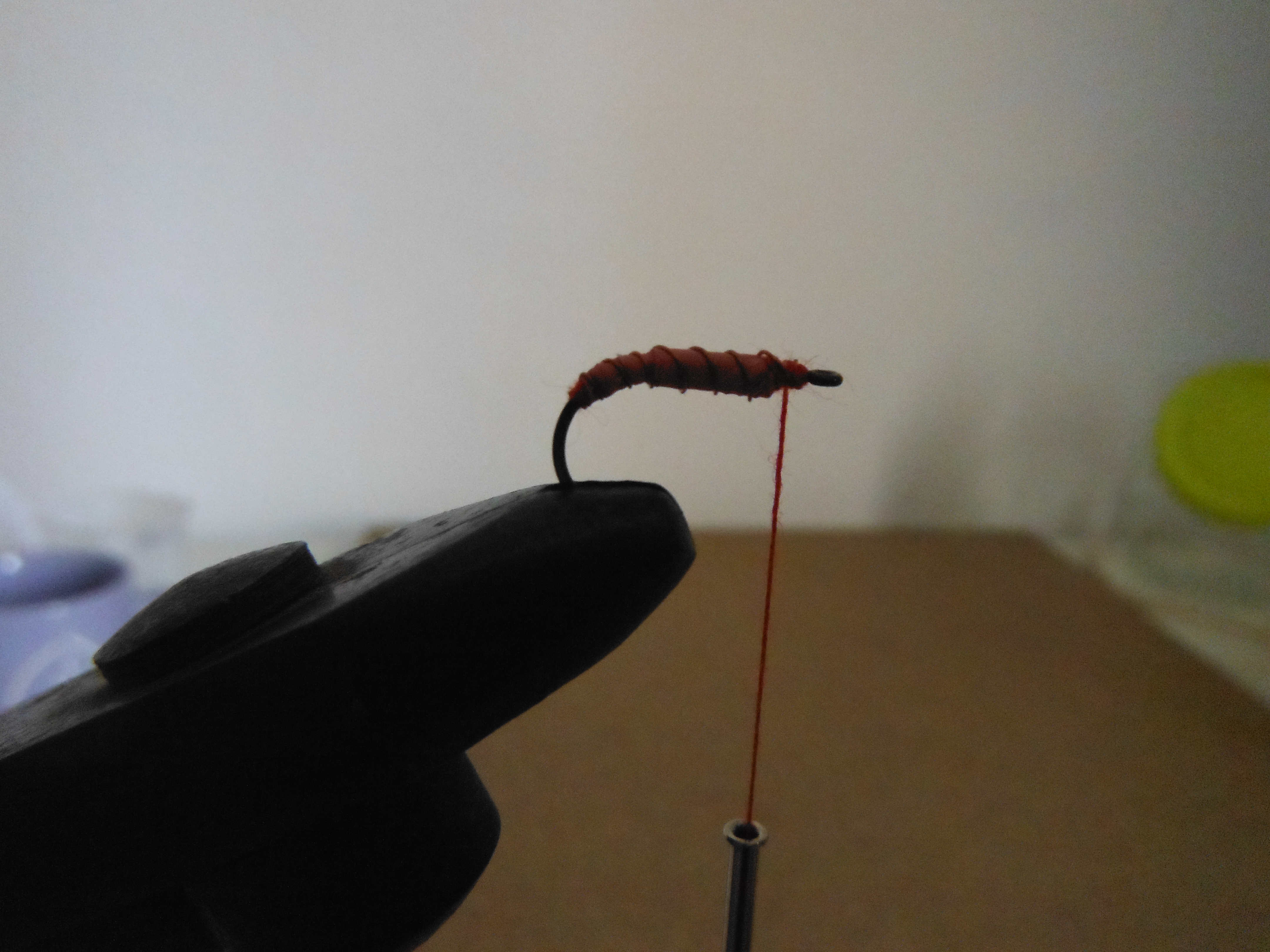
Wrap the plastic strip forward and tie down

Do the same with the copper wire

Do the same with the copper wire

Dub the head and tie off

Dub the head and tie off

The finished fly. PersonaIly, I like to de-barb them. Then it´s off to the river to find a carp thick enough to eat one!

The finished fly. PersonaIly, I like to de-barb them. Then it´s off to the river to find a carp thick enough to eat one!

An indispensable fly?

I read one time about a fly tied from a lady´s stockings. The author who described the pattern suggested that the business of procuring the stockings was far more engaging and stimulating than the tying process itself. The stockings belonged to the local barmaid and the author´s principal preoccupation was with ways he might contrive to get his hands on her undergarments which, he happily reported, he eventually managed to do. I can remember almost nothing of the fly itself. I imagine he can´t either. Maybe it was effective, maybe not. Who cares!

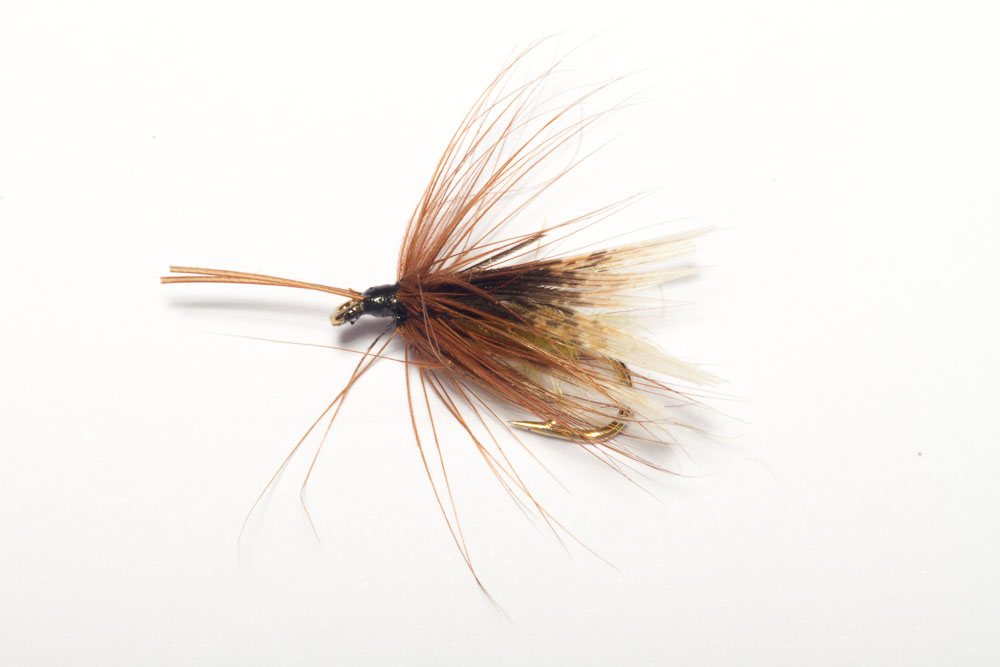
Other materials may not quite so much fun to obtain. There is a famous trout fly called the tupps indispensable which, in its original tying, incorporates the urine-stained wool taken from a ram´s scrotum. There are few sheep around our parts. This is goat country. But even if there were, it might raise a few eyebrows locally if I were caught in the act of sourcing this particular material. I am therefore going to dispense with the tupps, however indispensable it is claimed to be.

My advice to you, if you want to lay your hands on this particular fly, is just to go ahead and buy one. I have included below a photograph of a tupps indispensable which I found online and can be bought from Irish Fishing Flies. It costs 75 cents. You will notice from the photograph that the fly appears to be stuck in a tree. This impressed me. The Irish Fishing Flies people obviously target their marketing efforts to fishermen like me who appreciate that it is in a tree, very likely, that the fly will end its days.

The tupps indispensable

Close this window

Maggots and bluebottles

I once heard a comedian who cracked this joke:

“I have a friend who is a fly fisherman. He went off to the river the other day and came back with a two pound bluebottle!”

HA HA HA!

Not a bad joke actually, although I preferred the one about his family being so poor that the nearest thing they could get to a Jacuzzi was a fart in the bath.

What a winner!

I mention the bluebottle joke because I have been thinking recently about bluebottles and, particularly about their little wriggling larvae, familiar to coarse fisherman as the ubiquitous maggot.

I bought some maggots a few weeks ago for my students to have a look at. They were sold to me by a very beautiful young woman in the fishing section of Decathlon in Fuengirola. This woman was a real stunner and I immediately fell in love with her and felt, for the first time, a little embarrassed about asking her to get me a box of maggots from the locked fridge. What kind of a man goes buying boxes of maggots?

Of course this was not the first time I have bought maggots. I used to buy gallons of the things during the years when my brother Sean and I did a lot of coarse fishing. They were unceremoniously scooped out from great plastic containers using a pint glass. I never really felt uncomfortable or embarrassed when buying them before, but then again, the tackle dealers were not beautiful young women. Most of them, let´s face it, are as ugly as hell!

Maggots are interesting things from a scientific point of view. It turns out that they are useful in surgery to clean wounds which might otherwise become infected. The maggots, as it happens, will feed on dead tissue but leave living tissue alone and so help reduce the risk of infection.

And they are useful too in the morbid but fascinating study of forensic entomology because the size and stage of development of maggots and other little critters can be very useful in determining how long a dead body has been lying around.

Most people know little about insects, and have little interest in their biology and life histories, but, having said that, it is probably true to say that the image that immediately enters most of our heads when we think of a “fly” is the image of a bluebottle, or something very similar. So it is no surprise that the gag about the fly fisherman catching a two pound bluebottle works better than saying he landed, say, a two pound mayfly, or sedge, or stonefly, or caddis fly, or crane fly or whatever kind of fly or nymph a fly fisherman would actually use.

The truth is, from a fly fishing point of view, both maggots and adult bluebottles are of very marginal interest, and for a very good reason. The bluebottle lays its eggs on something gruesome like a dead hedgehog or whatever, and the larvae feed, grow and pupate and turn into the adult fly. The adults feed on nectar, bless them, but then go and spoil things by finding something dead and disgusting to lay their eggs on.

All of this means that at no point during their life cycle are maggots or adult blue bottles likely to find their way into the water and become the natural food of fish, quite unlike the midges, and caddis flies, and mayflies and all the others which the fly fisherman may want to impersonate. And maggots, which are a favourite bait of coarse fishermen, would not be part of the natural diet of fish either. The fish eat these things because fishermen throw bucket loads of them into the water. It is very unlikely that they would otherwise ever even see one.

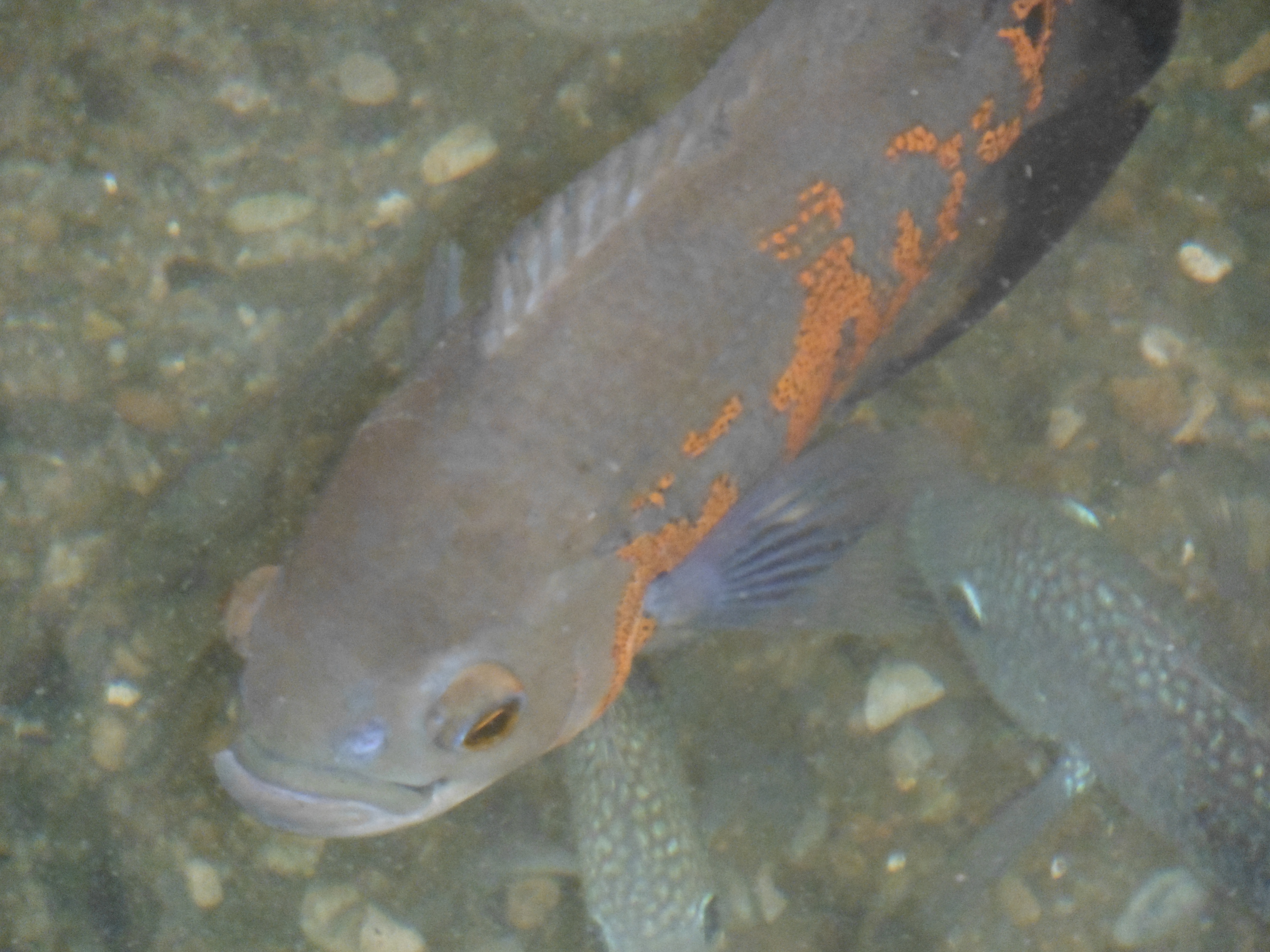
Of course none of this means that fish don´t consider them tasty. Fish love maggots. And they are perfectly happy to eat the adult flies if they can get their hands on them. (Okay, it´s just an expression – I know fish don´t have hands!) We know how much fish like bluebottles from experience because we had a pet fish one time called an oscar. It was given to us by a friend who had grown tired of looking after it. The thing was huge. My son Leo and I used to catch flies and pop them into the tank. Schlurp! The oscar absolutely loved them!

I have a dry fly pattern which works pretty well at imitating a “fly” in the familiar, generic sense. It is really simple to tie. A little black dubbing and some of that fine foam which is used in packaging are pretty much all you need. I sometimes use a black hackle feather, sometimes not. I don´t think it makes much of a difference.

If the fish are just taking whatever terrestrials have had the misfortune of getting themselves drowned it is as good a bet as anything else.

Oscars like this find bluebottles yummy

Oscars like this find bluebottles yummy

This week a package arrived for me in the post. When I opened it up I found it was full of flies. Most people would not be too excited about that, but this was different. These were flies I was expecting.

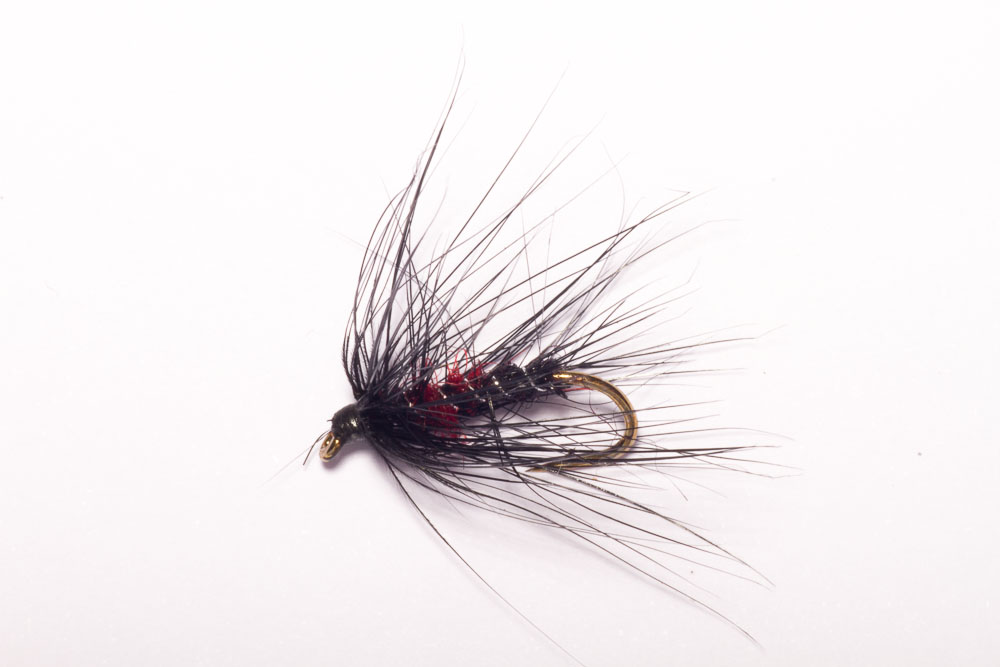
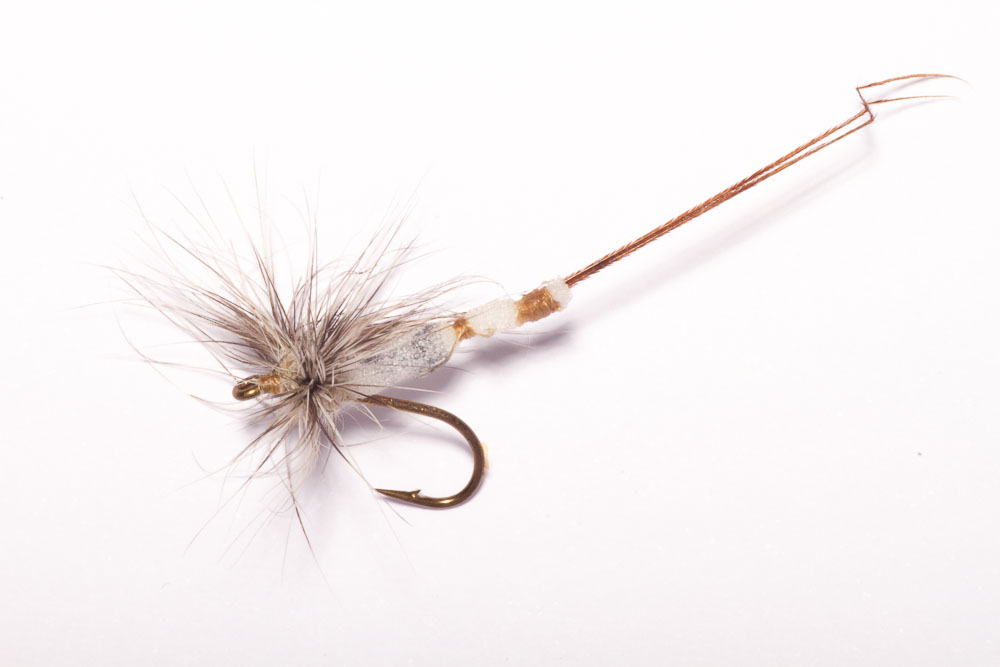
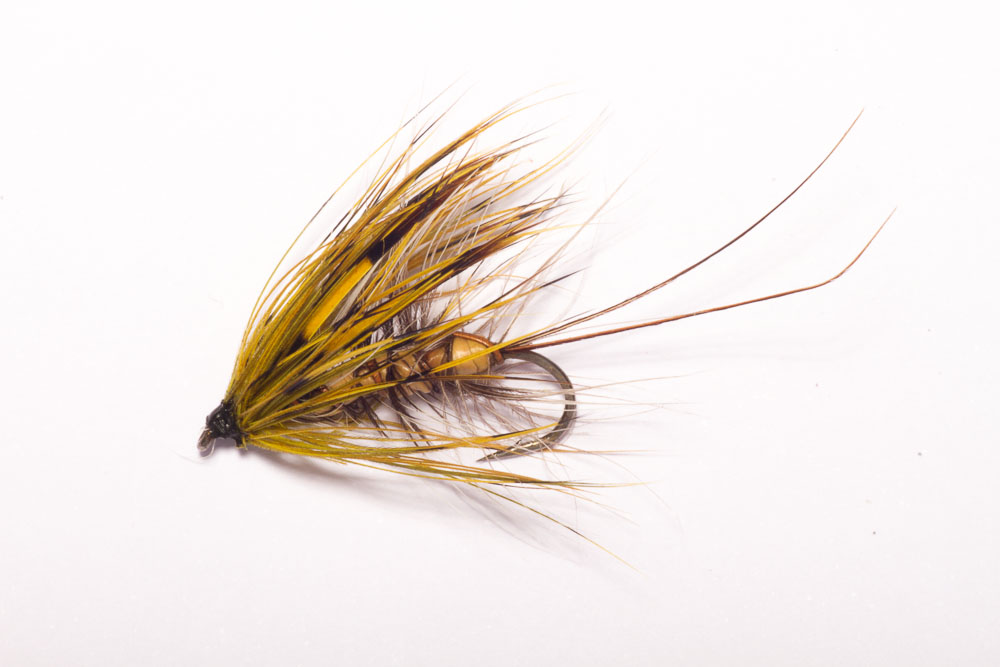
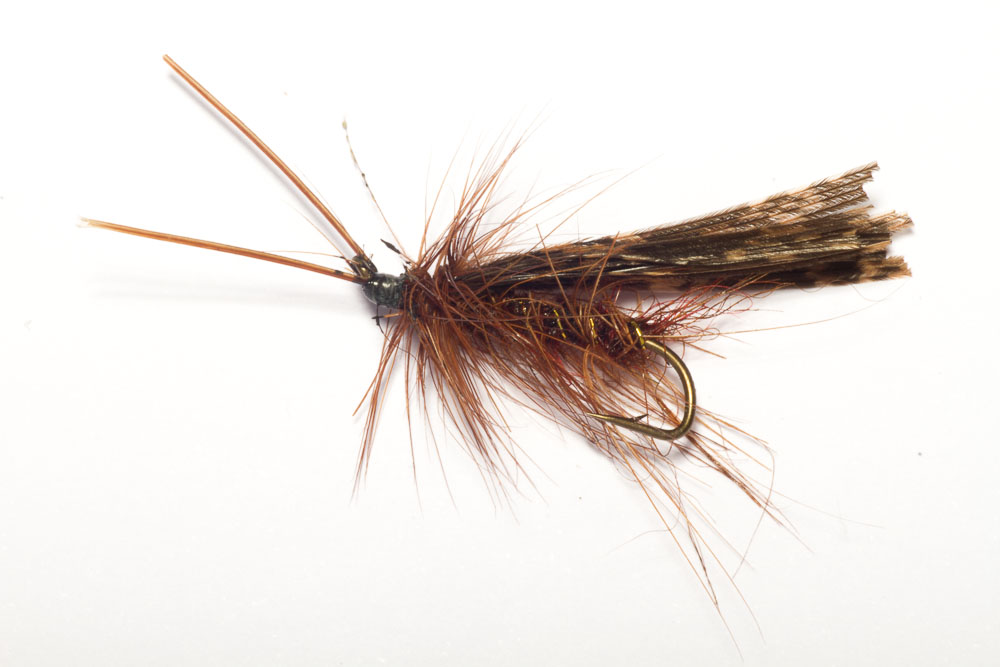
They were tied by Finian Dodd who lives on the shore of Lough Arrow in County Sligo and include many of the patterns which are effective on the lough and, no doubt, many of the larger loughs throughout the country.

I have used Finny´s flies myself on Lough Arrow during a visit this summer and on a previous visit a couple of years ago. The fish in July and August seem to feed very late in the evening and into the darkness and the locals don´t venture until quite late and the big sedges are likely to be on the water. The flies which are successful are Green Peters and murroughs  which are fished dry.

I have to admit that I was unsuccessful on the occasions I fished Arrow although I did hook a good fish that spat out the fly after a few seconds. It was just one of those things. Even though a couple of years have passed by I can´t think about Arrow without remembering that fish!

A work colleague, Geoff Lawrence, was kind enough to take some photos of some of Finny´s flies and I have attached the photos below.

If you ever want to fish Lough Arrow, Finny hires out boats and knows the lough like the back of his hand. He is exceptionally knowledgeable about the lough as a fishery and it is well worth having a chat with him. Here are some of Geoff´s photographs of Finny´s trout flies.

Golden Olive

Golden Olive Bumble

Bibio

Bibio

Mayfly - unfortunately the tail fibres got kinked in transit. I will see if I can straighten them out.

Mayfly – unfortunately the tail fibres got kinked in transit. I will see if I can straighten them out.

Mayfly

Mayfly

Murrough Sedge

Murrough Sedge

Green Peter Sedge

Green Peter Sedge

Green Peter

Green Peter

Green Peter

Green Peter