
Paul Reddish and I were in Cervera de Pisuerga the other day, a mountain town in the province of Palencia in northern Spain. We paused briefly on the street to count how many griffon vultures were circling overhead. We more or less agreed on our best guess — twenty-five and then, when we lowered our gaze again to street level, to our surprise, we found ourselves staring straight into the window of a fishing tackle shop.
Now, presumably you already know that the pope is a Catholic and what bears do in the woods, so you won’t need to ask whether two avid trout fishermen decided to step inside for a look around.
It was one of those wonderfully eclectic shops that could resupply anyone engaged in outdoor pursuits. There was hunting gear, fishing tackle, clothing for walkers and skiers, even hunting jewellery (which, I must admit, I didn’t know was a thing).
Two people were working inside, a man and a woman. After greeting them, we began to poke around. I appreciated that they let us browse freely, without making us feel obliged to buy anything. In fact, they seemed occupied with their own tasks. The man was mixing some glue and carefully fixing the tusks of a wild boar to make a mount. Only later did I learn that, in addition to running the shop — something he’s been doing for over thirty years — he is also a taxidermist.
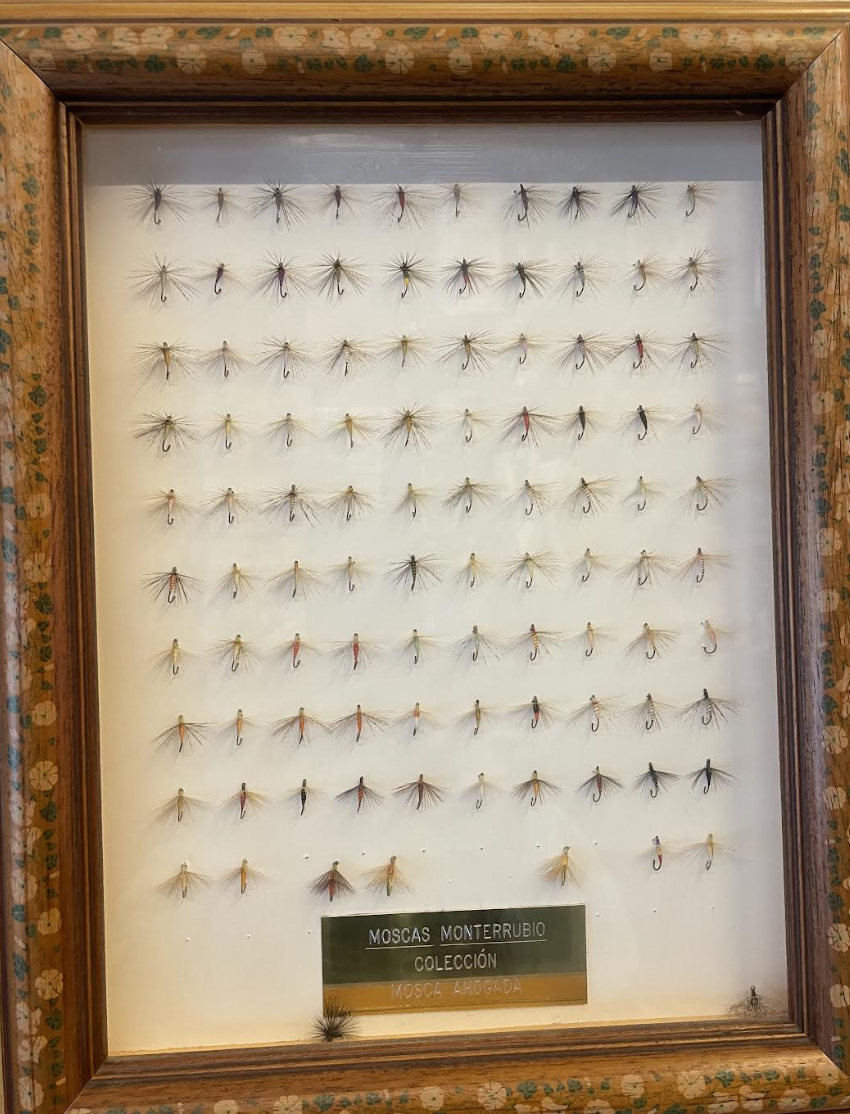
Paul and I already have more fishing gear than we realistically need, so our interest was mostly curiosity: what do the local anglers use? Before long we were drawn to a framed collection of beautifully tied flies. When I asked about their provenance, the man looked up from the glue and the tusks and told us, simply, that he had tied them all himself.
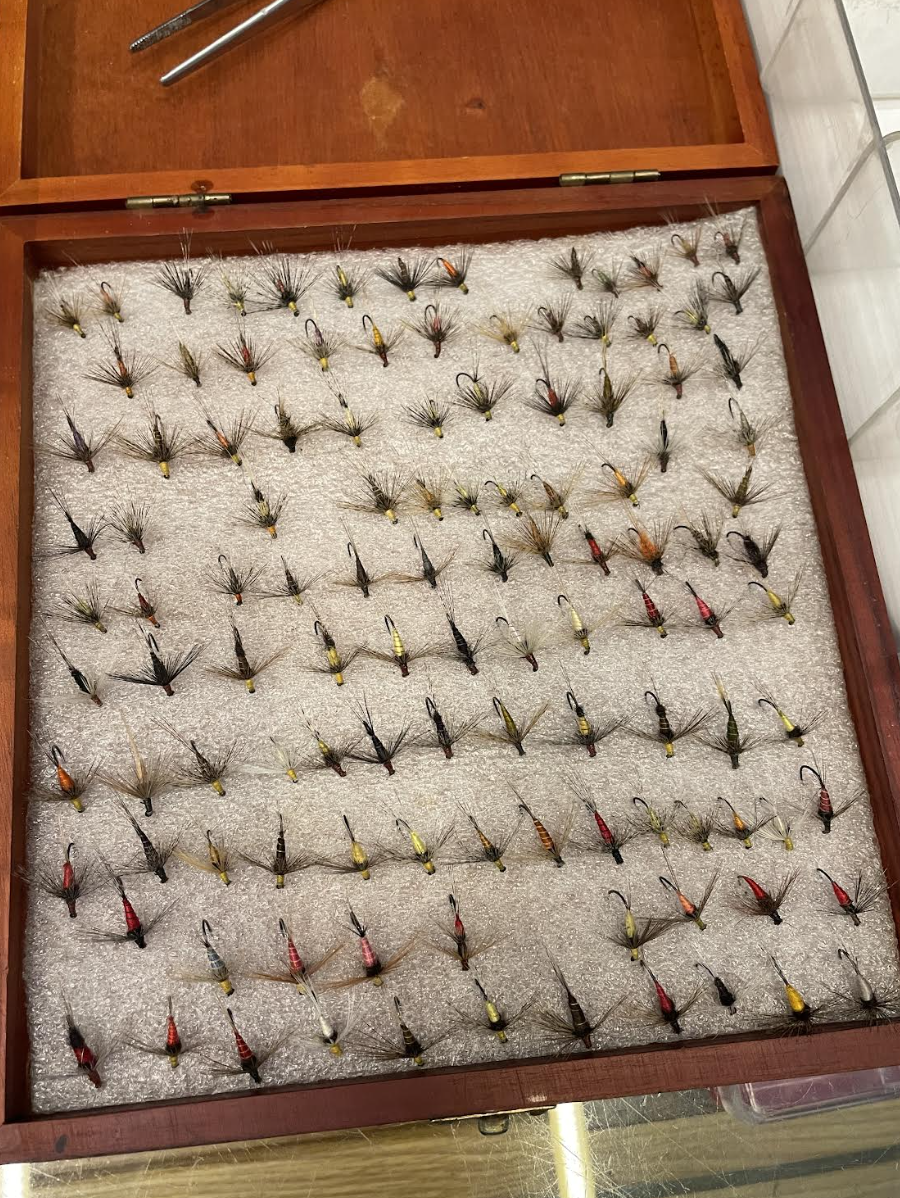
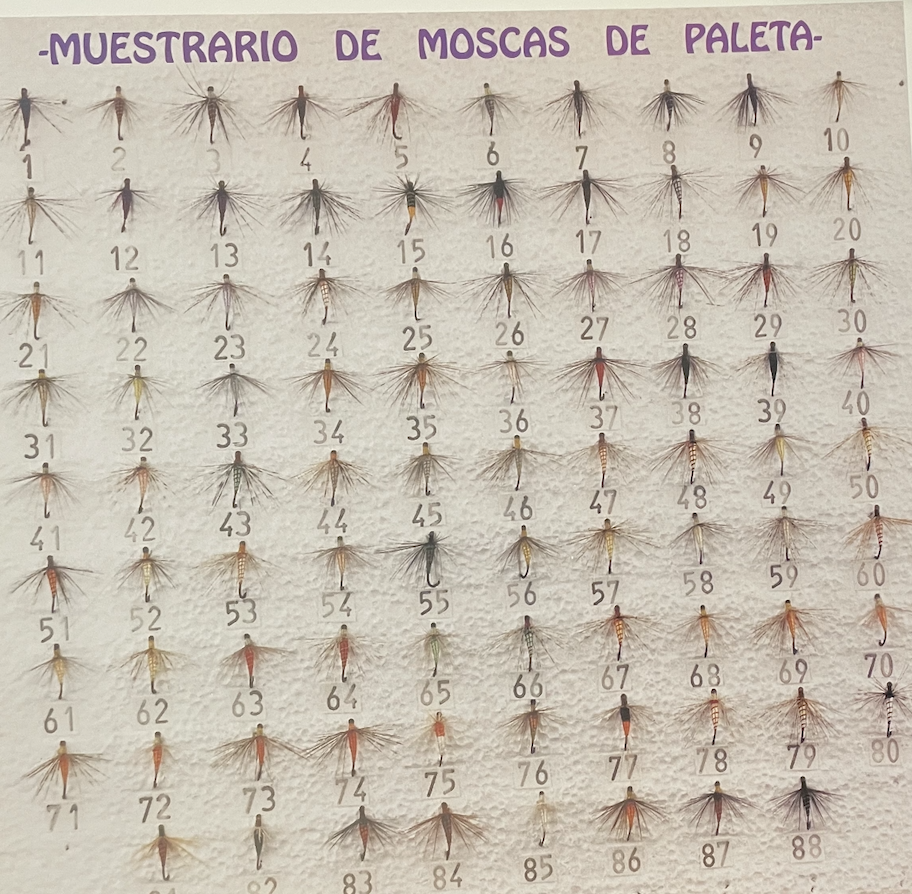
There is something magical about fishing flies — especially local and unfamiliar patterns — and it was fascinating to see what might fool the brown trout of the upper Pisuerga River. Some of the flies were tied on hooks without eyes, which is unusual, and a few were pre-tied to nylon so they could be fished together. The locals, he explained, often use a bubble float to fish several wet flies on short droppers — a technique I had also seen used on the upper Ebro.
I must admit I was getting rather excited by all these fly patterns — the sort of enthusiasm only another angler would understand — and asked if we might take a few photos of the display. The man was happy to oblige but stepped aside; it was clear he was uncomfortable being photographed. Later, after we had asked about local fishing sites and regulations and much else, I requested his name. He walked away without a word, and I worried I might have offended him in some way. Then he returned and silently placed his business card on the glass in front of me.
Out of respect for his privacy, I won’t share his name or image here. If you’re curious, his is the only fishing tackle shop in Cervera de Pisuerga, so he won’t be hard to find. He was kind, knowledgeable, and generous with his time.
This part of Spain is new country for us and we are hoping to explore the nearby rivers in the future. This may well be a place to revisit and ask the many questions that we have. I have the name and number of a local guide now, should I need it and, in my fly box, there is a small sample of the beautiful flies that are used locally. Not only is it going to be fun to try out the flies used nearby but it was a pleasure to have had the chance to meet the man who created them.

 fishydreams
“To our surprise… “ 😂 Fly shops in Spain are still something of a rarity. Sounds like you’ve discovered a gem! Hope you and Paul are both well 👍😎🎣🍻
Many thanks for getting in touch. Yes, you´re right it is hard to find anything much to do with fly fishing here unless you go online. Paul and I are both doing well. He left this morning and is back in the UK now. We had a lot of fun while he was here! I hope you are keeping well too.