
If a person had even half a brain, they would not have given a second’s consideration to walking from Reinosa to Fontibre yesterday afternoon. The rain did not let up for even a moment, and that would have come as no surprise to any of those half-brained people who had kept an eye on the weather. So yesterday afternoon — as you will not be surprised to hear — I decided to leave Reinosa and walk to the source of the River Ebro at Fontibre.
Continue readingTag Archive: spain
We have just come back from a hike up the tops of some of the peaks that we had seen when previously walking the caminito del Rey, Andalucia´s famous cliff edge walking path. There were three of us, my daughter Pippa, myself and Sable the black labrador that, you may recall, had disgraced herself during her audition as my fishing companion. Today, to her credit, she did not put a foot wrong and was excellent company throughout. She is knackered now though, and is fast asleep at my feet.
Continue readingI was a little surprised when fishing the upper river Ebro at how abundant the barbel were. This area I had imagined would be home primarily to trout. The river source is not far away and the water is cold, just the way trout like it. But the barbel are here in good numbers and it is lovely just to watch these fish in the clear river water. Armed with a fly rod, however much fun they were to observe, I could not resist having a crack at catching one. As a result I have been fortunate enough to look at these fish from up close and they are absolutely stunning.
Continue readingIt turns out that there was a perfectly good explanation for why the cat we came across this morning looked decidedly odd. It was not a cat at all. It was a mongoose! The dogs and I came across this thing at dawn this morning as we ambled along a camino. We often to head out early, the three of us, and manage to avoid any cyclists or people or cars and we can enjoy the campo, sometimes in the moonlight, before the world begins to stir.
Continue readingCatriona and I have just come back from Cantabria which, if you are not familiar with it, is a small province in the north of Spain sandwiched between Asturias in the east and the Basque Country in the west. It is in the high country of Cantabria that the river Ebro is born.
The Ebro has the distinction of being the longest river that flows entirely within Spain. It comes second in length only to the Tagus as the longest river in whole of the Iberian Peninsula but the Tagus, lacking true patriotism, abandons Spain, crosses the border into Portugal, and empties into the Atlantic in Lisbon. Interestingly, the Ebro is the second longest river emptying into the Mediterranean basin and is beaten into second place by no less a river than than the Nile.
During our trip to Cantabria we stayed in the town of Reinosa and took the chance to make the short journey from there to Fontibre and the Fuentona de Fontibre which is recognised as the the official source of the Ebro.
It seems as if the river appears out of nowhere. There is a beautiful clear pool and it is fed by a small number of little rivulets which just appear to percolate from the ground or emerge through cracks in the rocks. This place is called the Nacimiento del Ebro, which means simply the birth of the Ebro.
In Spanish giving birth is often described using the expression “dar a luz” which means, more or less, to offer to the light and this is a lovely way to describe it. The same term is used here to describe the waters as they surface into the light after a passage underground. Close to where the waters emerge there is a small statue of a virgin with child, the base of which is bathed in the cold water of the infant river.


A few metres downstream still, in on a little mid-river rock island, a dipper would appear between short dives into the water where it foraged for invertebrates.

Moving a little further downstream we saw our first brown trout which would occasionally move across the easy flows to take feed on some subsurface or emerging insect.
This is a magical place. The waters are clear. They have been filtered underground and they carry the faintest pale or turquoise hue. It is difficult to imagine that this cold clear stream would be the first stretch of a river that would go on to pass through 20 Spanish cities and 6 Spanish provinces.
While the River Ebro is sufficiently famous to find its way into the school Geography curriculum and be known to just about every Spanish child, how many of them would recognise the name of the Rió Hijár? My bet is that it would not be too many. But perhaps they should, and so should we all, because the water that is gurgling up from the ground and becoming recognised as the Rió Ebro is actually water from the Hijár. These two rivers have an interesting connection. The Hijár is considered to be a tributary of the Ebro and joins it in the town of Reinosa just a few short kilometers downstream of the Ebro´s official source at Fontibre. In reality the “Ebro” is water from the Hijár that has been filtered underground and surfaces here at Fontibre. If we were to follow this water upstream about 2 kilometres east of the official birthplace of the Ebro source we would reach a point of convergence. A steady flow of some thousand litres per second of the Hijár water leaves this point and passes underground to emerge as the “Ebro”. During those times of the year when the flows of water exceed this value, perhaps following the snow melt of its headwaters, the excess flows pass along the Hijár which is then considered a separate tributary river and joins the Ebro in Reinosa.
To find the “true” source of the waters of the Ebro we have to venture even further upstream than Fontibre and look for the source of the Hijár itself. This will lead us 22 kilometres westwards and we will have to climb to Pico Tres Mares.
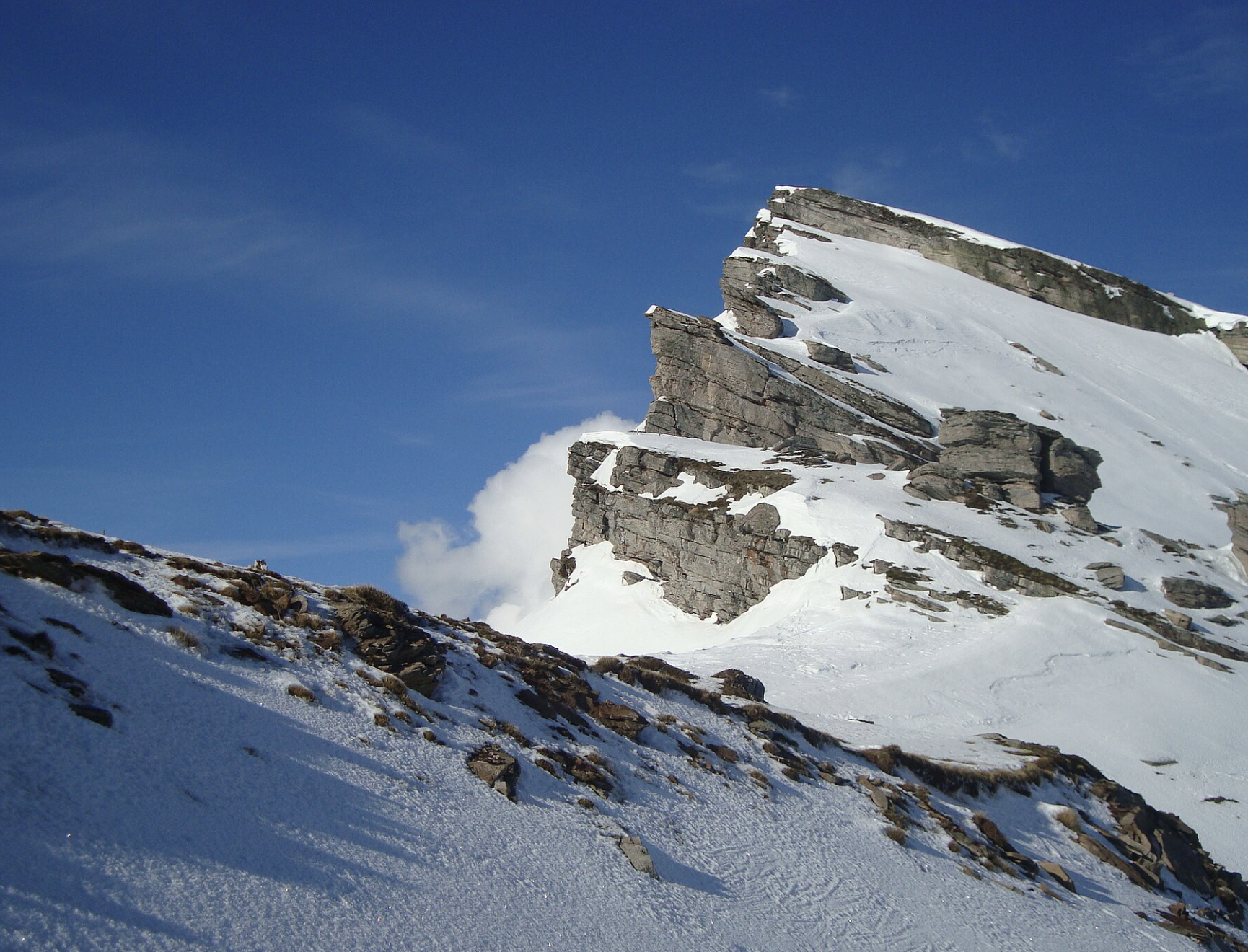
As its name suggests, the Pico Tres Mares drains water into three different seas. It is the only mountain in Spain to do so. The western flank feeds the Río Nansa which flows into the Cantabrian Sea on the north coast of Spain, the northern slopes feed into the Hijár-Ebro which will flow to the Mediterranean and the southern slopes lead to the Pisuerga river which is a tributary of the Duero and flows into the Atlantic in Portugal.

 fishydreams