
When we were away at Doñana last month I was asked by my students what my favourite bird was and I found it hard to answer because there are two that are vying for that particular position. One of these is the European Bee-eater and the other is the Red-necked Nightjar and at this time of year they both turn up on our doorstep.
Continue readingTag Archive: nature
I have just come back from the reservoir at El Chorro where my cunning plan had been to extract a carp from the margins. I´m afraid I have to report (once again!) that I had no success. The last time I fished there I brought a foolish young dog that proceeded to leap into the water and charge up and down the shallows, scaring the hell out of the carp and every other aquatic organism in possession of a nervous system and so my lack of success was not unexpected.
Continue readingYesterday I spent about 15 minutes staring at a log having been hoodwinked into believing that somewhere, behind it, was a concealed Iberian lynx with only a single ear on show. I was not alone. There were a whole bunch of us, similarly deluded, and all on account of someone making the dubious claim that somewhere, behind this log, they saw an ear twitch.
Continue readingCatriona and I have just come back from Cantabria which, if you are not familiar with it, is a small province in the north of Spain sandwiched between Asturias in the east and the Basque Country in the west. It is in the high country of Cantabria that the river Ebro is born.
The Ebro has the distinction of being the longest river that flows entirely within Spain. It comes second in length only to the Tagus as the longest river in whole of the Iberian Peninsula but the Tagus, lacking true patriotism, abandons Spain, crosses the border into Portugal, and empties into the Atlantic in Lisbon. Interestingly, the Ebro is the second longest river emptying into the Mediterranean basin and is beaten into second place by no less a river than than the Nile.
During our trip to Cantabria we stayed in the town of Reinosa and took the chance to make the short journey from there to Fontibre and the Fuentona de Fontibre which is recognised as the the official source of the Ebro.
It seems as if the river appears out of nowhere. There is a beautiful clear pool and it is fed by a small number of little rivulets which just appear to percolate from the ground or emerge through cracks in the rocks. This place is called the Nacimiento del Ebro, which means simply the birth of the Ebro.
In Spanish giving birth is often described using the expression “dar a luz” which means, more or less, to offer to the light and this is a lovely way to describe it. The same term is used here to describe the waters as they surface into the light after a passage underground. Close to where the waters emerge there is a small statue of a virgin with child, the base of which is bathed in the cold water of the infant river.


A few metres downstream still, in on a little mid-river rock island, a dipper would appear between short dives into the water where it foraged for invertebrates.

Moving a little further downstream we saw our first brown trout which would occasionally move across the easy flows to take feed on some subsurface or emerging insect.
This is a magical place. The waters are clear. They have been filtered underground and they carry the faintest pale or turquoise hue. It is difficult to imagine that this cold clear stream would be the first stretch of a river that would go on to pass through 20 Spanish cities and 6 Spanish provinces.
While the River Ebro is sufficiently famous to find its way into the school Geography curriculum and be known to just about every Spanish child, how many of them would recognise the name of the Rió Hijár? My bet is that it would not be too many. But perhaps they should, and so should we all, because the water that is gurgling up from the ground and becoming recognised as the Rió Ebro is actually water from the Hijár. These two rivers have an interesting connection. The Hijár is considered to be a tributary of the Ebro and joins it in the town of Reinosa just a few short kilometers downstream of the Ebro´s official source at Fontibre. In reality the “Ebro” is water from the Hijár that has been filtered underground and surfaces here at Fontibre. If we were to follow this water upstream about 2 kilometres east of the official birthplace of the Ebro source we would reach a point of convergence. A steady flow of some thousand litres per second of the Hijár water leaves this point and passes underground to emerge as the “Ebro”. During those times of the year when the flows of water exceed this value, perhaps following the snow melt of its headwaters, the excess flows pass along the Hijár which is then considered a separate tributary river and joins the Ebro in Reinosa.
To find the “true” source of the waters of the Ebro we have to venture even further upstream than Fontibre and look for the source of the Hijár itself. This will lead us 22 kilometres westwards and we will have to climb to Pico Tres Mares.
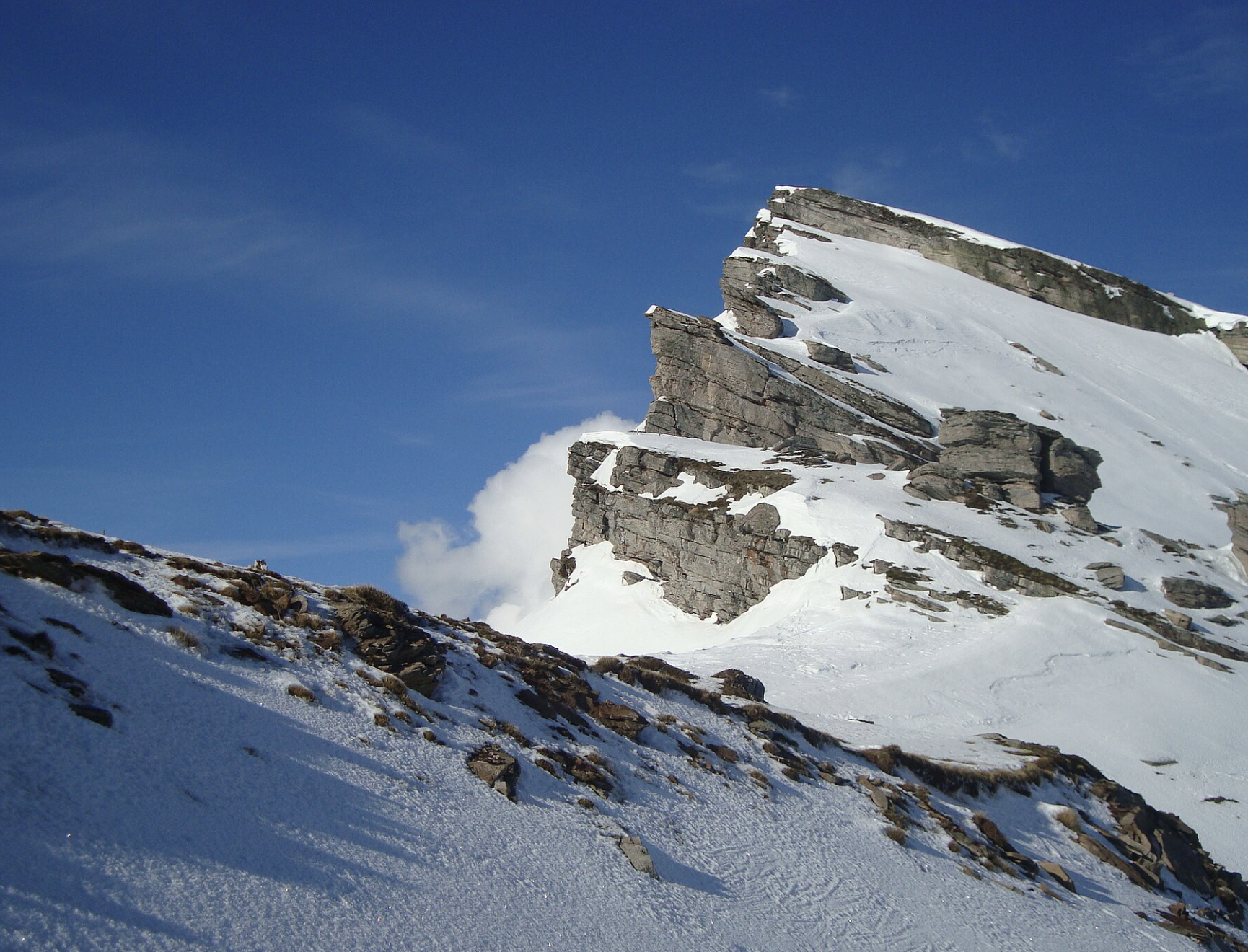
As its name suggests, the Pico Tres Mares drains water into three different seas. It is the only mountain in Spain to do so. The western flank feeds the Río Nansa which flows into the Cantabrian Sea on the north coast of Spain, the northern slopes feed into the Hijár-Ebro which will flow to the Mediterranean and the southern slopes lead to the Pisuerga river which is a tributary of the Duero and flows into the Atlantic in Portugal.
A highlight of our recent visit to Japan was getting to see cormorant fishing on the Uji River which runs through Uji city in Kyoto. We came across this opportunity by chance, having climbed nearby to see the macaques on a nearby hilltop (these are monkeys famously seen bathing in hot springs during the depths of winter). Having worked up quite a sweat we decided to “chill” for a little while aboard a little hired rowing boat on the river nearby. It was only when we returned our boat that we came across a poster advertising boat trips to witness the ancient tradition of fishing with cormorants. We decided that we would return to do so the next evening.
Continue readingYesterday we returned from the coast with some shopping in the back of the car and, as we normally do, went to and fro a couple of times between the car and the house carrying the bits and pieces we picked up. It was only as the last of these short errands were completed that I glanced over to a wall at the end of the house and noticed a mountain goat standing on it. It seems likely that it had been standing there all along.
Continue reading
 fishydreams