
Midges don´t have many friends, particularly up in Scotland, where the little devils devour everyone in sight and can make a hell of a nuisance of themselves. The real villian is one of the biting midges, a nasty little son of a bitch known as the highland biting midge, Culicoides impunctatus. As with mosquitos,it is the female who sucks blood, and for the same reason, to be able to produce a batch of eggs. Continue reading
Category: Fish and fishing
Christmas this year was spent in England and Ireland and it was great to see family and friends again. There was, not unexpectedly, a lot of sitting around and not a little consumption of alcohol.
In the UK the brown trout have their feet up too and are enjoying the closed season but the fishing for rainbows in many still water fisheries continues and there is good fishing for grayling for those who want to get out on the river and are prepared to brave the cold weather.
Back home in Spain, I lost no time in making for the river. I was in some need of solitude and space and fresh air, all of which the Guadalhorce provides in abundance.
I hooked a barbel pretty soon after starting up but the fish was hooked in the cheek rather than having taken the nymph properly. This is always regrettable, but it happens from time to time. Fortunately the fish was unharmed and, after apologising profusely to it, I released it and it made its way back upstream to the head of the pool from which it had been taken. Continue reading
I was first taught the “birds and bees” lesson about human reproduction in my last year of primary school. Before that I had given the matter no thought at all, unlike the kids of today who seem to know enough to write a PhD thesis on human sexuality by the time they are 10.
I can remember the lesson very clearly. While we were out on the playground playing our customary game of football with a tennis ball, Miss Howe had been busy drawing enormous diagrams of human genitalia on the blackboard and these diagrams became, naturally, the focus of our attention as soon as we returned to our desks.
This was a kind of awkward situation and I was keen to see how the other kids were going to react. Would they giggle? Would they blush? Did they look as though they knew all this stuff already? Most of them gave little away but I noticed something odd about Jimmy Simmonds.
Jimmy was one of those kids with thick lenses on his glasses which distorted his eyes and made it look as though he viewed the world through the bottom of beer glasses. What was immediately obvious about Jimmy, and this image I will never be able to erase from my memory, was that his reaction to the huge chalk diagrams could not be read from his eyes because the insides of his spectacles had completely misted over. The structures of the human reproductive organs were hidden from him by a thin layer of fog.
It’s funny how things work out. I am now a teacher myself and, Like Miss Howe, I find myself explaining to a new generation where babies come from.
It is difficult to think about sex and sexual reproduction without our natural bias towards reproduction in humans. If kids are told that the next topic is sexual reproduction they will assume it is about human sexual reproduction and turn up to the next lesson on time, or even early, and foaming at the mouth. But sex is, biologically speaking, what makes the world go round and is overwhelmingly common in just about every species you might care to think of. Even flowers and trees contrive to reproduce sexually in the majority cases although they have no awareness that they are doing so.
Biologists have often been puzzled by how commonplace sexual reproduction has become. It is not necessarily the easiest or most reliable means of producing offspring. For one thing you need to locate a reproductive partner or organise, as flowers do, for your sex cells to be delivered to one. But the benefits in terms of genetic reshuffling during the formation of sex cells, and the new genetic variability resulting from combing the genes of two parents, seem to outweigh the costs involved.
I usually introduce the sexual reproduction topic by getting the kids to think of organisms which are not human, and among my favourite are the fish. And, among the favourite fish of fly fishermen everywhere, and at the top of the list for many, are the salmonids.
Salmonids, which include char, trout, salmon and grayling, can be taken as pretty representative of fish in general in terms of how they reproduce. Sperm cells can swim quite happily in water they are released there by the male fish and fertilise eggs, which are also released into the water by the female. This typically happens in fast flowing, cold, well-oxygenated water in the upper reaches of rivers and streams. This external form of fertilisation is typical of fish and frogs and other animals that reproduce in the water. Of course, problems arise for animals that live on dry land and it is the absence of a liquid medium through which sperm can travel that drove the evolution of internal methods of fertilisation of land lubbers like us. In humans the sperm need to be deposited inside the reproductive tract of the female which results, among other things, in the giggling of the kids sitting in the back of the class in Year 9.
Before returning to the salmonids, here is an interesting thing that happened at work a few years ago. One of my colleagues came into my class in an agitated state. She was, at the time, teaching the “Sexual Reproduction” topic to Year 7 and was having to fend off probing and embarrassing questions on the topic by one of the boys. There seemed to be nothing he was not prepared to ask. I could only sympathise. Fearless kids like this can make teaching this stuff tricky. It was only some time later that I got wind of the fact that the other, more timid boys, were paying the other kid to ask the questions on their behalf. They were egging each other on, each trying to come up with a question to make the teacher most uncomfortable.
The going rate for questions about sex? One euro a pop.
Where were we? Okay, I remember, back to the salmon and trout. Once the fertilised eggs are deposited and covered by stones they are pretty much on their own. Mum and Dad are not going to be around to take care of them and, invariably, a punishingly high level of mortality results in very few of the offspring surviving even their first year. To offset these huge losses, large numbers of eggs are deposited and this, again, is quite typical of fish.
It is probably fair to say that it is the reproduction of salmonids which is best known by people with no particular interest in fish. The image of a salmon navigating obstacle and dangers to return from their ocean feeding and growing to the rivers of their own birth is vividly etched in the popular imagination. We have all seen the waterfalls they leap and the grizzly bears trying to hunt the fish as they push their way endlessly upstream. It is the salmon, and particularly the half dozen or so species of Pacific salmon that swum through our television sets and into our living rooms. They provide a spectacle that is unrivalled in natural history.
But the price to be paid for sex by these salmon is death. The Atlantic salmon may survive the rigours of spawning, although most do not, but this is not true of their Pacific counterparts whose spent bodies, post-spawning, litter the watercourses like the petals of flowers that have served their purpose and remain scattered on the ground. The nutrients within those remains are locally recycled and the whole migration can be seen as a swimming conduit of nutrients from the cold ocean to the interior of a continent hundreds or thousands of miles distant.
Reproduction of brown trout is essentially similar although the migratory distances will be relatively short. Some sea-going trout will have returned from their coastal wanderings to spawn, like the river relatives from which they are genetically indistinguishable, they are very likely will spawn in the rivers in which they were born.
Most of this drama is unseen by the fishermen who might have spent hundreds of hours chasing after trout during the fishing season. I came across some beautiful photos taken by Miguel Aguilar which show trout spawning. If you would like to see them, you might like to follow this link:
http://issuu.com/flymagemagazine/docs/flymage_15_october_2012_eng/33?e=0
I got a present of a book by Bob Wyatt for Christmas. It is called “What trout Want”. Wyatt is a good writer and this is a fine book from which I learnt many things. It also threw light on a mystery: the giant trout of the back country rivers of New Zealand.
I have long been puzzled by these iconic fish. Their large size and the remote pristine landscape they inhabit probably draw thousands to New Zealand each year. The thing I found odd about these fish was that most of them seem to be males, often broad in the back and with the characteristic kype. Why is this? And how could such huge fish sustain their bulk in these headwaters?
The answer, according to Wyatt, is that these are fish which have remained in the reaches of the river close to their spawning grounds after the others have dropped back to the more hospitable reaches of the river further downstream, or into large lakes into which these rivers drain. The fish may indeed struggle to maintain their bulk here and many will, in due course, work their way downstream where the food supply is more likely to meet their demands. And there they may remain until the powerful reproductive urges drive them upstream to spawn again.
It is difficult for me to think about things like the back country trout and the powerful drive that push salmon to the spawning grounds following their ocean wanderings. It is enough to make my glasses steam up!
I found this lovely drawing of a male (top) and female brown trout (bottom) on a blog called The Weedbed Blog. It was made by a Canadian guy called Nick Lafferiere.

Yesterday, while I was fooling around on the river, my friend Harry was off enjoying the kind fishing adventures guys like me can only dream about. Like me, he landed a couple of fish, but his were absolute stunners. One was an Arapaima, one of the largest-growing freshwater fish in the world and the other was a Pacu, a deep-bodied fish, not unlike a piranha to which it is closely related. I have seen both of these before swimming around in various aquaria and know a little about them. Both come from South America and so, when I saw Harry´s photos yesterday evening, I assumed he was having some crazy adventure on the Amazon.
As it happened he was in Thailand fishing a water stocked with various kinds of large tropical fish. The other anglers fish more conventionally using bait but Harry is, in his heart, a fly fisherman and he took both of his fish in the fly.
Arapaima are fascinating things. They need to surface periodically to breathe air and can survive in places which are so depleted in oxygen that many other species fail to survive. They also have such tough scales that they are able to resist the attention of piranhas. What I was little prepared for, when I saw Harry´s photo was just how beautiful they are. They have a flattened head which appears almost reptilian, and large scales protecting an elongated body.
Harry said that the Arapaima hit the fly pretty much as soon as it hit the water and that it was dark before the great fish was finally released.
The Pacu are as strong as hell. The specimen pictured was estimated to weigh 9 or 10 kilos. Apparently they have extremely sharp teeth and will bite through anything that is not made out of steel. Harry hooked his fish with a nymph and it was not taken in enough to result in his line being bitten through. Apparently hooking these things is like getting you fly caught in the 10.23 from Paddington, and they will do their level best to snag you in some underwater obstacle if they have not already bitten through your line. I had always thought of them like big docile herbivores, like swimming sheep, but I obviously underestimated them.
Harry is on his way to New Zealand and was kind enough to allow me to report on his adventures. So hopefully we will have more stories to report soon.
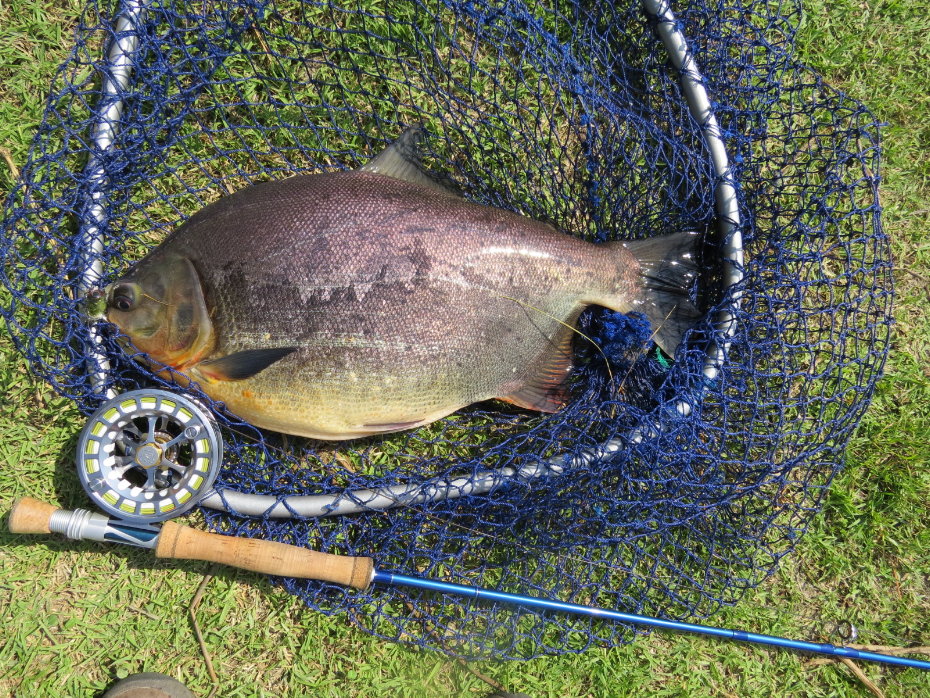
Pacu
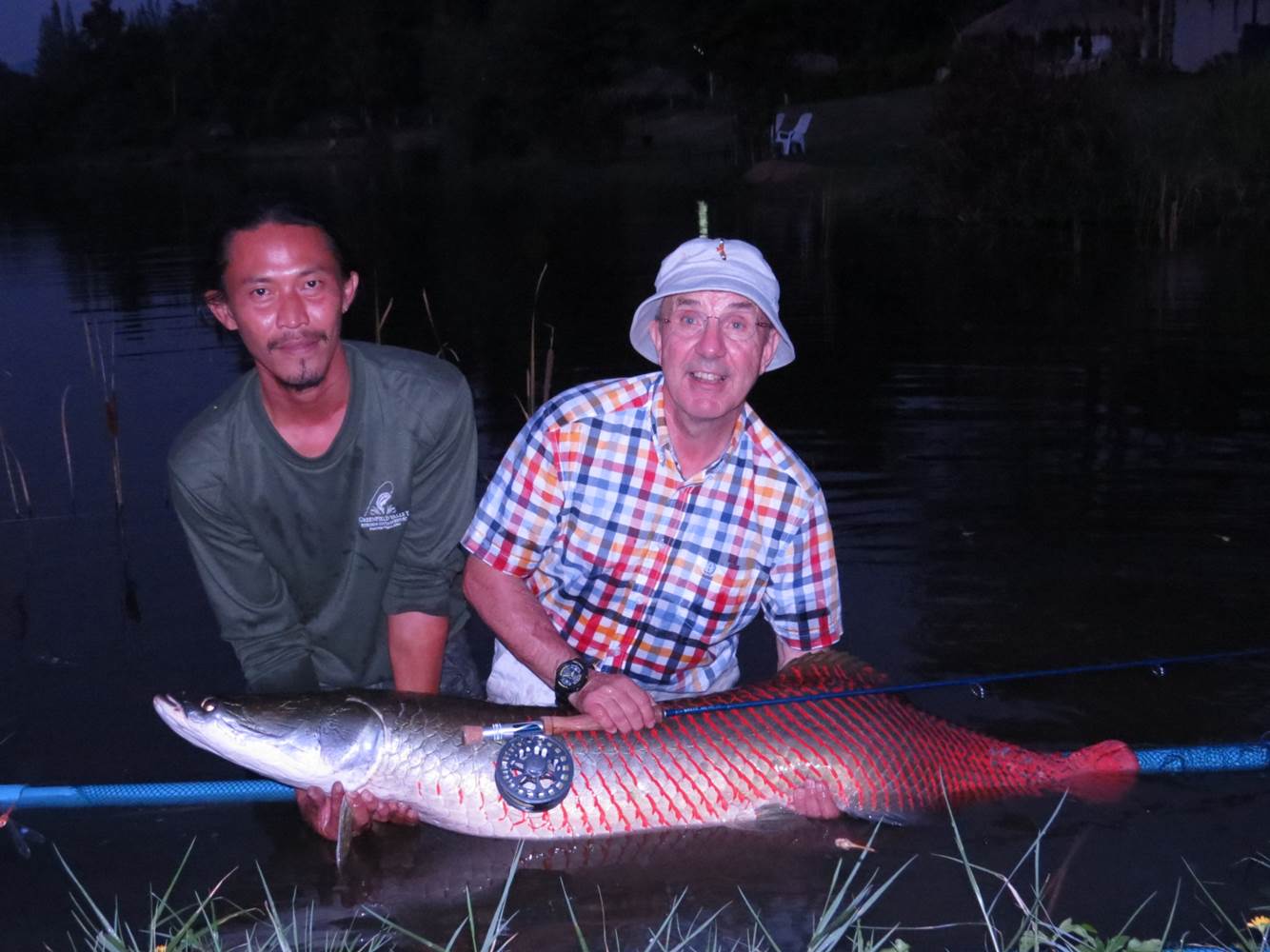
Harry with his beautiful Arapaima, estimated at 25 kilos.
The weather continues to be fine here and the dark skies of earlier in the week threatened rain but did not deliver. Today the sun shone and it seemed worth giving the river a whirl in the afternoon. I had hoped Norman, who introduced me to this stretch of the river, might be free to join me today but unfortunately he had other commitments. He did tell me, however, that yesterday he had a close encounter with a golden eagle which landed very close to his house. What an awesome thing to see!
The barbel seem to be active in the river. They are less easy to spot than earlier in the year but they still occupy the fast seams and broken water and will take a nymph if you are lucky. The carp put in an appearance too. They repeatedly refused the nymphs I offered but this is their party trick. I tried to coax them into taking the fly by telling them that I would immortalise them by posting their photos on my blog and that all I wanted in return was that they surrender their liberty temporarily. But the carp, being carp, would have none of it.
I did actually manage to hook a carp in the end, quite a good one too, but it spat out the nymph after a minute or so which surprised me as I thought it was well hooked. Such is life!
In the end I had to settle for a couple of gypsy barbel but they were fine strong fish. How lucky I am to be able to fish at this time of year when most fly fishermen have hung up their waders and are tying flies or just hanging around at home getting on their wives´ nerves.
When I got home I found a message from my friend Harry Abbot who is off fishing in the tropics. He has made a couple of fine catches already and I will report on his adventures shortly.
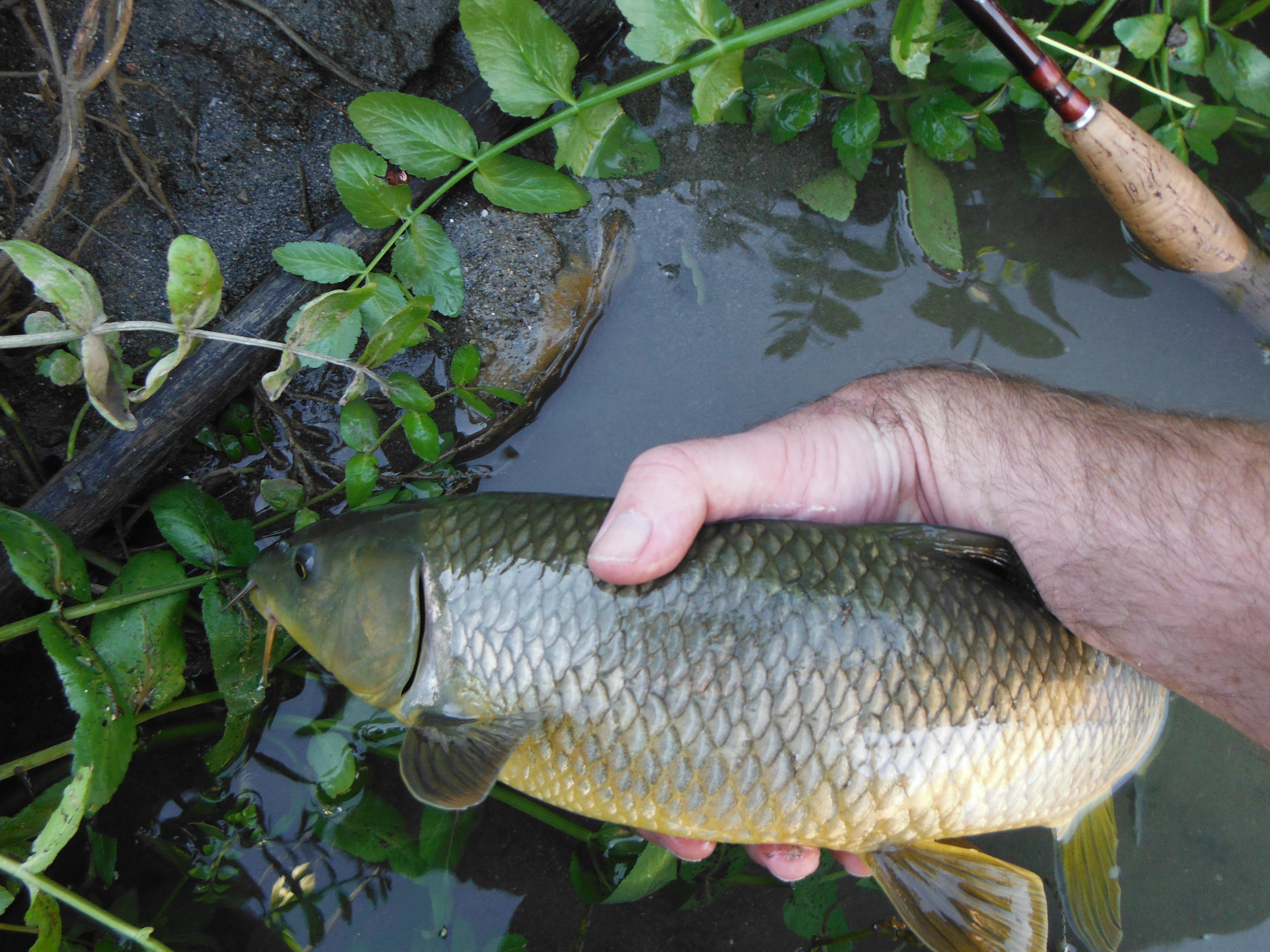
Numero uno
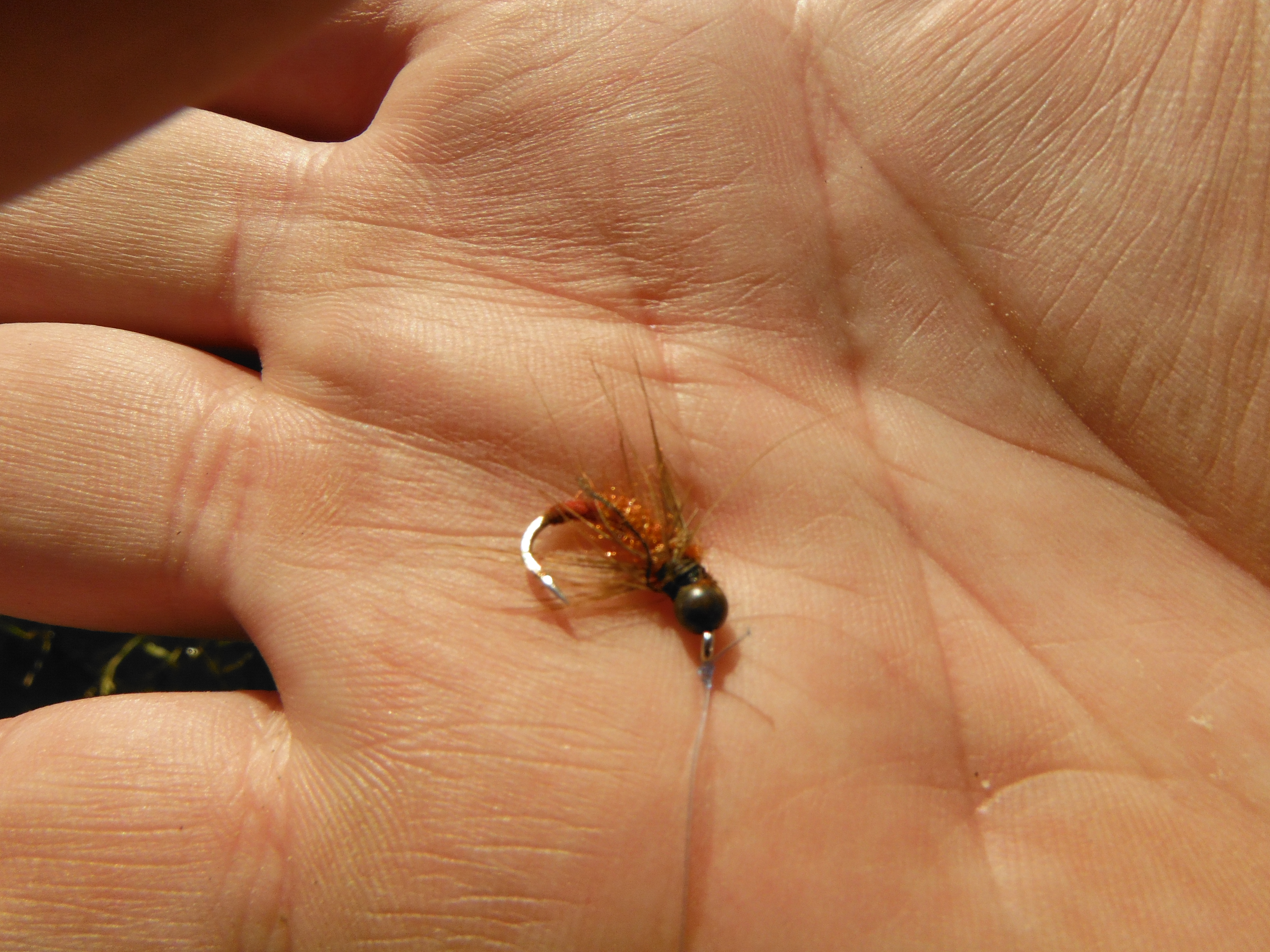
The nymph
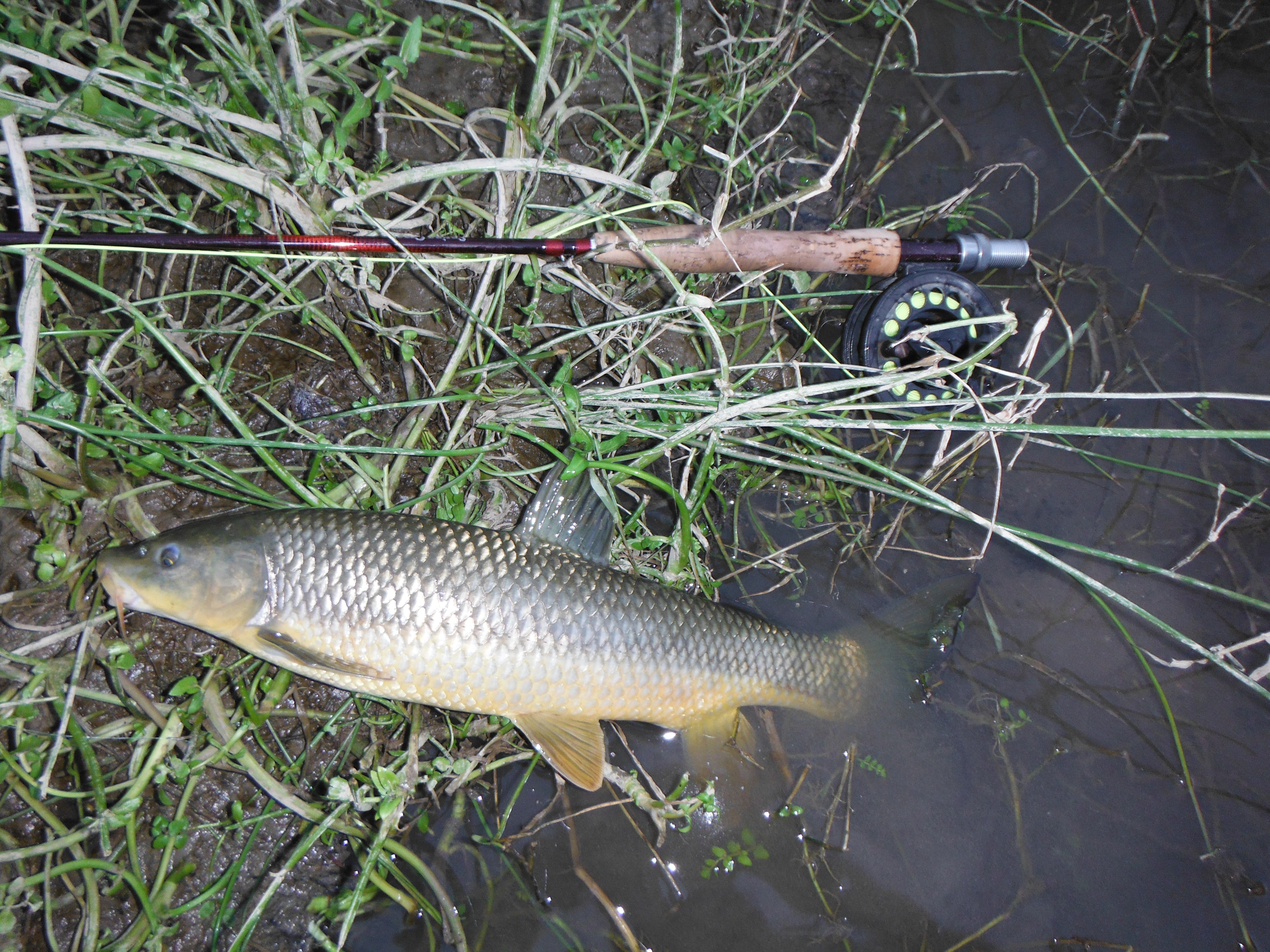
Numero dos
Having thrown together a few little “Plastic Bag” nymphs this morning I took them to the river to give them a little swim. I had only an hour or so on the water since Ireland were about to play the All Blacks and we had invited neighbours around to watch the game on the telly.
The river was looking good but the water temperature seems to have dropped. The river was also carrying a little colour. It is difficult to be precise about the temperature change since my thermometer consists of my legs and feet! I have a pair of neoprene boots which I use to wade and they seem to be falling apart. The puppies have been chewing the damn things.
There were a couple of fishermen on the stretch I had hoped to find some carp and so I gave them a wide berth and headed downstream a little way. There were no carp to be seen but a few barbel were around although difficult to see.
The little nymph took one barbel but I hooked another which came off after some time. Interestingly, the fish took the nymph which was dragging downstream as I waded slowly upstream looking for fish.
In the head of the pool there were some fish but they were difficult to see. I decided to fish a nymph blind and swapped my little PB nymph for something with a little more weight. I just cast the nymph into the deeper area with strong current and just tried to keep in touch with it as it drifted downstream.
It was a real eye opener! I managed to hook two or three good fish but all of them came off. One was a decent fish too. I was not in the least deterred by not landing the fish. It was interesting to see how productive the “blind” nymphing can be and it suggests that I might be able to catch a few fish when the winter comes on and there are few fish to be seen.
And the rugby? Ireland lost to the All Blacks but they came as close to winning as it is possible to come. It was a terrific performance. Final score: Ireland 22, New Zealand 24. The All Blacks are undefeated this year and Ireland, a team that has never beaten them, came within a whisker of spoiling the party!
Christ, you can´t beat sport!

The river was carrying a little colour

A new stretch of river for me

In the heat of battle!

The one fish I managed to land.

Such lovely fish, these.

Look what the puppies did to my wading boots

Just because they´re cute they get away with anything!

This fly was heavier than the PB nymph and was taken by several fish which were unseen. Interesting!
Out there in cyberpspace the word seems to have gotten out that my willy is nowhere near as big as it is supposed to be. This seems to be common knowledge!
I am aware of this because people who I have never even met, and who are, no doubt, decent and well-meaning, have been busy offering me treatments to enlarge my manhood. And they are keen to improve my performance in the bedroom too! (how the hell do they know?!)
The truth, of course, is that the cyberspace people don´t actually know who I am, but they do know exactly what I am: I am a man! And men, like all those snake oil salesmen out there will tell you, are deeply insecure about themselves. They feel they just don´t measure up!
It can be a bit like that for us fishermen too. Deep down, they are afraid that, when it comes to a particularly favoured species of fish, everyone has got a bigger one than they have!
Down on my local river, the Guadalhorce, there are only two kinds of fish that are taken on the fly; gypsy barbel and carp. Both grow to a size which offers wonderful sport, but neither reaches anything like the maximum size they can reach elsewhere. I suppose the size limit is determined by population size and the food the river can provide.
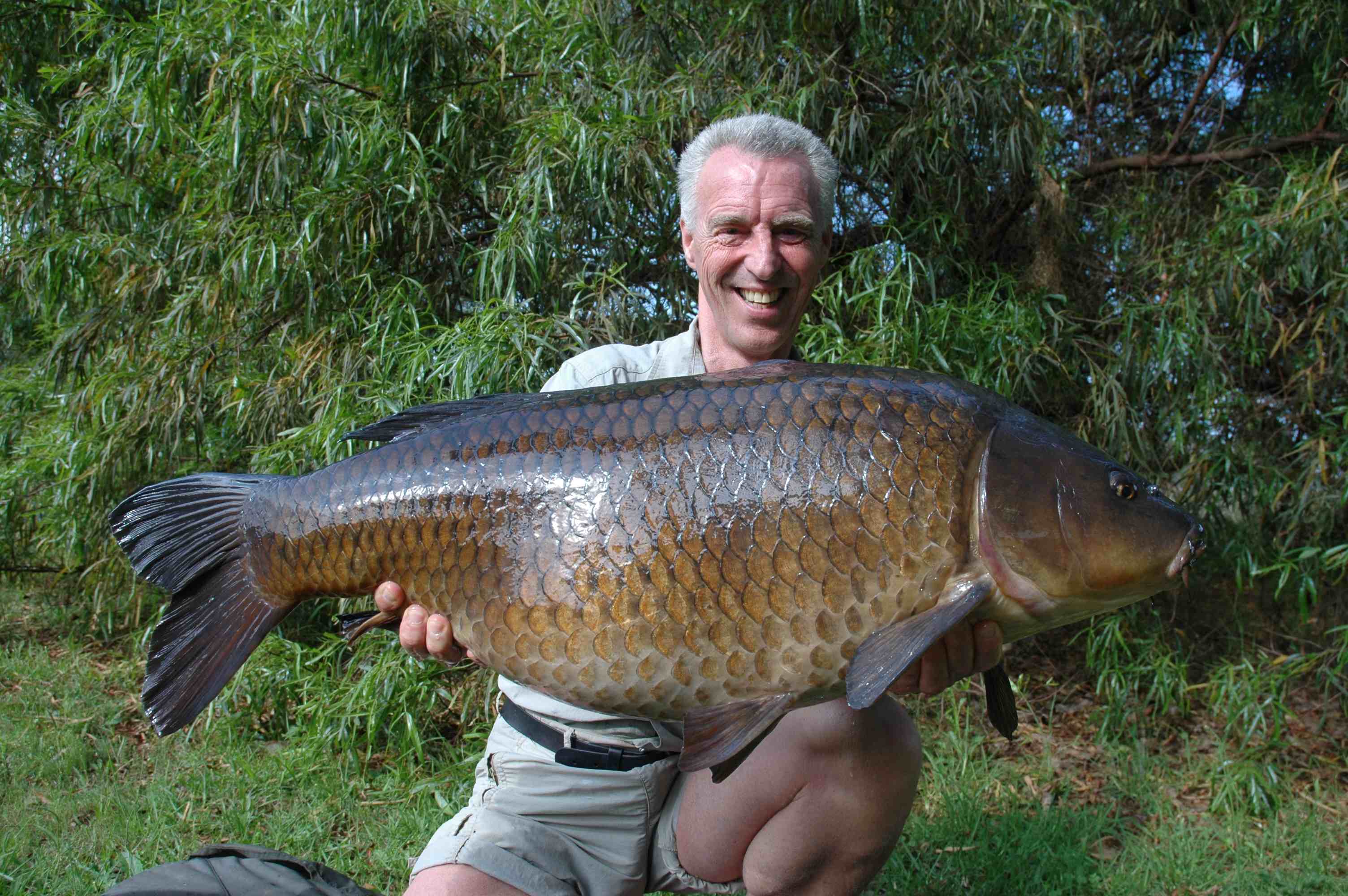
Under optimal conditions carp can reach weights in excess of 80 pounds. John Langridge is an expert on carp and his book “Aphrodite´s Carp”, is a fascinating account of the fish´s history. He is also a very keen fisherman and and sent me a picture, which I have reproduced below, of himself with a beautiful common carp. John believes that, here in Spain, there are carp of 100 pounds in weight. They may not have been caught yet, but they are out there!
Unfortunately,for people like me who fly fish and target individual fish by sight, catching one of the whoppers is always going to be a bit of a long shot. The biggest fish tend to be wary and are likely to spend much, or even all of their time unseen. In the river, it is likely to be the deepest reaches where the better fish are lurking.
The same might be true of trout. Giant brown trout are elusive creatures (or, at least, they have done a bloody good job of eluding me!) I am a great fan of brown trout but it is likely that the really big boys rise infrequently to the surface where they are most likely to see our flies. It might take a good hatch of large flies to tempt them up and the largest of these trout have probably switched to a largely fish-based diet and are more likely to be taken by fishermen trolling lures at depth. This seems to be the case in Ireland, at least, where the largest “ferox” fish, some of them enormous, are invariably taken on lures.
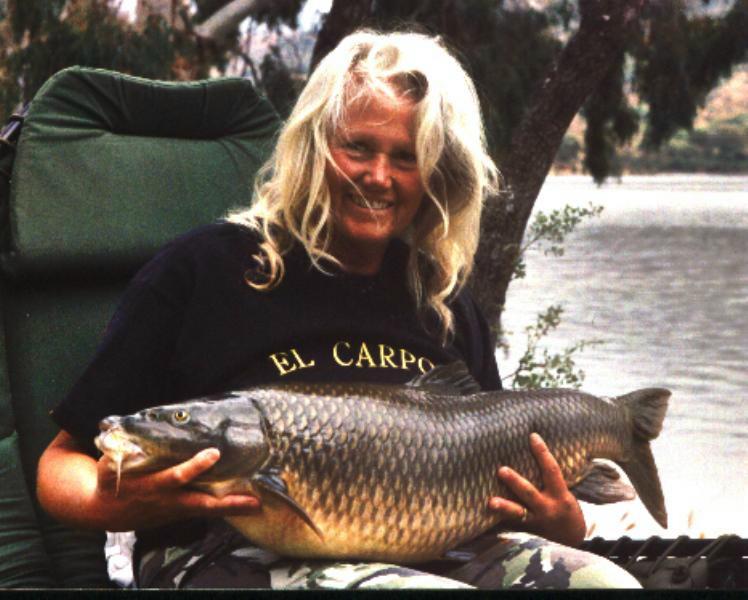
The gypsy barbel, though not Spain´s largest growing species (that distinction belongs to the comizo barbel), can grow pretty big too. Tomorrow I am hoping to go to the river with my friend Norman Smith, who has fished the river for more than thirty years, and taken Guadalhorce gypsies to five and a half pounds and carp to almost ten pounds. He and his wife, Maureen, have fished widely throughout Spain and taken exceptional fish of many species. Maureen caught one of the heaviest gypsy barbel I have heard of (nineteen and a half pounds) and Norman knows of only one that was heavier. A picture of Maureen´s fish is shown below.
So how do I feel about having all these people taking much bigger fish than me? I can live with it!
Everyone knows I don´t measure up.
Just ask the cybermen!
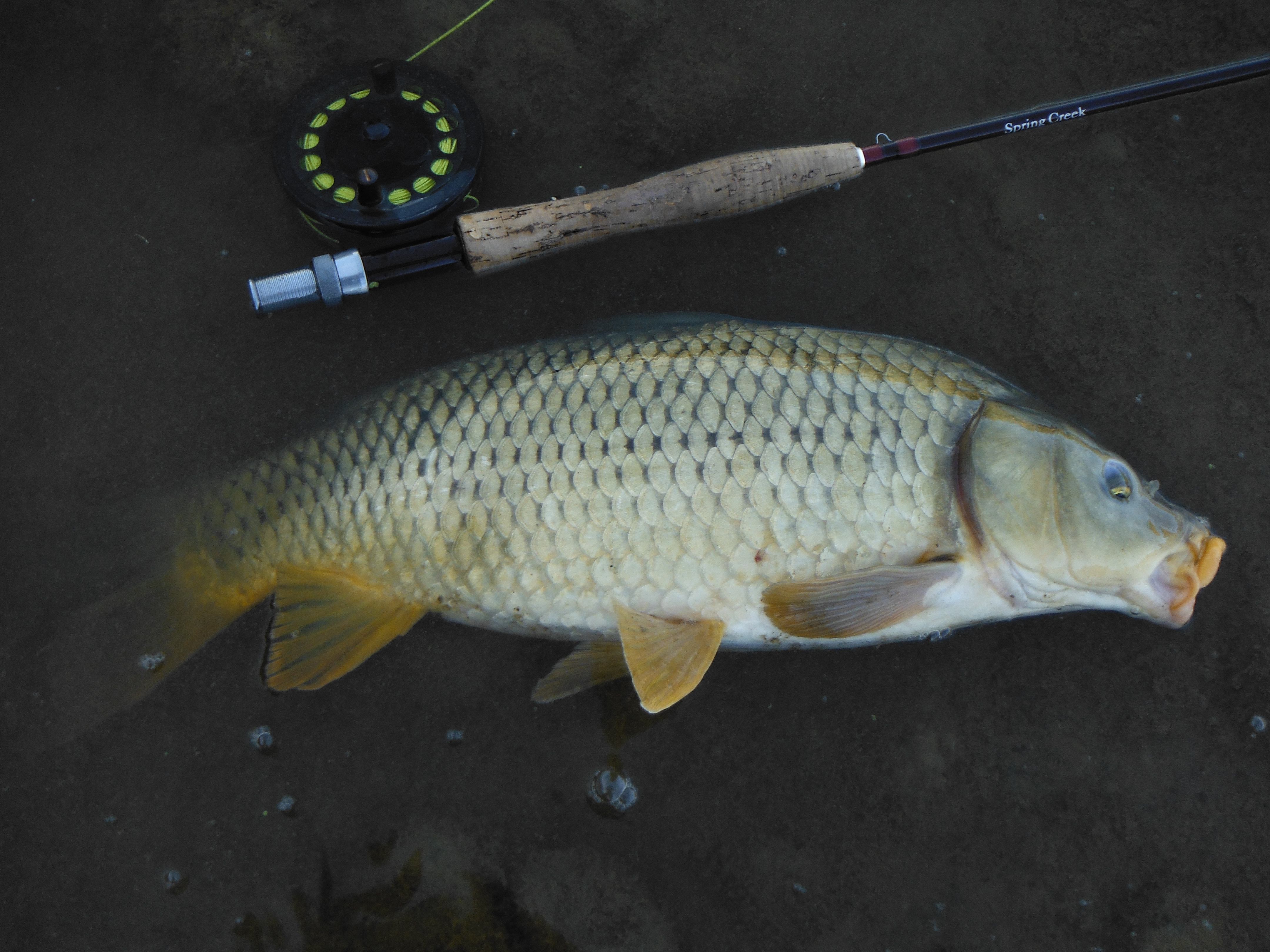
This is as big a carp as I have taken from the Guadalhorce
He´s got a bigger one than me! Author and fisherman, John Langridge with a beautiful coomon carp.

Norman´s first fly-caught fish. Things can only get better!
One of the biggest gypsy barbel ever taken. Maureen Smith with a fish of nearly 20 pounds.
Some bastard went and stole my brother´s boat.
The boat was called Mojo and my brother Sean built it himself from marine ply from a template he ordered from the internet. He did a fine job. It was a beautiful boat.
Like any fishing boat, her design was a compromise between being heavy and stable enough to drift well, light enough to transport and launch single handed, and sufficiently fast and easy to handle to get around easily using only oars. The perfect boat does not exist and the compromise Sean made between these inherently conflicting demands was as good as he was going to get. And she was pretty to boot.
Why Mojo? The name was given in recognition of the first of his four kids to put in an appearance and incorporates part of each of their names. His oldest child is Molly and her younger brother is John. The other children, Dan and Nancy, came in the wake of the boat´s launch.
Mojo is a fine name. It is an Americanism meaning the art of casting magic spells or an object considered to carry some kind of magic.
I fished from the boat only a couple of times and her magic yielded me a small pike. But Sean has taken much better fish, one of which can be seen in the picture below. But the boat was more than just a fishing platform. It was also a source of adventure for Sean´s kids and my own.
Sean took the loss of his boat philosophically. He did, of course, use some pretty heavyweight expletives at the time he discovered it had been stolen. That is only natural. He is only human,
The plus side, if there is one, is that he will go ahead and build a successor to Mojo when the kids are a little bigger and he has some more time on his hands. In the meantime, I would like to pay my own little tribute to the boat and to the man who built it.

Mojo

A fly-caught pike taken by Sean from Lough Inniscarra. The fish was not weighed but Sean reckons it is 15 pounds or better.
Most of us return all the fish we catch unless we decide to keep the odd one for the table. Personally, I return everything.
So what is the best way to land a fish with the fish´s welfare in mind? I think that the answer to the question, like the answer to many questions is ……it depends!
The usual way is to land the fish in a landing net. These things are now made with very fine knot-less mesh which is less likely to catch in fins and spines. Landing nets come in all shapes and sizes. Carp nets can be huge and swallow up really big fish comfortably, whereas smaller scoop nets, like the lovely wooden framed model Mark McCann owns, are pretty to look at and easy to carry around. I think nets of this kind are more popular in the States among trout fishermen. There is a trade off between ease of carrying around (short handled nets) and ease of landing fish (bigger long handled nets). I guess everyone makes their own mind up here. My own net is something of a compromise having a double extendable handle and the net itself has a joint allowing it to fold back over the handle.
Black bass have huge mouths and, when they are landed, obligingly open them up making it a simple matter to hold the fish by the lower jaw and gently pick it from the water. The fish can usually be unhooked and returned without being handled anywhere but its lower jaw.
And pike too, even big ones, can be picked up by hand by gripping carefully on the underside of the head between the gills although it is a good idea to make sure you see how this is done first! Pike are scary and have a lot of teeth! This approach to landing pike particularly lends itself to fly fishing because a single hook is used and there won´t be extra treble hooks flying around. Many float tubers routinely land their fish this way.
Out on the river I rarely carry a net. The fish I catch are always beached. This is possible because of the suitable shallow banks and the soft muddy substrate. I think that from the point of view of fish welfare this is the best way to go for a couple of reasons.
First, the fish can be landed sooner than if you had chosen to use a net. It is not necessary to be so close to the fish as when netting them and the fish´s own movements can be used to beach it. The fish needs to come close to a fisherman to be netted, particularly if the net has a short handle. As a result it may need to be more “played out” and quite a lot of strain is put on the tackle. The sight of the fisherman is often enough to give the fish a new lease of life and off it goes again!
The second reason I prefer beaching is that the fish has less contact with the fisherman. Less of the fishes surface comes into contact with hands or mesh. With care, it is possible to unhook and photograph a fish lying in the shallows without handling it very much at all. Finally, with wet hands it is simply helped into water deep enough to support it and off it goes!
Trout can be landed by hand or by net and the decision is made by the angler depending on the particular circumstances. They say that a trout, if turned upside down, will lie calmly in the angler hands. I am too nervous to find this out for myself! Other things being equal, I think I would opt for a net. I catch so few decent trout these days that I don´t want to take any risks!

A gypsy barbel beached in the shallows where it can be returned with the minimum of contact.

The river here is shallow and so beaching is possible.

A bass can be lifted by its bottom jaw – no net needed!
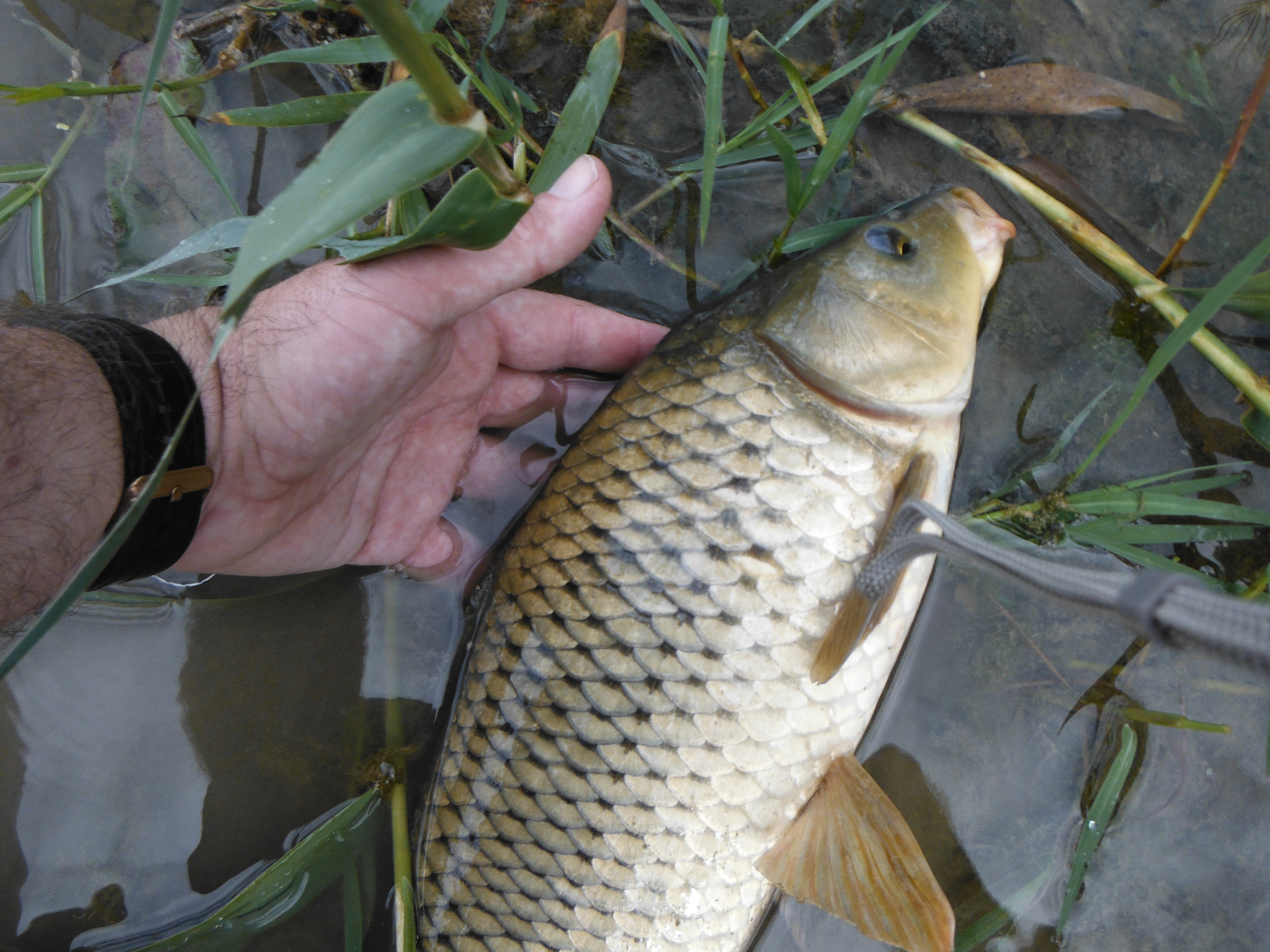
A beached fish is quickly photographed and gently eased back into the river
On the face of it this sounds like a dumb question. But I am trying to be serious. Maybe “friends” is too strong a word. It seems appropriate only when describing people. It seems nonsensical to consider other animals, like say, cows in a herd, as being friends. But if you have dogs, as we do, the notion doesn´t seems quite as outlandish.
Two of our dogs, Bonita and Chica, are sisters. The other two, Barney and Boris, are just puppies. We all spend much of our time falling and tripping over the damn things. It is clear however that they are “friends” in the sense that they interact enthusiastically and spend time in one another´s company, much as Bonita and Chica have done for many years.
What about fish?
I have experienced very “odd” behaviour on many occasions on the river. It is not infrequent to play a barbel or a carp which, as it runs around the river is very closely “shadowed” by another fish, or sometimes more than one. To my knowledge, similar claims have been made for salmon although I have never caught one myself. The “companion” fish may even swim quite close to the angler during the heat of battle throwing its normal caution to the wind. Why?
Any serious suggestion that fish can be “friends” would be greeted in the scientific community as hopelessly anthropomorphic. A scientist might suggest I get a bit of therapy at the funny farm. But if the word “friends” is very loosely defined in the limited sense that it describes an individual with which another individual might spend time in preference for others of the same kind, maybe it is not so crazy after all.
To my knowledge, the shoaling activity of fish is well understood and the advantages to individual fish in terms of protection from predators are clear. Each fish benefits from the extra “eyes and ears” of those around them, and a confusing melee might make individuals more difficult to pick out by predators.
As I write this my two teenage kids are sitting on the sofa opposite. Leo has earphones stuck in his ears and is watching something on Youtube. Pippa is glued to a TV rerun of “Friends”. It sometimes seems like they live in a different world from us. Generations of humans certainly differ now more than perhaps they ever have in the past. Later I will run the kids over to friends´ houses where they will hang out with others of their own age.
This behaviour, familiar to all the parents of teenagers, does not seem confined to humans. Fish very often shoal with others belonging to a particular year class. If you catch a particularly big perch or bream it is a fair bet that there are a few more nearby.
But the benefit of hanging out with your mates may depend on how you plan to make a living for yourself. If you are actively competing with your siblings for a particular lie in a stream, as trout do, or a source of fodder fish, as pike do, then it might make sense to be intolerant of others of your kind. Maybe it makes more sense to chase them away or even to eat them. Of course, when they have reproduction on their minds, both pike and trout will ignore the usual rules and override their natural intolerance of one another.
Fish, in my view, have a kind of PR problem. Everybody thinks that they are thick! They are not credited as being smart like the “higher” vertebrates. Birds and mammals are considered to be quite adaptable and “clever”. We used to keep hens until a semi-feral campo dog broke in and killed them all. Hens are fine birds but, however much you love them, there is no getting away from the fact that they are pretty thick. Sheep are too.
But even hens have a social awareness which is well established and a means for determining individual rank within the “pecking order”. So clearly each individual is “known” within the group. Fishermen, more than scientists, know just how canny a fish like a carp can be. After all we spend so much time being outsmarted by them! In my book a wily carp is as “smart” as a hen and I would be inclined to credit them with knowing the others in their group as individuals – maybe even to the point of getting on better with some than with others. Some might have “personalities” which make them more likely to be leaders, and others to be followers. Maybe there is also some kind of rank within a shoal?
Although few would disagree that it makes sense for fish to form associations if the benefits outweigh the disadvantages, maybe I am alone in thinking that, under certain circumstances, fish develop allegiances and “friendships” which are more complex than anyone might suspect.
And if I need to spend a spell in the loony bin weaving baskets out of spaghetti, then so be it.

Leo and Pippa taking it easy along with the two puppies, Boris and Barney
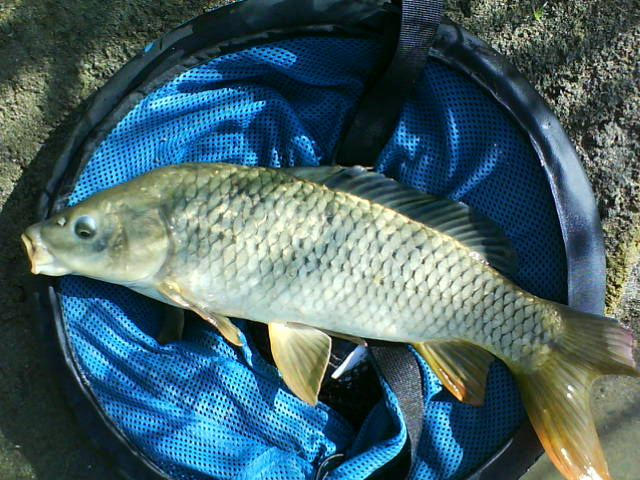
Carp like these are often “shadowed” by others while they are being played

 fishydreams