
I bumped into a very good fly fisherman on the river and we got to chatting for a little while. He told me that he fished dry flies exclusively and, even though there was no discernible hatch on and no evidence of trout feeding on the surface, that an attractor pattern could bring the trout up. I asked if he would show me what fly he was using and he was kind enough to open his fly box and show row after row of very similar patterns differing mainly in size. Generally those flies were pretty small – no bigger than a size 14 but perhaps mainly 16 or smaller. They each had a post, usually white, but often with some pink or orange added to enhance visibility.
This got me to thinking and so, when I got home, I tried to see if I could make something similar and tied up a few simple flies. The posts on mine were tied up with antron yarn (I think!) but looking into this I think that polypropylene yarn is even more buoyant. I found some pink marabout somewhere so added a little to the post to make the fly more easily seen. The fly is simplicity itself to tie, requiring only a light hook and dubbing, in addition to the post. There is no hackle. When fishing the fly I found that teasing the fibres apart and rubbing in a little floatant meant the flies remained buoyant and visible. The general profile is that of an emerger and the post is the only part above the surface. I was very pleased with how these little flies performed and, particularly, with how they float (I have a history of tying dry flies that actually sink!)
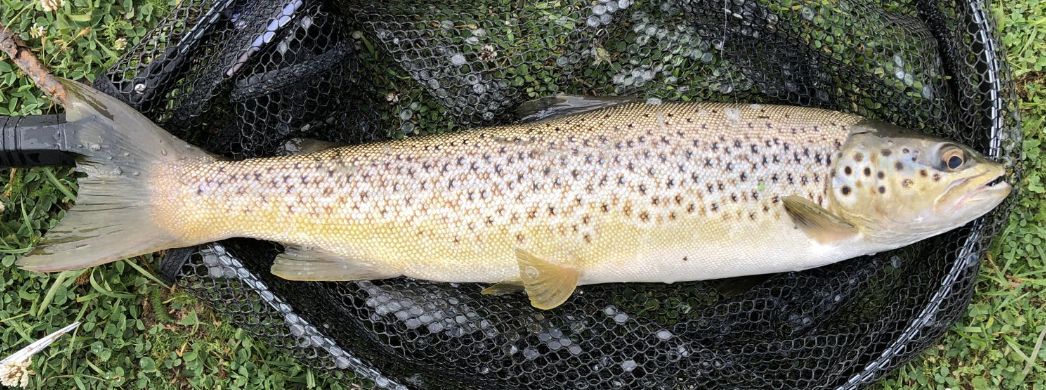
The trout seemed to give the nod of approval and so I think that this little pattern will earn a place in my fly box and, having now attached one to a tree and another to a stone wall, I think I will tie up a whole bunch more to replenish supplies.


 fishydreams