
Here in Cantabria there are some areas where trout fishing is available to anyone with a licence, provided they follow the appropriate rules. Around our base here, the town of Reinosa, this is true of much of the Río Ebro, particularly the catch and release section between the town and the reservoir. There are other regions, however, where fishing is restricted and numbers limited and where a special permit is needed (and this applies to hunting too) and such regions are called cotos. I had never fished anything other than public water here before Friday but I did manage to acquire a permit to fish one of four cotos within walking distance. As a member of the Reinosa fishing club I bought it for the discounted price of 5 euros and 20 cents. This coto that I could access was the Coto de Fontibre and covers the stretch of the Ebro between Reinosa and the source of the river Ebro at Fontibre.
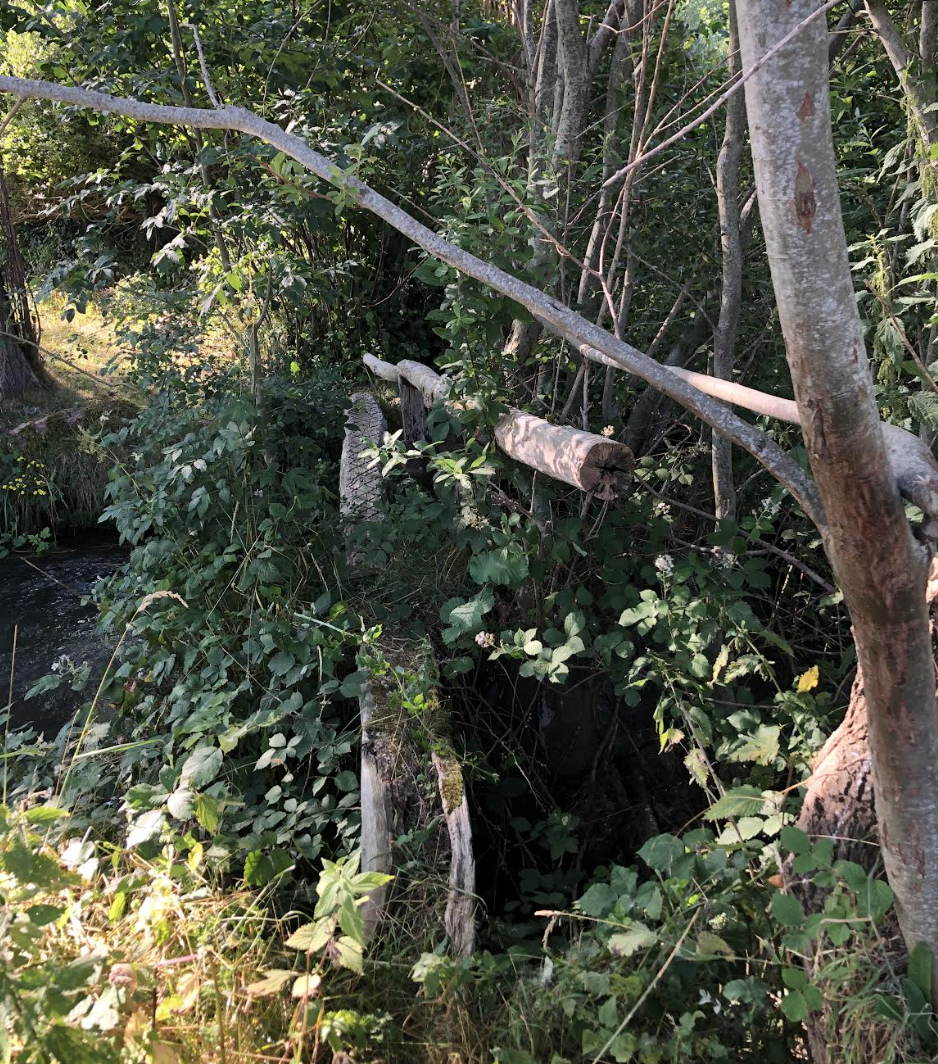
I really did not know what to expect but enjoyed the day enormously. There were frustrating moments because the river, which can be quite narrow, snakes its way through wooded areas and often trees and branches create an obstacle to progress, sometimes blocking the river completely. A lot of time was spent walking into what turned out to be dead ends, the edges of properties and fields and I became intimately acquainted with every bank of stinging nettles and every barbed wire fence and with every barking dog in the local vicinity.
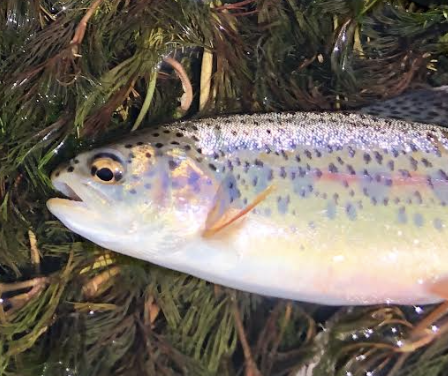
But every now and then the river would open up and sunlight would bring out all of its colours. In the shallow glides it was easier to cast and I came across many free-rising trout. Nearly all of the the trout I caught were rainbows and I realised when I got home that I had taken almost no pictures of them. This was in part down to the fact that I do not like taking out my phone to take pictures in a flowing river (I have drowned at least one phone in the past) but the reason was generally simpler – I was having too much fun and the less I bothered the fish the better.
Most of the trout were pretty small but, interestingly there were some better brown trout around. One of these I managed to hook but it came off after showing me just enough of himself to get my heart racing. I don´t think he would have given me any change from three pounds. This particular fish took my little dry fly in an open sunlit section of the river but most of the browns were in the wooded overgrown areas. They preferred the cover of deeper water and often held tight to the bank. I was generally so busy trying to navigate myself and my rod through overgrown spaces that I was nearly always on top of these fish before I saw them (and they saw me!) and at that point it was game over.
One exception was a fish that took the fly when I managed to finally get the “right” cast. This was the cast where you risk losing your fly in branches but somehow contrive to land it in the water that will carry it under trailing branches. I did manage this once and a big nose came up right under the trees but, again, our connection lasted only briefly.
As I get older I feel that I want to cause as little harm to the environment and to the fish as possible. All the fish were returned unharmed but the rainbows took the fly like they really meant business and forceps were often needed to help remove the barbless hook. Happily, all the fish were returned unharmed (or they parted company but obligingly returned my fly to me). One fly ended up in a tree and another in a stone wall. Given the nature of the terrain, I figured that was not too bad a result.
The end of the coto is a bridge called Puente del Molino de Fontibre. When I reached it it was time to go home. There was nobody around and so, just before I left, I took the law into my own hands and fished a few metres upstream of the bridge (which was probably technically illegal) and where a shallow sill crossed the river creating turbulent water beneath. This, and the glide below it was lovely water and I cast upstream into it and caught a good number of lively rainbows. It was interesting to reflect that these fish were the furthest upstream and at the highest altitude that anyone could catch, the river source being just a short walk away.
When I had reached the end of the fishing the weather took a turn for the worse. The rain that they had been talking about, and for which I was not prepared, about came down with real intent and my hour long walk home would see me get a good drenching and clobbering by pebble-sized hailstones. After a long day of walking and exploring, often in tight spaces, and of catching a couple of dozen beautiful trout on dry flies there was nothing the weather could throw at me that was going to dampen my spirits.




 fishydreams