
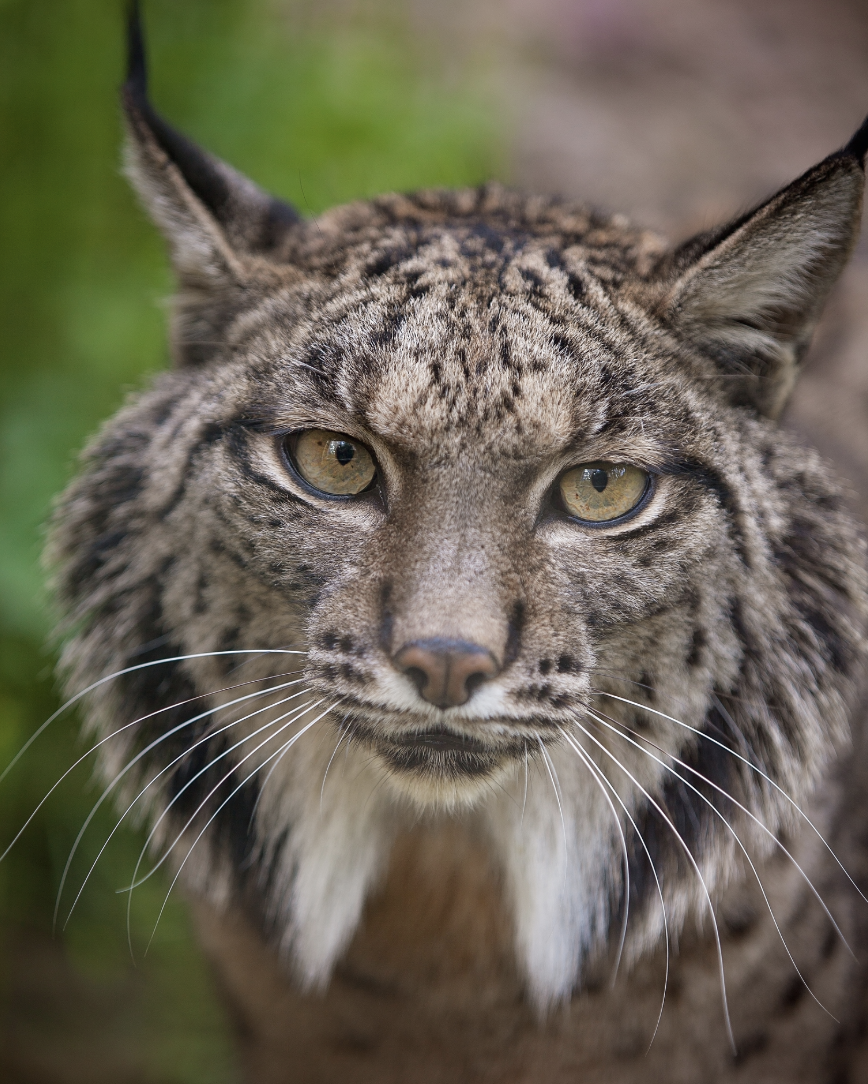
Yesterday I spent about 15 minutes staring at a log having been hoodwinked into believing that somewhere, behind it, was a concealed Iberian lynx with only a single ear on show. I was not alone. There were a whole bunch of us, similarly deluded, and all on account of someone making the dubious claim that somewhere, behind this log, they saw an ear twitch.
This all took place in Doñana national park in an observatory overlooking an enclosure where two lynx are in residence. There are four ears which might have been candidates for the sighting claimed. Two of these are attached to the head of Felix, the male resident and the other two to the head of Dama, the female resident.
Both of these cats are retired participants in a breeding programme which was put in place to bring these cats back from the very edge of extinction. Felix is the father of twelve cubs all successfully released and Dama is the mother of eleven, all similarly released to augment the wild population.
If you are interested in natural history there are few reasons to be cheerful with what seems like an inexorable drift towards threatened and reduced biodiversity, pretty much wherever you look. Given this backdrop, the story of the Iberian lynx provides a ray of hope and reminds us what what can be achieved if people put their minds and hearts into making things better.
The world population of these lynx dwindled to a mere 93 individuals from two different sites. One was Doñana and the other, also in Andalucía was in the Sierra Morena. Twenty years ago the decision was made to capture 30 animals from each of these populations and use them in a captive breeding programme aimed to bolster the population and re-introduce the animals to the wild. The most recent census from last year puts the population now at more than 3000 and the animals just last week had their status changed from “in danger of extinction” to “vulnerable”.
Wow!
Initially there was a single breeding and re-introduction facility in Doñana but now there are five. Four of these are in Spain and one is in Portugal.
Some of the animals will never be released. They are those, like Felix and Dama, who are relatively old and have had a lot of contact with humans. Their chances of making it “on the outside” are not good. Also not to be released are some individuals who show genetic shortcomings that might be detrimental to the gene pool should they be free to breed in the wild. All of these animals, although never to be released, are treated as “ambassadors” for their species and will live out their days in large enclosures which, although never a real substitute for the open spaces explored by these territorial cats, offer cover and protection. In these enclosures they are monitored constantly and given vetinary care as needed. Like their wild counterparts, they hunt live rabbits for food.
The trip to national park of Doñana is something I organise for my sixth form Biology students every two years and every time I return having learned a little more about this remarkable environment. It is somehow comforting to know that in protected spaces such as this, iconic species continue to roam.
Whether you can see them or not!
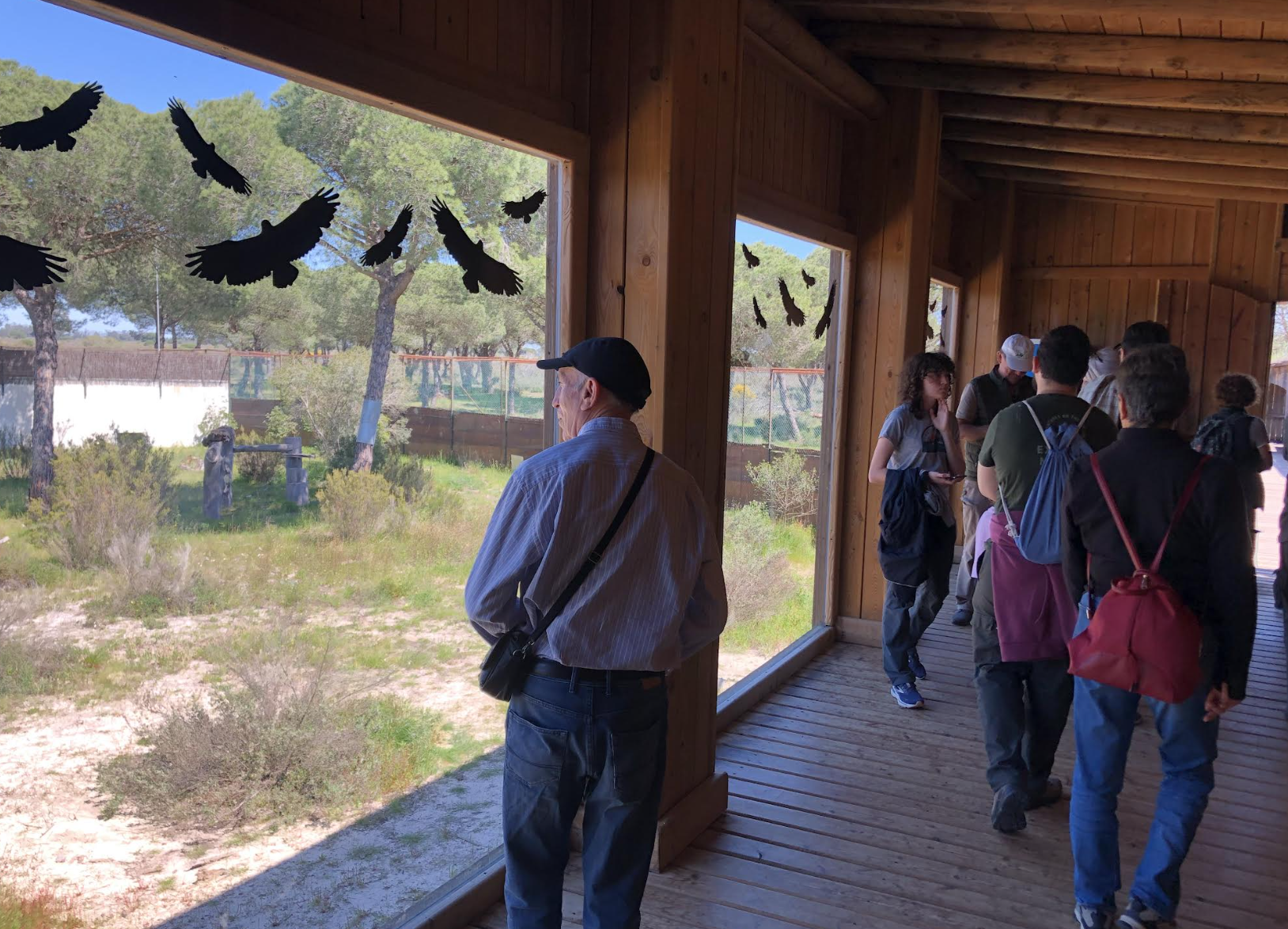
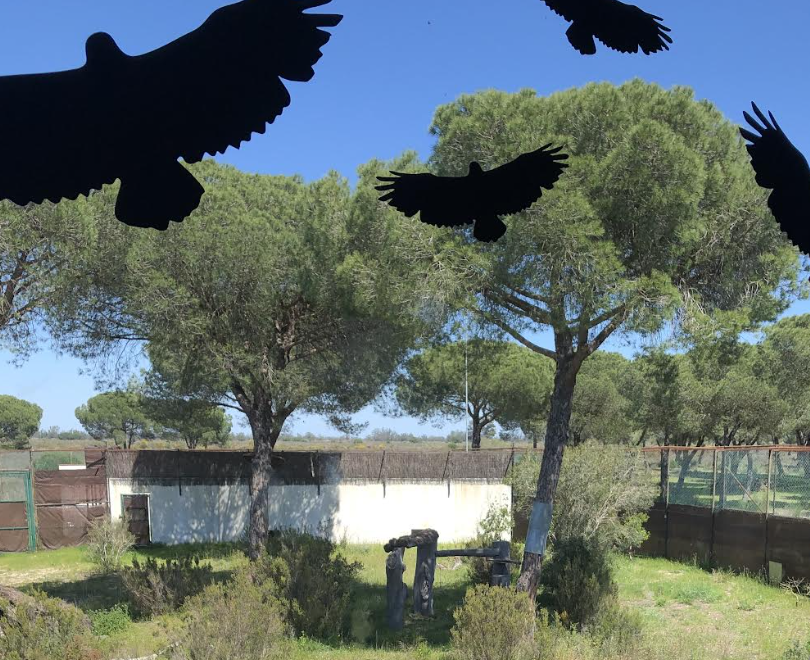
Maybe your eyesight is better than mine? The ear allegedly is on the edge of the log in the sunshine beneath the horizontal wooden beam. If the “middle” black bird silhouette at the top of the picture were to poop it would land more or less on top of the lynx! I suspect we were all just imagining things.

 fishydreams